PHOTO
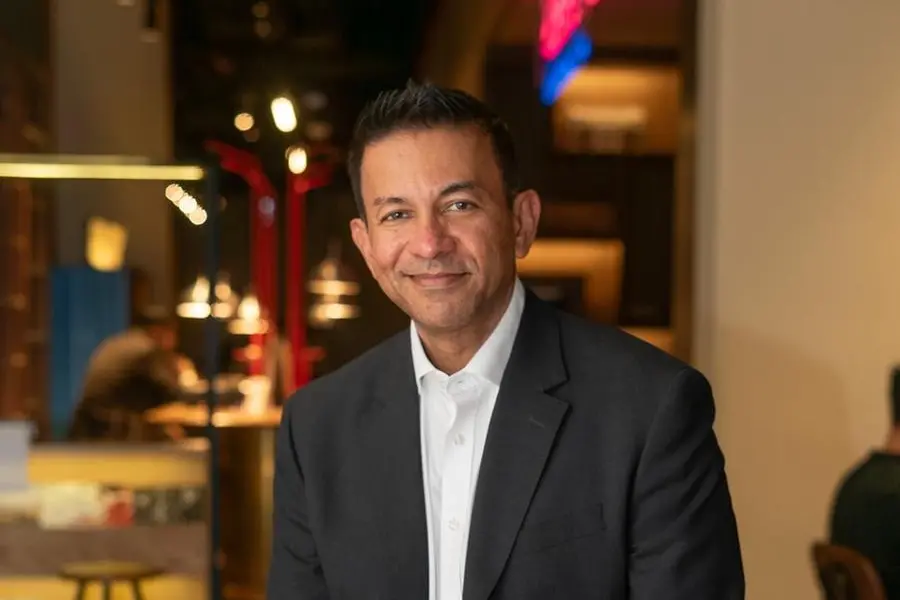
Dubai's residential rental market is becoming increasingly value-driven as tenants prioritise payment flexibility, digital convenience and lifestyle benefits alongside location and affordability, according to Co-Founder & COO of UAE-based proptech platform Rentify.
The biggest shift we are seeing is that renting is no longer being judged only by location, size and price," Rajneel Kumar said. "Those remain fundamental, but tenants are increasingly evaluating the full experience around the home—how they pay, how much control they have over cash flow, what digital support they receive, and whether their largest recurring expense gives them any value back."
He pointed out that said rent remains one of the largest household expenses but has traditionally offered little flexibility or customer engagement compared with other consumer sectors such as banking, retail and travel.
“"People earn points on smaller everyday spends, but for many tenants, rent has remained a large annual or quarterly outflow with no engagement, no rewards and very limited flexibility," he said
Kumar said he expects affordability to remain an important consideration in 2026 as tenants become more selective, but winning landlords and property managers will be those that enhance the resident experience rather than simply reducing rents.
That strategy underpins Rentify's BELONG programme, which allows tenants to earn rewards through rent payments and engagement during their tenancy.
“If rent is the biggest payment people make, it should not feel like money disappearing into a void," Kumar explained. "It should become part of a broader lifestyle and financial experience."
According to the Rentify co-founder, the programme is designed to improve tenant retention as much as customer engagement.
“In a market where tenants have more choice and are more sensitive to value, rewards, convenience and recognition can become meaningful differentiators,” said Kumar. “The future of renting will not only be about collecting rent more efficiently. It will be about making tenants feel that staying with a landlord or community gives them ongoing value.”
He said demand for Rent Now, Pay Later and monthly rent payment solutions is strongest in residential properties occupied by salaried tenants who prefer not to tie up significant liquidity through one to four annual rent cheques. These properties include apartments targeting young professionals, family homes and mid-market residential communities, where affordability increasingly depends on payment structure rather than headline rents.
“Most people earn monthly, but rent is often paid quarterly, semi-annually or annually,” said Kumar. “That mismatch creates cash-flow pressure even for tenants who are financially sound. Flexible rent solves that structural problem by aligning rental payments more closely with income cycles.”
The Rentify executive also believes digital rental behaviour is emerging as an important financial indicator.
“Over time, payment history, punctuality, lease behaviour, tenant preferences and engagement can help landlords and financial partners understand risk and affordability better than a static application alone,” he noted.
Flexible payments, he continued, become significantly more valuable when combined with tenant rewards.
“Flexible payments solve the practical pain point, while BELONG adds emotional and financial value on top of that. A tenant who pays rent on time, earns rewards, receives clear reminders and has a clean digital record is engaging with rent in a very different way from someone simply handing over cheques.”
Kumar said the market is moving towards better cash-flow management, bank-backed financing, card-based rent payments and rewards integrated into the same customer journey
“Rentify’s role is to connect these pieces so that tenants get flexibility and value, while landlords get visibility, predictability and better-quality engagement,” he stated.
Excerpts from the interview:
Following the regional tensions, have rental pricing undergone adjustments?
Regional uncertainty can affect sentiment, but the rental market should not be read through a single event. What we are seeing is a more mature and more selective market after several years of strong rental growth. Demand remains supported by Dubai’s population growth, economic resilience and continued appeal to professionals, entrepreneurs and families, but tenants are becoming more value-conscious.
The important point is that pricing is no longer moving uniformly across every community and every asset type. Well-connected, well-managed communities with strong amenities continue to perform better, while areas with more new supply or weaker lifestyle propositions may face more negotiation and slower growth.
For tenants, the conversation is shifting from “What is the rent?” to “What do I get for this rent?” That includes commute, amenities, payment flexibility, digital convenience, service quality and rewards. In a more balanced market, perceived value becomes more important.
For landlords, this creates a strategic choice. They can compete only on price, or they can improve the rental proposition around the unit. Flexible payments, digital proof of rent, rewards, smoother renewals and better communication can all help make a tenant feel they are getting more value without immediately reducing headline rent.
So yes, some parts of the market may see pricing moderation or greater negotiation, particularly where new supply gives tenants more options. But the larger trend is value differentiation. Landlords who can combine fair pricing with convenience, flexibility and resident benefits will be better positioned than those relying only on market inflation.
Uncertainty usually triggers behaviour toward “liquidity preservation.” Are tenants choosing monthly payments over traditional quarterly or annual payments as a hedge against geopolitical uncertainty?
Liquidity preservation is definitely part of the story, but we would not attribute the shift to geopolitical uncertainty alone. The preference for monthly payments has been building for years because it reflects how people actually manage money.
Most tenants earn monthly, plan monthly and budget monthly. When rent is paid through large cheques, it forces households to lock up cash in a way that does not match their income cycle. During uncertain periods, that pressure becomes more visible, but the underlying need is structural.
What tenants want is control. They want to preserve liquidity, avoid large upfront outflows, and have more predictable monthly obligations. This is especially relevant for young professionals, families managing multiple expenses, entrepreneurs with variable income, and new residents who are settling into the UAE.
Monthly rent also fits the broader direction of consumer finance. People increasingly expect large expenses to be managed through instalments, cards, financing products or embedded digital experiences. Rent is one of the last major categories still catching up.
The next step is not monthly payments in isolation. It is monthly payments combined with transparency, responsible underwriting, reminders, digital records and rewards. That is where Rentify is focused. Flexibility should help tenants manage money better, not encourage irresponsible debt. When designed properly, monthly rent can improve financial wellbeing for tenants while giving landlords more predictable and better-managed rent flows.
At Rentify, how do you see the performance of the rental market this year? Which areas are ‘hot zones’ for rentals?
We remain constructive on the UAE rental market, but the story in 2026 is more nuanced than the last few years. The market is moving from broad-based rental escalation to more selective performance. Demand is still strong, but new supply, affordability pressure and tenant choice are changing how people make decisions.
The communities likely to remain most resilient are those that combine connectivity, lifestyle, employment access and quality management. In Dubai, this typically favours areas with strong transport links, established amenities, proximity to business districts, and a clear community proposition. Tenants are not only looking for square footage. They are looking for convenience, identity and day-to-day ease.
This is also where resident experience becomes commercially important. A landlord in a well-located building still needs to think about retention, payment experience and tenant satisfaction. If two similar units are available at similar prices, the landlord who offers smoother payments, digital communication, rewards and better service has an advantage.
From Rentify’s perspective, the strongest-performing portfolios will be those that treat rental income as an operating system, not just a lease contract. That means understanding tenant behaviour, reducing payment friction, improving renewal journeys and creating reasons for tenants to stay.
The market is still healthy, but tenants are becoming more rational. In that environment, the hot zones will not only be geographic. They will be communities and portfolios that offer better total value.
With regard to DLD’s AI-powered Smart Rental Index, how is it impacting transactions?
The Smart Rental Index is a very important step for the market because it gives both landlords and tenants a clearer reference point. When rental decisions are supported by transparent benchmarks, there is less room for confusion, unrealistic expectations and unnecessary disputes.
Dubai Land Department’s use of AI and building classification is particularly relevant because rent is not only about an area average. Building quality, amenities, location, maintenance, age and service standards all affect fair rental value. A smarter index helps the market move from broad assumptions to more specific, data-led decisions.
For tenants, this improves confidence when entering a negotiation or renewal discussion. For landlords, it creates a more credible framework for pricing and rent adjustments. For the broader market, it supports maturity and trust.
At the same time, transparency is only one layer of the future rental experience. Once the market has better benchmarks, the next question becomes: how do we make the rental journey itself better? That includes how tenants pay, how landlords collect, how renewals are managed, how risk is assessed, and how value is returned to the tenant.
This is where Rentify complements market-wide initiatives like the Smart Rental Index. DLD is improving visibility and fairness at the market level. Rentify is building the transaction and engagement layer around the tenant and landlord relationship. Together, these kinds of developments move the UAE rental market towards a more transparent, digital and customer-centred model.
(Reporting by Dennis Daniel; Editing by Anoop Menon)
Subscribe to our Projects' PULSE newsletter that brings you trustworthy news, updates and insights on project activities, developments, and partnerships across sectors in the Middle East and Africa.