PHOTO
Doha, Qatar: As part of the ninth edition of the Doha International Maritime Defence Exhibition and Conference (DIMDEX 2026), the Middle East Naval Commanders Conference (MENC) convened today, bringing together senior naval commanders, defence officials, strategic experts and academics to address key issues shaping the future of maritime security.
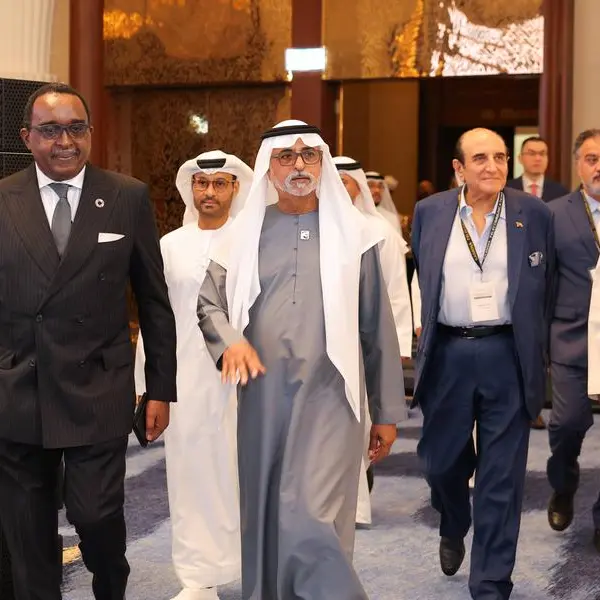
Under the patronage and in the presence of His Excellency Sheikh Saoud bin Abdulrahman bin Hassan bin Ali Al Thani, Deputy Prime Minister and Minister of State for Defence Affairs, the conference was organised in collaboration with the Joaan Bin Jassim Academy for Defence Studies under the theme “Defence Diplomacy and Maritime Security Challenges”. It was held at the Conference Hall of the Qatar National Convention Centre and was attended by H. E. Lt. Gen. (Pilot) Jassim bin Mohammed Al Mannai,Chief of Staff of Qatar Armed Forces, alongside high-level delegations, ministers, ambassadors, naval commanders, maritime experts, specialists and academics from around the world.
His Excellency Sheikh Saoud bin Abdulrahman bin Hassan bin Ali Al Thani, Deputy Prime Minister and Minister of State for Defence Affairs said in his speech: “In this ninth edition of the Doha International Maritime Defence Exhibition and Conference (DIMDEX), the conference is being held under the theme ‘Defence Diplomacy and Maritime Security Challenges,’ to underscore the importance of the close interconnection between defence diplomacy and maritime security, and how this nexus can be leveraged to enhance regional and international security and stability.”
“Recent experiences have demonstrated that military power alone is insufficient to address today’s challenges, whether regional conflicts, transnational threats, or non-traditional risks such as cybersecurity, terrorism, and the protection of maritime routes and global supply chains. Here, defence diplomacy emerges as a platform for dialogue, partnership-building, and the strengthening of cooperation among all relevant stakeholders. Defence diplomacy addresses the management of differences through sustainable coordination channels and cooperative mechanisms based on mutual respect and shared interests, thereby contributing to the consolidation of stability, the reduction of escalation risks, and the enhancement of trust among defence institutions, even in times of tension”, His Excellency added.
His Excellency pointed out that our region requires balanced defence approaches that combine military readiness with effective diplomatic engagement, adding: “Regional security cannot be achieved in isolation from dialogue, nor can it be sustained without genuine partnerships founded on the principles of sovereignty, good neighbourliness, and adherence to international law. From this perspective, today’s conference constitutes a strategic platform for realizing this vision. The State of Qatar has consistently adopted this approach and has contributed to shaping a deep trajectory of cooperation, friendship, and growing relations built on trust, which has made it a destination and a venue for playing important roles in resolving disputes and conflicts through dialogue, negotiations, and diplomatic and peaceful means.”
In his welcoming speech, Brigadier General (Dr) Rajeh Mohammed bin Aqeel Al-Nabet, President of the Joaan Bin Jassim Academy for Defence Studies, affirmed that the Qatar Armed Forces believe maritime security is a shared responsibility that requires parallel coordination and cooperation, as well as the building of trust-based partnerships and the exchange of expertise in a manner that serves the security and stability of the region.
“Security challenges in the maritime domain are no longer confined to specific geographic areas or traditional frameworks; rather, they have become transnational and interlinked in their impact, requiring comprehensive approaches that combine hard power with diplomatic tools, and that place emphasis on collective action and multilateral and multinational coordination. Accordingly, we affirm that this conference will contribute to producing actionable, evidence-based insights that enhance the security and sustainability of maritime systems and support efforts to strengthen cooperation and coordination among all partners”, he added.
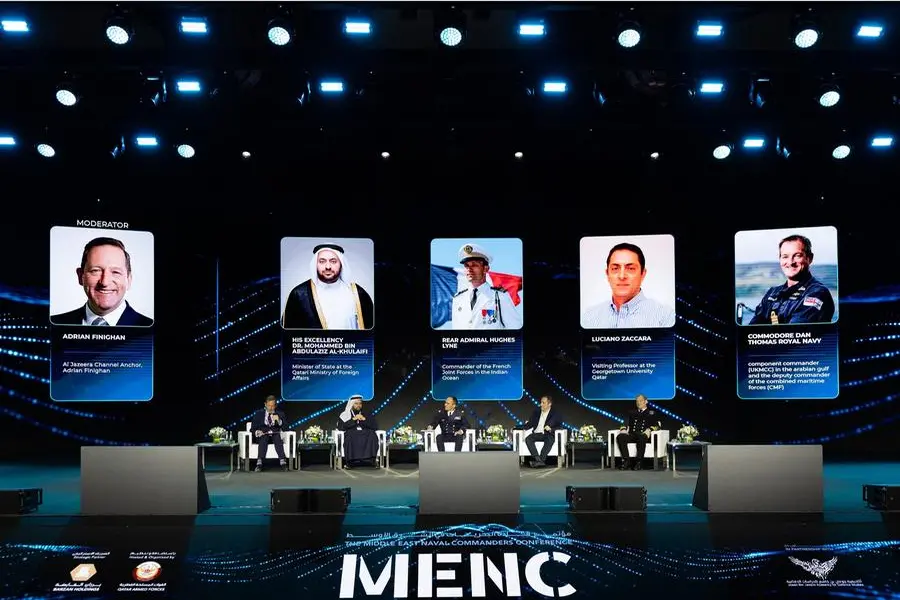
The first session featured contributions from His Excellency Dr. Mohammed bin Abdulaziz Al-Khulaifi, Minister of State at the Qatari Ministry of Foreign Affairs who stated: “Maritime security today extends far beyond naval power alone — it is an integrated endeavour that links diplomacy, defence, trade, food security, and regional stability. Qatar’s experience demonstrates that effective security at sea requires seamless coordination between our Ministry of Foreign Affairs and Ministry of Defence, sustained cooperation with our partners, and a commitment to trusted mediation. As conflicts grow more complex and borderless, stronger regional mechanisms, multilateral institutions, and innovative solutions are essential to safeguard sea lanes, protect coastal states, and ensure the stability of the wider maritime domain.”
Moderated by Adrian Finighan, the first session featured Rear Admiral Hughes Lyne, Commander of the French Joint Forces in the Indian Ocean, who underscored that maritime threats are becoming increasingly sophisticated and brazen—from shadow fleets to illicit activities that undermine regional security—and emphasized that such challenges cannot be addressed by naval power alone, but must be aligned with political dialogue and sustained relationship-building with coastal states. The session also included Luciano Zaccara, Visiting Professor at Georgetown University in Qatar, as well as Commodore Dan Thomas, Component Commander of the UK Maritime Component Command (UKMCC) in the Arabian Gulf and Deputy Commander of the Combined Maritime Forces (CMF).
The second session featured insights from Brigadier General Ramzan Hamad Al Naimi, Head of Qatar’s NATO OCC Program, and David B. Des Roches, Professor of Practice at the Near East South Asia Center for Strategic Studies (NESA), who addressed the limits of technology and lessons learned from recent naval failures. Ali Baker, Professor of International Affairs, Security, and Defence at Qatar University, examined hybrid maritime threats and the security of the global maritime domain. The session concluded with Dr. Hassan Jouni, Retired Brigadier General (Staff) at the American Institute for Anti-Corruption in the Middle East, who explored the implications of threats to the security and safety of strategic sea lanes and their impact on the stability of global supply chains and energy markets.
The Middle East Naval Commanders Conference serves as a key platform for addressing regional and international maritime challenges, underscoring the State of Qatar’s position as a trusted hub for defence diplomacy and its commitment to supporting dialogue, cooperation and the strengthening of collective security. Since its inception, the conference has hosted more than 50 speakers from around the world and addressed a broad range of topics impacting the maritime security sector and their social, political and economic implications.
For more information on the Middle East Naval Commanders Conference and DIMDEX 2026, please visit www.dimdex.com and follow us on social media platforms X, Facebook, and Instagram.