PHOTO
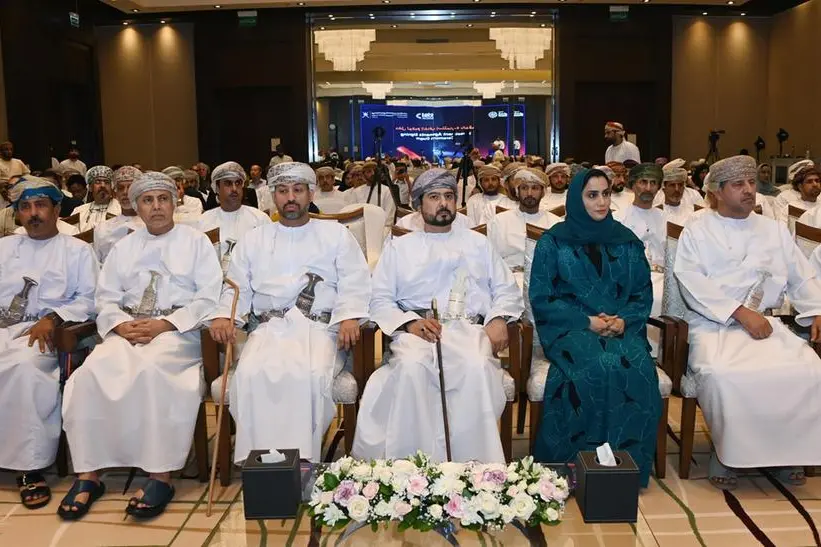
Duqm: Investors from Asia, Europe and the Middle East signed a new round of agreements with the Special Economic Zone at Duqm (SEZAD) on Monday in industries linked to clean energy, electric mobility, industrial supply chains, tourism, construction and power infrastructure.
Held at Crowne Plaza Hotel Duqm, the ceremony was led by HE Qais Al Yousef, Chairman, Public Authority for Special Economic Zones & Free Zones (OPAZ), joined by senior company representatives from Oman, India, China, Egypt, Germany, Korea and the Philippines.
Speaking at the ceremony, HE Al Yousef said the investments showed growing confidence in Duqm’s ability to serve international markets. “Investors have multiple options when deciding where to establish a business. What they find on SEZAD is a strong combination of core fundamentals - industrial land at scale, port access, energy infrastructure, regional connectivity and room to expand. Importantly, their impact will extend beyond the individual projects through new export markets, employment opportunities, business partnerships and industrial supply chains.”
The agreements come as international demand for cleaner industrial materials, battery components, green fuels and resilient production hubs continues to grow. Electric vehicles are reshaping supply chains, automakers are seeking lower-emission steel and green ammonia is attracting attention from energy, shipping and industrial buyers. Duqm is increasingly connected to these trends through large-scale industrial land, port access, energy infrastructure and direct access to regional and international trade routes.
Among the US$7.5 billion commitments announced, ACME is developing the second and third phases of its green hydrogen and green ammonia project with investment of US$4.2 billion across 10 square kilometres. Once complete, the two phases are expected to produce 800,000 tonnes of green ammonia and 142,000 tonnes of green hydrogen a year with commercial operations planned for 2030 and 2033.
A leading Chinese company is investing US$500 million in battery anode materials used in lithium-ion batteries with production planned to rise from 2,000 tonnes a year in the first phase to 5,000 tonnes a year in the second. The project is designed to help localize part of the silicon-carbon anode supply chain in Oman and serve export markets linked to electric mobility.
TROT Holdings of India signed a memorandum of cooperation for a US$500 million integrated industrial complex covering one million square metres. The project will be developed in four phases and is expected to attract Omani and international companies in light industry, adding a further link between Oman and one of the world’s fastest-growing economies.
Jindal Shadeed Oman also signed an agreement to develop a US$78 million residential community for employees on a 460,000 square metre site. The project will include 500 housing units and supporting facilities, reflecting the growing need for workforce accommodation as industrial activity expands in Duqm.
Beyond manufacturing and clean energy, the signings included commitments that will strengthen Duqm’s wider operating environment. An Omani-Korean led consortium is investing US$910 million in an 890MW power station to support future industrial growth with early commissioning expected in 2028 and commercial operation planned for 2029.
OQ Group signed a memorandum of cooperation for a US$750 million natural gas liquids separation and processing plant in Duqm’s petrochemical industrial zone. The project is expected to provide feedstock for downstream industries and strengthen links between energy, logistics and manufacturing activity on SEZAD.
Ruby Investment & Development signed a memorandum of cooperation for a US$480 million tourism development comprising two hotels, a shopping mall and office spaces, reflecting confidence in Duqm’s appeal as a place to live, work and visit.
Eng. Ahmed Akaak, CEO, SEZAD, said: “Today’s agreements mark an important stage in SEZAD’s development. As new industries establish operations in Duqm, the value will come not only from individual investments but from the connections between them. The opportunities for local procurement, specialist services, industrial collaboration and workforce development become broader. That is how economic zones mature and how long-term in-country value is created.”
Oman continues to attract rising levels of foreign direct investment. FDI reached US$81.3 billion at the end of 2025, an increase of 8.1% on the previous year, while non-oil export activities contributed US$17.3 billion to the national economy.
Monday’s signings, covering industries from tourism and power generation to green ammonia, battery materials and petrochemicals show the growing range of businesses choosing Duqm for long-term industrial and commercial development.
Press Enquiries
Khalid Al Abri
Media & Communications Section
Special Economic Zone at Duqm
PO Box 77
Duqm, 100
Sultanate of Oman
Tel: (+968) 92 59 69 71
Email: khalid.alabri@duqm.gov.om