PHOTO
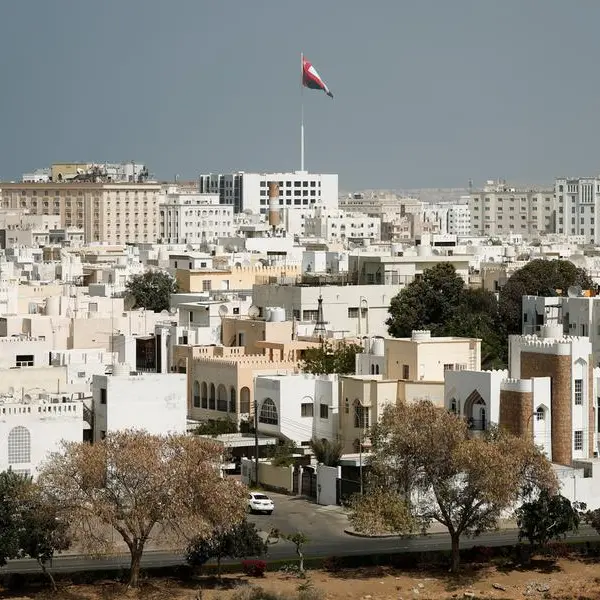
There is “a lot of excitement” about the investment, entrepreneurship and restructuring in the GCC over the coming decade as countries open up and replace fossil fuels as the driver of economies, according to Swiss bank UBS.
UBS economists said in their Chief Investment Office (CIO) Year Ahead 2024 roundtable that governments are continuing to use oil money to invest in different sectors, and entrepreneurship had been energised with demographic changes.
Themis Themistocleous, chief investment officer EMEA, UBS Global Wealth Management (GWM), said: “There is a lot going on in the region, a lot of excitement, because there is a lot of restructuring and there is a lot of investments going on; we can talk about Saudi, we can talk about Qatar and some of the other economies in the region.
“They are opening up, they are looking at replacing fossil fuels as the driver for the economies, and Vision 2030 in Saudi, so there is a lot of excitement.”
Oil prices staying reasonably high has provided an environment for governments to drive the economy and invest in infrastructure, such as the entertainment and service sectors in Saudi Arabia.
“The prospects are clearly quite positive,” he said.
“We are talking about 2024, but for me the excitement is when I look at the next five to 10 years, rather than specifically for 2024, dynamics can change, oil prices can change or whatever, but longer term, clearly there is a lot going on in the region.”
Paul Donovan, chief economist, UBS GWM said the region’s young, relatively well-educated population gave it ‘enormous scarcity value, huge advantage’.
Changes to regulation around women in business had brought about change, he said: “Saudi has had for a couple few years the fastest growth in female entrepreneurs in the world as a consequence of that, tapping into a hitherto dramatically under used source of female entrepreneurship and so on.”
The demographic issues and the potential to energise entrepreneurship in the region is significant for the decade ahead as well, he said.
Bond outlook
The bank saw more upsides to bonds, relative to equities for 2024, providing they were risk adjusted and with thought about the volatility of the two asset classes, Themistocleous said.
“We prefer quality within bonds, we prefer high grade, investment grade bonds,” he said, adding: “As the Federal Reserve cuts and yields come down, you get the coupon, the yield, you get the potential for capital appreciation.
“You have the added advantage that if the macro-outlook turns out to be a tougher outlook, then you also get the hedging qualities of high grade bonds to cushion some of that downside in a portfolio perspective.”
Interest rate cuts in 2024
Donovan said he expected interest rates to start falling in the second quarter onwards, with the Bank of England (BoE) likely to cut rates first due to the fact that the UK is a more interest-rate-sensitive economy, in which mortgage holders often see their rates move with the central bank around every two or three years, whereas in the US, homeowners routinely fix their rates for the entirety of the mortgage.
“Because of bracket creep – tax brackets not moving up in line with inflation – there is also effectively a fiscal tightening that takes place in the UK every year at the moment. That is going to be something the bank will factor in.”
Governor Andrew Bailey is likely to cut as early as May, he said.
Meanwhile, the European Central Bank (ECB) and the Fed are likely to cut in the middle of the year, with a little competition to see who can cut first, depending on data flow, which Donovan he said he did not like because of the potential for a ‘rogue number’ delaying a cut by a meeting or two.
Oil price outlook
UBS’s Year Ahead 2024 report, published yesterday, said risks appear tilted toward a downside case of regional escalation of the Israel-Hamas conflict due to Israeli ground operations in Gaza and exchanges of fire between Hezbollah and Israel.
For the impact of this on oil markets, the report said: “We expect Brent to trade in a $90-100 per barrel range. But if Iranian crude exports fall by around 500,000 barrels per day, this could push oil prices to $100–110 barrel.”
A broadening of the conflict across the region, involving other oil producers, could push prices above $120 per barrel, the report concluded.
(Reporting by Imogen Lillywhite; editing by Seban Scaria)
(imogen.lillywhite@lseg.com)