PHOTO
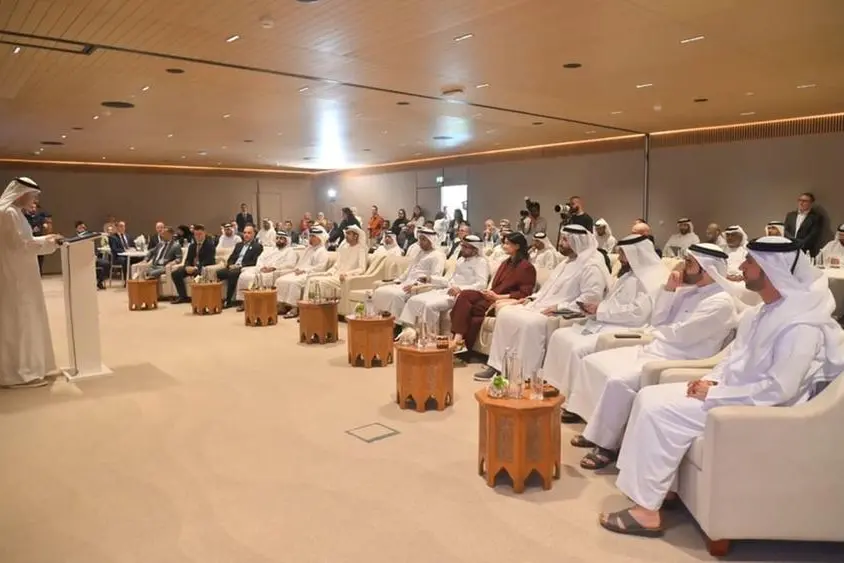
The Sharjah FDI Office (Invest in Sharjah), in collaboration with PwC, convened leading public and private sector entities to assess the emirate’s investment position and identify opportunities emerging from global economic shifts.
The high-level seminar was held at Al Bait Al Westi in the historic Heart of Sharjah, and carried the theme “Sharjah’s Economic Resilience: Unlocking Opportunities Amid Global Shifts.”
Discussions focused on strengthening cross-sector integration and reinforcing competitiveness across an array of sectors.
Participants, who represented key sectors like aviation & logistics, real estate, manufacturing, financial services, and hospitality, alongside representatives of government entities, business councils, and academic institutions, also explored plausible pathways to sustain growth by reigniting investment momentum.
Sharjah’s economic landscape was a central focus of the session, with discussions examining the factors underpinning stability and continuity across its markets and free zones amid accelerating global shifts.
Participants stressed that the emirate’s economic model is anchored in a diversified base of growth-supporting sectors, advanced infrastructure, and a stable population that reinforces domestic demand and sustains economic activity.
The discussion also highlighted how Sharjah’s development model has translated into strong economic performance in 2025, with foreign direct investment projects increasing by 45%, capital investments rising by 8.8%, and employment opportunities growing by 25.7% compared with the previous year - according to data from “fDi Markets - Financial Times”.
The figures reflect the strength of the emirate’s economic structure, the effectiveness of its supporting policies, and Sharjah’s ability to sustain growth momentum while enhancing its investment appeal.
Ahmed Obaid Al Qaseer, CEO of Shurooq, said, “Sharjah has built an investment environment that remains steady and confident in the face of global change. This strength is the result of a clear development vision, close alignment between the public and private sectors, and an economy shaped by diverse sectors that continue to support one another. At Shurooq, and through Invest in Sharjah, our role is to bring these strengths together, identify where opportunity is emerging, and convert market confidence into practical partnerships that advance the emirate’s long-term growth.”
Mohamed Juma Al Musharrkh, CEO of “Invest in Sharjah”, said, “Markets that sustain investment appeal and stable growth are those that build integrated economic systems capable of absorbing change and turning it into long-term opportunity. In Sharjah, we are focused on strengthening these connections across sectors, supporting consistent performance, and providing investors with a well-defined and scalable environment.”
He added, “Sharjah’s strength lies in its ability to turn regional and global economic shifts into lasting opportunities through strong institutional partnerships and efficient processes. This reinforces its position within global value chains and enables investors to create sustainable value beyond short-term fluctuations.”
Khaled bin Braik, UAE Country Senior Partner at PwC, said, “Investor confidence follows fundamentals, and Sharjah's fundamentals are strong. A diversified economy, clear policy direction, and real alignment between public and private sectors. At PwC Middle East, we see this directly as businesses increasingly prioritise stability, connectivity, and long-term growth potential. Sharjah delivers on all three, and our clients are committing to it. That is the clearest signal of confidence an economy can receive.”
The seminar highlighted Sharjah’s “unique value propositions”, which present opportunities amid current regional developments, including alternative transport modes. Khorfakkan Port, located on the Gulf of Oman, together with strong transport links to the northern emirates and Oman reinforce Sharjah’s role as a “resilient alternative logistics hub”. Sharjah recently launched a new logistics corridor linking the emirate with major ports in Oman, following a new Sharjah-Saudi multimodal logistics corridor to accelerate cargo flow and reduce transit times.
Another advantage that was highlighted is Sharjah’s competitive cost base compared to elsewhere in the UAE, with lower start-up costs in both free zones and mainland, commercial rents 40% lower and office rents up to 60% less. This “cost resilience” is particularly significant “during a period of input cost inflation” and “especially suitable” for industrial and logistics businesses. The seminar also demonstrated how investors can optimise operations by co-locating within sector-specific zones to benefit from close proximity to suppliers.
Alongside the local economic outlook, discussions also examined global economic trends and emerging investment models, highlighting opportunities across Sharjah’s key sectors, including food and beverages, consumer products, business services, manufacturing, technology, and logistics. The session also explored the emirate’s appeal to investors and entrepreneurs across sectors, including real estate, in line with the strong momentum Sharjah continues to see in this area.
Around 75% of investment projects progressed to operational stages in 2025, while the real estate sector recorded 29,235 transactions in the first quarter of 2026, reflecting an 18.9% increase compared with the same period last year.
The session featured participation of prominent leaders from leading entities across the emirate, including, including Sheikh Fahim bin Sultan Al Qasimi, Chairman of the Department of Government Relations and the Higher Committee for Economic Integration in the Emirate of Sharjah; Ahmed Hamad Rashid Matar Al Suwaidi, Assistant Secretary General of The Sharjah Executive Council; Hamad Ali Abdalla Al Mahmoud, Chairman of the Sharjah Economic Development Department; Ali Ahmed Ali Abughazayain, Chairman of the Sharjah Fish Resources Authority; Najla Al Midfa, Vice-Chairperson of the Sharjah Entrepreneurship Center (Sheraa); Khamis Al Mazrouei, CEO of Sharjah National Oil Corporation (SNOC); Omar Al Mulla CEO of Osool Investments at Sharjah Asset Management Holding, and Saif Alsuwaidi, Director Of the Sharjah Publishing City Free Zone, alongside representatives from business councils, educational institutions, and the hospitality sector in the emirate.