PHOTO
ABU DHABI: The Mohammed Bin Rashid School of Government (MBRSG) has unveiled a policy report examining the growing physical risks of climate change across the Gulf Cooperation Council region and the critical role of policy, finance and institutions in strengthening climate resilience.
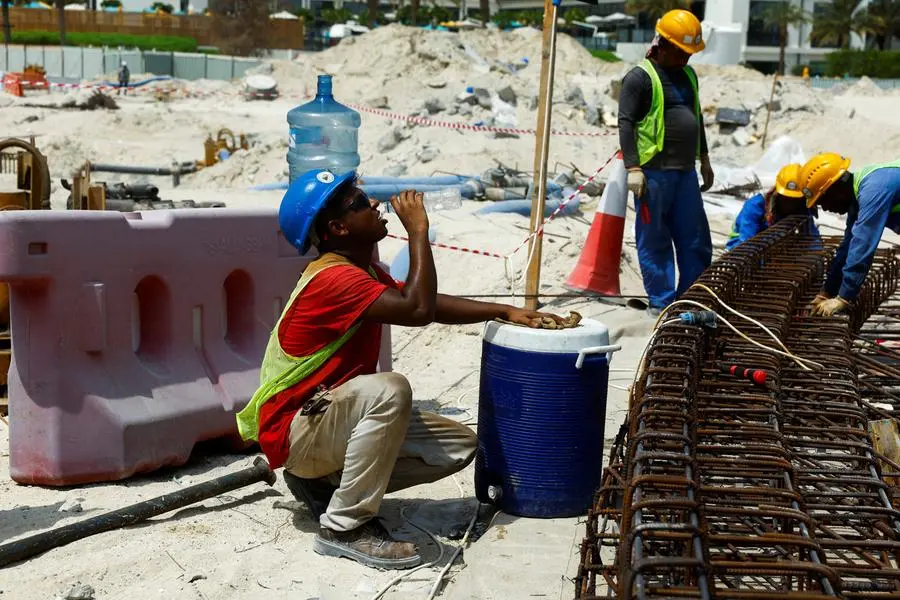
Titled Addressing the physical risks of climate change in the GCC, the report was supported by a grant from HSBC Middle East as part of its philanthropic outreach. It highlights the increasing impact of extreme weather events, including heatwaves and flooding, and stresses the need to treat climate risks as immediate challenges affecting communities, infrastructure and economic stability.
The report underscores the importance of strengthening climate adaptation alongside mitigation, warning that the cost of inaction is likely to far exceed the cost of proactive measures. It calls on GCC countries to operationalise evidence-based National Adaptation Plans supported by clear governance structures, cross-ministerial coordination and alignment with national development strategies and budgets.
Fadi Salem, Director of the Policy Research Department at MBRSG, said the report is timely given recent climate events in the region, noting that it provides a strategic roadmap for governing climate risks across GCC countries, drawing on extensive data and fieldwork from the school’s sustainability research.
The report presents policy recommendations across four pillars, governance, implementation, data and research, and finance. It highlights the need to strengthen adaptation finance through improved data, robust risk assessment and innovative financial frameworks to safeguard long-term economic stability.
It also stresses the importance of mobilising capital through blended finance, public-private partnerships and sustainable finance frameworks to support large-scale adaptation efforts in the GCC.
Justin Wu, Head of Sustainability and Climate Change for Asia and the Middle East, said climate resilience is a strategic driver of long-term economic stability, adding that the financial sector has a critical role in accelerating adaptation by embedding climate risk management into decision-making and fostering cross-sector collaboration.
Lama Zakzak, MBRSG Research Fellow and lead author of the report, said that while emergency responses to extreme weather in the GCC have been strong, there is a need to shift from reactive approaches to proactive risk management through stronger climate data systems, early warning mechanisms and continuous monitoring frameworks.
The report was launched during the Green Finance Conference at the World Future Energy Summit, contributing to regional dialogue by bringing together government leaders, financial institutions and climate stakeholders.
The study adds to MBRSG’s global knowledge base, which includes indices published annually through the World Government Summit, and reflects the institution’s ongoing focus on sustainability and climate policy research in support of government excellence across the Arab region.