PHOTO
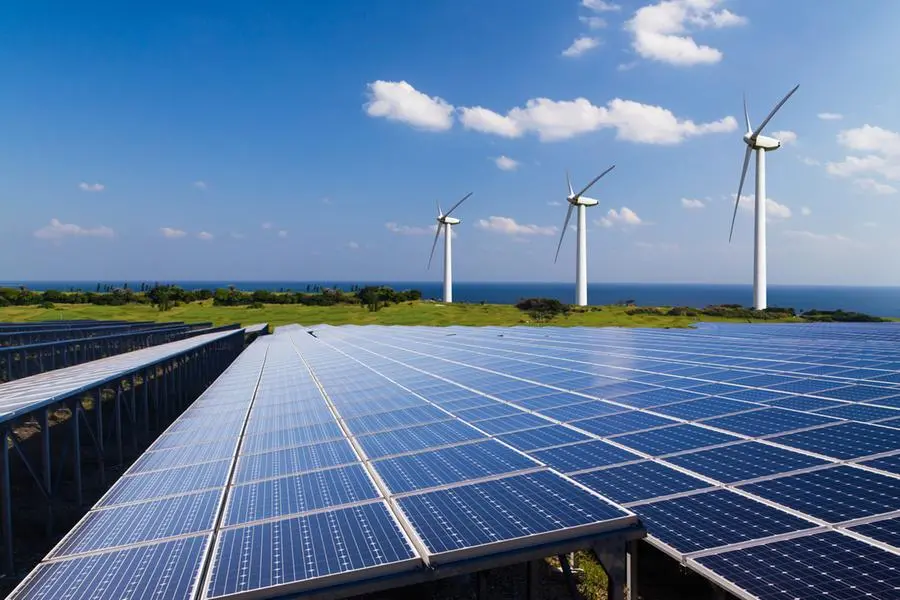
Renewable energy capacity across the Gulf Cooperation Council (GCC) region recorded strong growth in 2025, led by Saudi Arabia’s large-scale solar expansion, while Oman and Qatar posted the fastest percentage increases from a lower base, according to a report by the International Renewable Energy Agency (IRENA).
IRENA’s ‘Renewable Capacity Statistics 2026’ report indicated that Saudi Arabia’s installed renewable capacity rose by 86.8 percent year-on-year to 12,332 megawatts (MW) in 2025, up from 6,601 MW in 2024. The increase of 5,731 MW represents the largest absolute addition in the region, driven almost entirely by utility-scale solar photovoltaic (PV) projects.
The United Arab Emirates (UAE), the second-largest market in the GCC, expanded capacity by 15.4 percent to reach 7,907 MW in 2025, adding 1,054 MW during the year, reflecting a more mature renewable energy market.
While Saudi Arabia led in absolute capacity additions. Oman and Qatar emerged as the fastest-growing markets in percentage terms. Oman’s renewable capacity surged by 138.5 percent to 1,722 MW in 2025 from 722 MW a year earlier, reflecting a 1,000 MW increase driven entirely by solar PV.
Qatar more than doubled its renewable capacity, rising by 106.2 percent to 1,699 MW in 2025 from 824 MW in 2024, with solar accounting for all new additions.
Bahrain recorded a 66.7 percent increase in capacity to 115 MW, while Kuwait’s renewable capacity remained unchanged at 114 MW, indicating limited project activity during the year.
(Writing by Anoop Menon; Editing by SA Kader)
Subscribe to our Projects' PULSE newsletter that brings you trustworthy news, updates and insights on project activities, developments, and partnerships across sectors in the Middle East and Africa.