PHOTO
- Event is part of ongoing efforts to strengthen institutional dialogue with the private sector and support Gulf economic integration
- Outlining regulatory frameworks and policies to enhance the business environment in GCC markets
- Younis Haji AlKhoori: "The Ministry is committed to exploring the best ways to support the continued growth and expansion of UAE companies across the region."
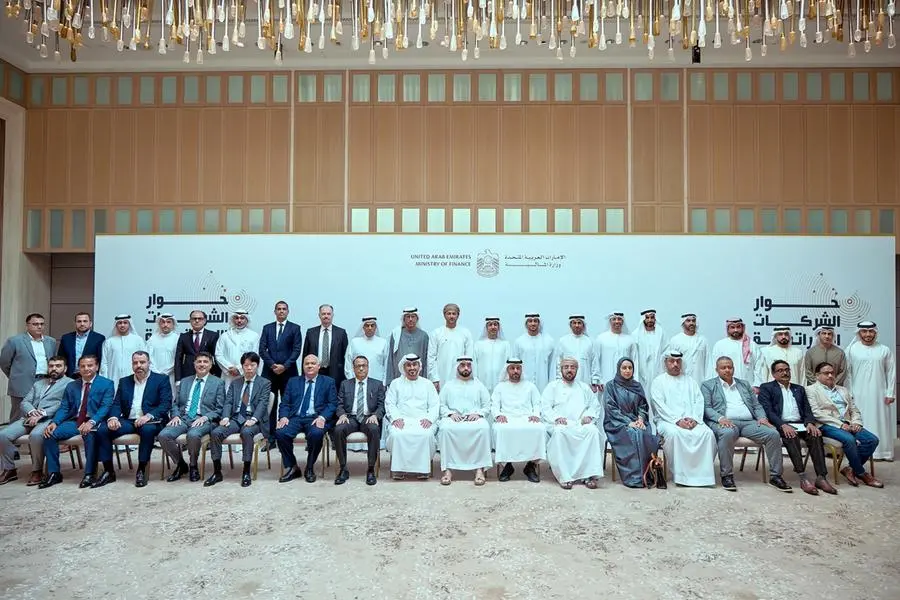
Dubai: The Ministry of Finance (MoF) has organised the second high-level dialogue with senior executives from UAE companies operating in the Gulf Cooperation Council (GCC) countries, under the title "Enhancing Gulf Economic Integration within the Framework of the GCC Common Market: Opportunities and Challenges Facing UAE Companies Operating in GCC Countries". The event was held as part of the Ministry’s ongoing efforts to strengthen its partnership with the private sector and to support economic integration across the GCC.
Building on the first session held in September 2024, the roundtable aims to reinforce communication channels with UAE private sector representatives and to engage directly with their insights and proposals on the key opportunities and challenges within Gulf markets.
The event was attended by H.E. Younis Haji AlKhoori, Undersecretary of the Ministry of Finance; H.E. Khalid Al Sunaydi, Assistant Secretary-General for Economic and Development Affairs, GCC Secretariat; H.E. Humaid Mohammed bin Salem, Secretary-General of the Federation of UAE Chambers of Commerce and Industry (FCCI), and Koralai Kirabaeva Senior Economist, International Monetary Fund.
Also present were a number of officials from government entities across the country, several directors of chambers of commerce and industry in the UAE, as well as representatives of Emirati companies operating in the GCC countries.
Enhancing competitiveness
In his opening remarks, His Excellency Younis Haji AlKhoori emphasised that the second dialogue with senior executives of UAE companies operating in GCC countries was organised as part of the Ministry of Finance’s commitment to strengthening collaboration and communication with the private sector, a vital partner in driving development and enhancing the UAE’s competitiveness across Gulf markets.
He noted that the dialogue provides a constructive platform for exchanging perspectives and proposing practical initiatives that support joint Gulf efforts and accelerate the implementation of the GCC Common Market’s goals. These efforts, he said, contribute to advancing regional economic integration while achieving a balanced alignment between regulatory frameworks and the evolving needs of the private sector.
H.E. AlKhoori highlighted that, under the directives of the UAE leadership, the Ministry of Finance will continue to develop tools for Gulf economic cooperation and believes strongly in the importance of public-private partnerships in realising future aspirations. He emphasised that such dialogues promote transparency and support decision-making based on market realities and the needs of Emirati investors operating in the GCC.
He concluded:“ “At the Ministry of Finance, we are committed to engaging with national companies operating across GCC markets, understanding the real-world challenges they encounter, and exploring effective solutions to support their sustained growth and expansion by fostering a dynamic economic and regulatory environment that encourages innovation and attracts investment.”
Equal access to opportunities
Commenting on the event, His Excellency Ahmed Jasim Al Zaabi said that organising the second high-level dialogue with senior executives from UAE companies operating in the GCC is part of the strategic partnership between the Ministry of Finance and the Federation of UAE Chambers of Commerce and Industry supporting joint efforts to empower the UAE private sector and strengthen its contribution to supporting and integrating the GCC common market.
His Excellency added that the dialogue discussed regulations and policies that support economic, commercial, and investment activities across GCC countries. It also explored ways to further develop these frameworks in line with current requirements. This, he added, will help enhance business flow and ensure equal opportunities for Emirati companies operating in the region.
Al Zaabi further noted that the dialogue also aimed to empower and strengthen the role of the private sector within the Gulf market, activate its various segments, address challenges facing companies, and capitalise on available opportunities to support regional expansion and growth.
His Excellency reaffirmed that the private sector will remain a key partner in achieving sustainable economic development and enhancing the competitiveness of GCC economies.
Supporting Gulf integration
The dialogue aimed to support and strengthen the Gulf economic integration within the framework of the GCC Common Market, address the practical challenges faced by Emirati companies operating in GCC countries, and review the policies and regulatory frameworks that support economic and investment activities in these markets.
It also sought to listen to the perspectives of the private sector, propose practical and actionable solutions to overcome challenges, and develop clear recommendations to support decision-makers and enhance the Gulf economic environment.
Sessions
The event commenced with an introductory video highlighting key economic achievements across the GCC and the pivotal role UAE companies play in promoting regional integration.
The meeting agenda included a working paper presented by the Ministry of Finance, highlighting the outcomes of the first dialogue and the progress made in implementing its recommendations. This was followed by a working paper from the GCC General Secretariat outlining the regulations and policies that support economic and investment activity across GCC markets. The International Monetary Fund (IMF) also presented a paper exploring the role of the private sector in supporting the GCC Common Market.
The event featured a dedicated discussion session where participating UAE companies shared their views on how to facilitate economic activity, mechanisms for strengthening cooperation and joint investment, and their proposals for empowering and activating the full potential of the GCC Common Market.
Throughout the sessions, speakers stressed the importance of reinforcing public-private partnerships, describing them as a cornerstone for enhancing market integration across the GCC and enabling the private sector to fulfil its developmental role.
In this respect, the UAE reaffirmed its commitment to supporting and actively contributing to the development of the GCC Common Market, driven by its belief in the importance of involving national companies in shaping Gulf economic policies and in establishing a competitive, sustainable business environment across member states.
Participants also discussed the importance of institutional dialogue as a strategic tool for improving the Gulf's economic environment by exchanging experiences, ideas and initiatives that serve the Common Gulf Market and contribute to the sustainability of economic growth in the GCC states.
GCC integration in numbers
It is worth noting that GCC countries have made significant progress in facilitating the free movement of citizens within the region. To date, over 41.4 million GCC nationals have travelled across member states, representing a 188.5% increase compared to 2007.
The number of commercial licences issued to GCC nationals to operate businesses across member states has reached 96,300, an increase of 558.8% since 2007. Additionally, property ownership by GCC nationals in other member states has exceeded 17,900 cases, a 162.1% rise over the same period.
Furthermore, the number of public joint-stock companies whose shares are permitted to be traded by GCC nationals reached 748 companies, a growth rate of 3.3%.
In the education sector, GCC students enrolled in public schools across the region represent 10.8%, while higher education enrolment has grown by more than 364%. Access to public healthcare services has also expanded, with a 17.4% increase in the number of GCC beneficiaries.
On the infrastructure front, the GCC region is home to 25 major ports, serving as key gateways for global trade. The GCC commercial fleet accounts for 54.2% of the Arab maritime fleet, and GCC countries are now ranked among the top 35 global maritime fleets, according to UNCTAD’s 2024 classifications.
With robust economic indicators, including a combined GDP of over USD 2.1 trillion, USD 1.5 trillion in merchandise trade, and USD 4.4 trillion in sovereign wealth fund assets, the GCC continues to move steadily toward economic unity, laying the foundation for a sustainable economic future for its citizens.