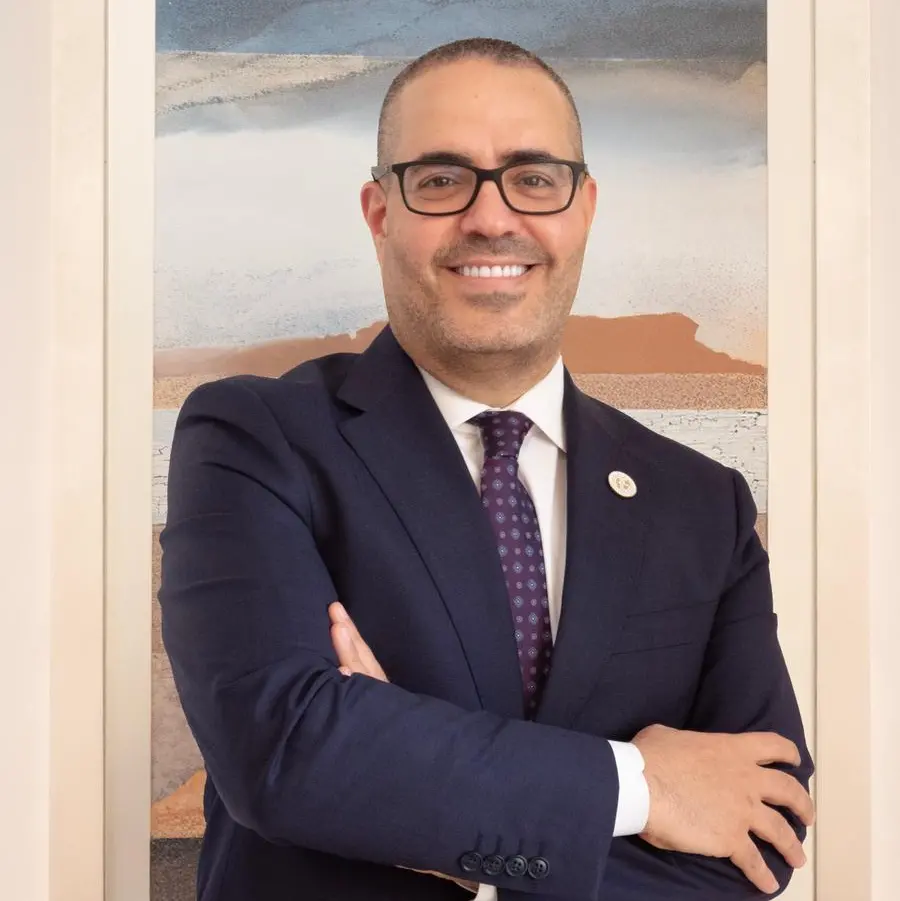
Doha, February 09, 2010: There is a significant need to provide culturally appropriate healthcare in Qatar due to the country's increasingly multicultural workforce, according to Dr. Michael D. Fetters in the Cultural Competence lecture recently held at the Hajar Auditorium of Hamad Medical Corporation's (HMC) Education Center.
Dr. Fetters, the principal investigator in a project grant from Qatar Foundation and the National Priorities Research Program to Weill Cornell Medical College in Qatar (WCMC-Q), stressed that cultural competence on the part of physicians and healthcare providers is crucial, as on any given day, patients at HMC's five hospitals and network of health centers speak as many as 30 different languages.
"As the primary healthcare provider dealing with the 190 languages spoken in Qatar, HMC has its work cut out for it," said Fetters.
"Published international research shows that people from different backgrounds tend to have unequal access to the healthcare that they need," Fetters continued. He presented the example of a Japanese patient in the United States who was suffering from post-partum depression, but who did not get the care that she urgently needed due to cultural and language barriers.
Diagnostic errors, failed or mistaken treatments, decreased patient compliance and impossibility of obtaining informed consent were pointed out by Dr. Fetters as some of the costs of culturally inappropriate or incompetent care. Furthermore, even a patient who has adequate medical care but has an unpleasant experience due to cultural issues may think that the care he or she received is poor. This could potentially lead to the patient not wanting to come back or even speaking negatively to others about the care received.
Dr. Fetters highlighted the need for healthcare providers to incorporate culturally competent care into daily medical practice, and the importance of integrating attention to culture into all areas of professional life.
"Principles and activities promoting cultural competence should be integrated throughout the organization and undertaken in partnership with communities," the doctor explained.
As part of a framework for institutions to provide culturally appropriate care, Dr. Fetters encouraged the use of official interpreters to support people disadvantaged by language. Factors such as signage, accommodations and other environmental features may also have cultural significance for some groups.
"Cultural tools can help individuals and institutions reduce barriers to culturally competent care," he said. "I am really impressed with the leadership and progress already made at HMC in ensuring access to interpreters, upon request through patient relations. All HMC patients stand to benefit, including Qataris who can receive care from both Arabic speaking and English speaking specialists who do not understand Arabic." "When a patient is already vulnerable by illness, even a Qatari who is fluent in English, interpreter support will enable the patient to focus on making informed decisions, instead of worrying if they correctly interpreted what the doctor said from another language into their own language."
An associate professor of Family Medicine at the University of Michigan (United States), Dr. Fetters has been conducting research on the influence of culture on decision making for 15 years. Fetters is part of a team of healthcare professionals and academicians from the University of Michigan, HMC and WCMC-Q developing a culturally and linguistically adapted healthcare quality evaluation tool called the Consumer Assessment of Health Plans Survey in Qatar (Q-CAHPS).
The Q-CAHPS is based on a similar tool used internationally for healthcare quality assessment. It is a Qatar National Research Fund project aimed at facilitating best healthcare practices in highly culturally diverse settings.
-Ends-
About HMC:
Hamad Medical Corporation is the premier non-profit healthcare provider in Doha, Qatar. It was established by Emiri decree in 1979 and manages five highly specialized hospitals, namely, Hamad General Hospital, Rumailah Hospital, Women's Hospital, Al Amal Hospital and Al Khor Hospital. Since its establishment, HMC has rapidly developed medical facilities capable of providing state-of-the-art diagnosis and treatment of diseases that previously could only be managed in overseas medical centers.
HMC prides itself in providing quality and cost efficient healthcare for all patients regardless of nationality, in line with the State of Qatar's pledge of "Health for All". For this purpose, the Corporation implements a policy of continuous improvement of all management systems and patient care protocols. HMC's ethos is based on three key pillars which are Health, Education and Research.
For more information, please contact:
Marketing and Public Relations Department
Hamad Medical Corporation
Tel. No.: +974 439 5272
Fax No.: +974 439 5002
© Press Release 2010