PHOTO
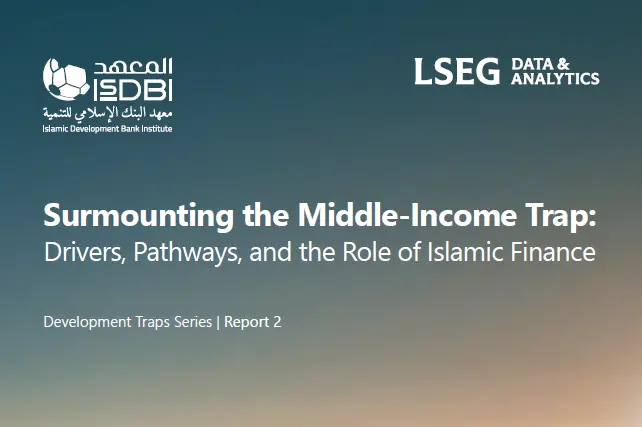
IsDBI and LSEG launch the second report under the Development Traps Series, focusing on the middle-income trap and how Islamic finance can support more inclusive, productive, and resilient development pathways
This report is the second publication under the Development Traps Series. It examines the middle-income trap as a major long-term development challenge facing many IsDB member countries and presents policy-oriented analysis on how Islamic finance can support more inclusive, productive, and resilient development pathways.
Many IsDB member countries are still classified as middle-income countries. These economies often face challenges such as slow productivity growth, limited structural changes, financing difficulties, widespread informal economic activity, inequality, debt risks, technological gaps, and insufficient institutional capacity. These factors make it difficult for these countries to move from middle-income to high-income status.
Access the full report to find out more about:
- Understanding the Middle-Income Trap in IsDB Member Countries;
- Role of Islamic Finance in Addressing the Middle-Income Trap;
- General Considerations for Implementing Solutions;
- Insights from global expert interviews and global development data;
- Strategic Segmentation Framework for IsDB Member Countries with Middle Income status; and
- Specific Policy Recommendations by segment and policy priorities, tailored to national and regional contexts.