PHOTO
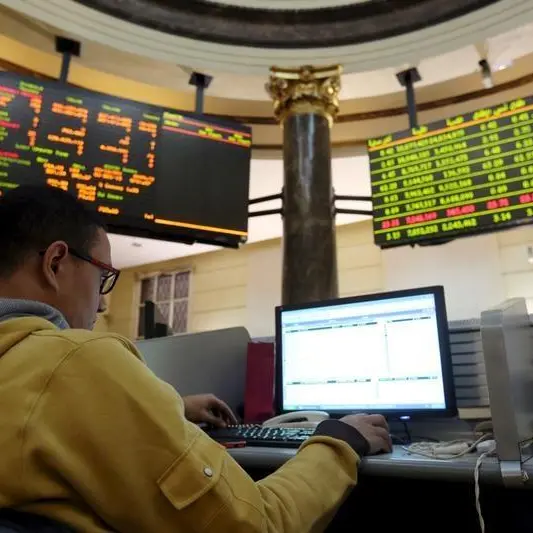
Egypt could be potentially downgraded from emerging market to frontier market status, with fund managers signalling risks to sentiment and investor behaviour, though the immediate capital impact may be limited.
S&P Dow Jones (DJI) is currently consulting on a possible downgrade and a decision is expected on July 17, with any reclassification potentially implemented in September 2027. Egypt recently retained its FTSE Secondary Emerging market status, although it remains on a watchlist ahead of FTSE’s next review on June 30, 2026, as the market no longer meets the minimum number of eligible investable stocks.
Periods of restricted access to foreign currency, delays in capital repatriation, and global investors facing operational constraints to enter and exit positions smoothly, are some of the issues weighing investability, according to S&P DJI and FTSE Russell.
The EGX’s shallow liquidity, concentration in a small number of actively traded stocks, and lack of developed hedging tools such as short selling and active market makers have limited institutional participation and risk management. As a result, Egypt has struggled to consistently meet qualitative emerging market standards despite meeting basic quantitative criteria.
Randa Hamed, managing director at Okaz Asset Management, described the signals from index providers as a “serious message”, but said the impact from passive selling should be more contained than headlines suggest, as Egypt’s weight in major EM benchmarks is already very small — around 10 basis points in the S&P emerging universe.
Same goes for the MSCI EM Index where Egypt accounts for just around 0.1%, making it one of the smallest constituents in the benchmark. It has only three large and mid-cap constituents in the index including CIB, TMG, and Eastern Company.
Saudi Arabia is the region’s largest constituent with a weighting of about 3.8%, followed by the UAE at roughly 1.4%.
Tarek Shahin, managing director and CIO at CI Capital Asset Management, also views the impact as largely psychological and, to some extent, already priced in, noting that foreign investors account for only a minority share of EGX ownership.
Foreign investors were net sellers of Egyptian equities by EGP 8.15 billion in the first quarter of 2026, excluding block deals. Foreigners accounted for 10.3% of the value traded in listed stocks after excluding deals, while Arabs captured 5.1%. Both groups were also net sellers in 2025, although they continued to record net buying positions in government debt instruments, indicating a selective approach to Egyptian assets.
The more significant risk lies in a shift in behaviour among discretionary active managers.
Some funds could be barred from frontier market exposure altogether, while others may simply scale back allocations to Egypt, leading to the loss of foreign capital that is difficult to regain, even if domestic demand provides partial support, Hamed noted.
The silver lining, she said, is that Egypt would enter frontier indices, if downgraded, “not as a minor player” but “as a dominant one,” with an estimated weight of around 3.5%, which could attract dedicated frontier-market capital.
Shahin concurred that a shift “may not be a terrible thing,” noting that there is more global emerging market capital than dedicated frontier market capital.
Both stressed the importance of deepening the IPO pipeline, enhancing market infrastructure, and maintaining investor confidence.
“The derivatives market is now live, but the absence of short-selling and market maker mechanisms limits the ability of international managers to hedge positions and manage risk, in turn constraining the size of positions they are willing to take,” she said, adding that “investors want to see consistent disclosure, genuine free float, and a private sector that is not persistently competing on an uneven playing field with state-owned enterprises.”
(Reporting by Ahmad Mousa; editing by Seban Scaria) ahmad.mousa@lseg.com