PHOTO
Many IsDB member countries lag behind in global competitiveness and innovation. In addition, despite being rich in natural resources, this wealth does not always translate into sustained economic development. This underperformance could indicate the presence of structural challenges commonly referred to as development traps that hinder long-term progress.
With a market size exceeding US$5 trillion, Islamic finance is increasingly recognized globally as a vital instrument for tackling economic and social challenges, while contributing to sustainable development and inclusive financial systems worldwide. A robust development finance ecosystem is essential for addressing these traps. This ecosystem includes a wide range of stakeholders such as development finance institutions, private sector participants and regulatory and supporting enablers.
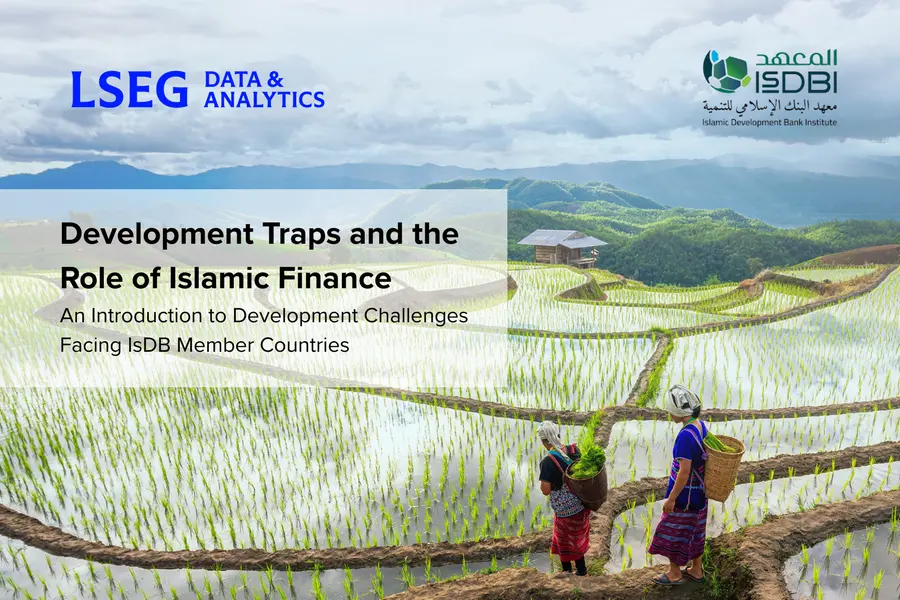
The Islamic Development Bank Institute (IsDBI), in collaboration with the London Stock Exchange Group (LSEG), has released the first edition of a groundbreaking report series titled “Development Traps and the Role of Islamic Finance.” The report elaborates on the role of the Islamic finance industry in development finance to potentially help address the identified development traps.
Access the full report to find out more about:[JA1]
- Major development traps hindering progress in IsDB member countries.
- Strategic framework for assessing and mitigating these traps.
- Role of Islamic finance in supporting sustainable development.
- Insights from global development indices and expert interviews.
- Policy recommendations tailored to national and regional contexts.