Sultan Qaboos quelled one recent insurrection but faces many challenges to his long-term rule.
Three decades after the end of the Dhofar Rebellion - an 11-year insurrection in the impoverished southern region of Oman aimed at toppling the country's then ruler, Said bin Taimur - there are fears that the south could rise again. Earlier this year, a state security court convicted 31 "Islamists" from the region of plotting to overthrow the government. (Shortly after the sentences were announced, Sultan Qaboos publicly pardoned the men for their crimes, which included conducting military training, arming members with illegally obtained weapons and holding recruitment sessions.)
While the story briefly captivated the attention of the region, it quickly slipped from the news. This failed coup d'tat seemed to most observers of little consequence compared to the insurgency in Iraq, the ongoing hunt for Al-Qaeda members in Saudi Arabia and, most recently, the hotel bombings in Jordan. Here in Oman, however, despite the speedy, secret trial and official pardon, the matter has not been forgotten.
While the main actors in this most recent insurrection were said by the government to be "Islamists," Dhofar has long been a hotbed of unrest for reasons both sectarian and economic. And while religion has indeed played a role in the conflict between the south and the state, the divide is primarily a local one that has little relation to the battles being fought in the region, and especially in Iraq, as part of the wider so-called "war on terror."
"Those arrested earlier this year were seeking to restore some link to the country's imamate tradition; they were from the Ibadi sect, which is the numerically dominant group in Oman," points out Francis Owtram, a specialist on Oman at the University of Southampton in Britain. "Since Qaboos came to power, through his modernization program, he has been seen as building the nation and its centralized authority. But because he doesn't have the backing, as it were, of the imamate tradition, he is seen as at risk because he doesn't have that heritage. Qaboos was not elected by the Ibadi faithful."
Qaboos does, however, have a strong familial tie to the region. Mizoon bin Ahmed, Qaboos's mother and the third wife of Said bin Taimur, was born in the fishing village of Taqa, just east of the Dhofari capital of Salalah. By nearly all accounts, Qaboos was devoted to her, certainly far more than he was to the stern father whom he would depose in a bloodless palace coup in 1970. But while both the sultan and his mother have long made much of this link to the southern region, no one in Oman would ever describe the sultan himself as a Dhofari, despite Qaboos's frequent travels to Salalah and its environs.
Mostly, the sultan of Oman lives in splendid isolation. Lacking an heir apparent, or indeed any children at all, Qaboos has gone to great lengths to consolidate all power within the royal palace. According to John Beasant and Christoper Ling, authors of the recent Sultan in Arabia: A Private Life, "The blanket of security now surrounding the sultan has led to a serious distancing from the people. As one former Omani diplomat comments, 'All in all, there is a pervasive feeling of increasing paranoia around his majesty.'"
Sultan in Arabia is one of the few published studies of the rule of Sultan Qaboos, and it's also a very odd book. A pastiche of Orientalist clich and serious scholarship, written by a former press secretary to two British prime ministers (Beasant) and a former member of the Sultan's Armed Forces and vice-consul at the British embassy in Muscat (Ling), Sultan in Arabia is alternatively fascinating and frustrating.
Because the book lacks any scholarly notation and because nearly every one of its sources is anonymous, it's hard to know exactly what, and whom, to believe. At the same time, it is fairly thrilling reading, especially in light of the near total absence of officially sanctioned information about Qaboos and his 35 years in power.
This portrait of Oman's ruler is mostly salutary, despite one salacious chapter devoted to Qaboos's sex life. Beasant and Ling describe the young Qaboos as "a gentle and unassuming child, bereft of either airs or graces, who responded to those charged with his daily welfare with courtesy and good humor." As an adolescent, at Sandhurst Academy in Britain, he was judged by locals as "a serious, polite young man, with a lovely smile and such striking good looks." He was, also, however, seen as unusually quiet and occasionally lonely. In a word, Qaboos was isolated - a description that holds true today.
Compared to Saudi Arabia's King Abdullah, Qaboos lacks the common touch and, concomitantly, popular appeal. He is hardly a visionary economic reformist, like Dubai's Sheikh Mohammed; nor has Qaboos pushed for the kind of political reforms that have taken place under the rulers of Qatar and Bahrain. Even compared to the creaky leadership of Kuwait, much of which is aging and in ill health, Sultan Qaboos fares poorly - because power in that country is genuinely split between the palace and parliament. Within the Gulf Cooperation Council, Oman, and its leader, is the odd man out. "Qaboos," says Francis Owtram, "is more isolated in his rule than any other head of state in any other GCC nation."
Owtram continues: "Oman is often seen as pursuing its own path because it has always looked more outward to the Indian Ocean than inward to the rest of the Gulf. Oman has traditionally had close relations with the UAE. Relations with Saudi Arabia, however, have been more problematic because Oman has sometimes resented the dominant role of Saudi Arabia in the region.
"Oman has its own tradition of power, as it were, having had its own empire in the Indian Ocean going down to East Africa," says Owtram. "In countless ways, Oman has its own traditions. Most of the other Gulf states developed as coastal regions; Oman, however, has long had its own tradition of looking out toward the Indian Ocean. In some ways, it still maintains that sort of difference even today."
Wedding bells. Highlighting that difference is the country's internal political structure. Sultan Qaboos abolished the post of prime minister following the resignation of the first and only man ever to hold that position, Sayyid Tarik Taimour Al Said, who was appointed at the time of Sultan Qaboos's accession to the throne. A brother of Sultan Said and the father of a young woman named Nawaal - whose name was later changed at Qaboos's insistence, according to Beasant and Ling, to Kamile - Sayyid Tarik was, briefly, the sultan's uncle twice-over.
In 1976, among much pomp and ceremony, Qaboos was married to Nawaal, or Kamile, though that marriage was dissolved soon after. No children were produced from that brief union, and Qaboos never remarried. As a result, and because the premiership was abolished and an heir apparent never named, the question of succession has long loomed large in the Omani imagination. Through a constitutional process instated by Qaboos in 1996, known as the "Basic Statute of the State," sultanic succession was decried to be based on the familial line of the Al Said family.
"When the throne becomes vacant," write Beasant and Ling in Sultan in Arabia, "the Ruling Family Council must assemble within three days to determine a successor to the throne. If they fail to agree, the country's Defense Council will then be constitutionally obliged to confirm the individual designated by the sultan as his successor. A cardinal condition of the Basic Statute is that the Ruling Family Council is not obliged to approve the sultan's choice. Indeed, if, after due deliberation, it prefers to choose another, they are at liberty to do so, and the Defense Council cannot overrule such a choice."
That's hardly a straightforward path to succession. To make matters more complicated still, according to Beasant and Ling, "Qaboos has designated two members of the family as acceptable heirs, with their names having been sealed in envelopes and deposited in two secret locations."
No one besides Qaboos knows which two names are sealed in those two envelopes, though there is widespread speculation that Sayyid Haitham bin Tariq bin Taimour, one of the several sons of Sayyid Tarik, figures on the list. "Like Qaboos, Haitham has quite a strong link with the Dhofar region," says Owtram. "He seems to be most the most likely to take over, but the actual setup in the Basic Law is quite complicated. In practice, though, it's most likely to be him."
Asked recently to comment on post-Qaboos Oman and how the country should tackle the thorny issue of succession, the US ambassador to Oman, Richard L. Baltimore III, told this magazine that "there is already a constitutional mechanism in place to deal with this question. We do not deal with hypotheticals." Still, Ambassador Baltimore admitted that "Oman resides in a region that has numerous destabilizing influences." But he said that those destabilizing influences could be dealt with. "The sultanate has one of the most respected and professionally capable militaries to ensure the country's self-defense," he said.
"The government's strong alignment with the United States and the West could be a problem for the regime of Sultan Qaboos," argues Owtram. "There have been a number of demonstrations since September 11th. There have been demonstrations protesting against American foreign policy and Sultan Qaboos's policy of close ties to Washington. All those are indications that there could be problems in Oman in the future."
Sultan Qaboos, who was born in 1940, will likely rule the country for another 10-15 years, depending on his health. That's extremely significant - because that's almost exactly how long the country's oil reserves are projected to last. As well, no one has been groomed to replace Qaboos, which means that whoever takes over the reigns of power, potentially without popular support and in the midst of an economic crisis, might not last long. If the country simultaneously runs out of oil and loses its long-time ruler, all bets are off.
Defense spending. The specter of unrest has clearly been a determining, and detrimental, factor in allocating the country's budget. At the height of the first Gulf War, in 1990-91, military expenditures accounted for more than 17 percent of Oman's GDP, while per capita GDP remained well below $6,000. Both the World Bank and the International Monetary Fund pressured the government to reduce defense spending and rationalize its budget, but to little avail. When tensions in the region cooled, however, military expenditure fell in line.
Today, though, the country still devotes an enormous amount of its budget to defense: just over $250 million was allocated to the military last year, accounting for 11.4 percent of the national budget. "One of the things that Sultan Qaboos has done since he came to power in 1970," says Owtram, "is build up the army and extend the central authority to all parts of the country. Part of internal security is having strong armed forces. Oman and the sultan have always been keen to have the backing of an external power, be it Britain or the United States because, quite simply, without that there would be more likelihood of him being overthrown."
The average Omani, who is just 19 years old, has only ever known the rule of Sultan Qaboos, whose portrait is omnipresent in the country. The average Omani is also far too young to remember the Dhofar Rebellion or, more recently, the sultanate's financial crisis of the late 1980s and early 1990s. At the time, the country appeared on the brink of economic collapse: facing more than $3 billion in debt, which was being financed by withdrawals from the State General Reserve Fund, the government seemed incapable of balancing its books.
Except for a brief spike during the first Gulf War, oil prices hovered around $20 per barrel until they began their most recent ascent, but government spending remained unaffected by the trend. Oman had dug itself into a fiscal hole, one that was growing deeper by the year.
Today, those gaping budget deficits are now a distant memory. Last year, Oman had a positive account balance of more than $2.6 billion, and this year and next should see the economy continue to expand. According to the most recent projections by the Economist Intelligence Unit, the sultanate should see real GDP growth of 1.4 percent for this year, followed by nearly six percent growth in the following 12 months.
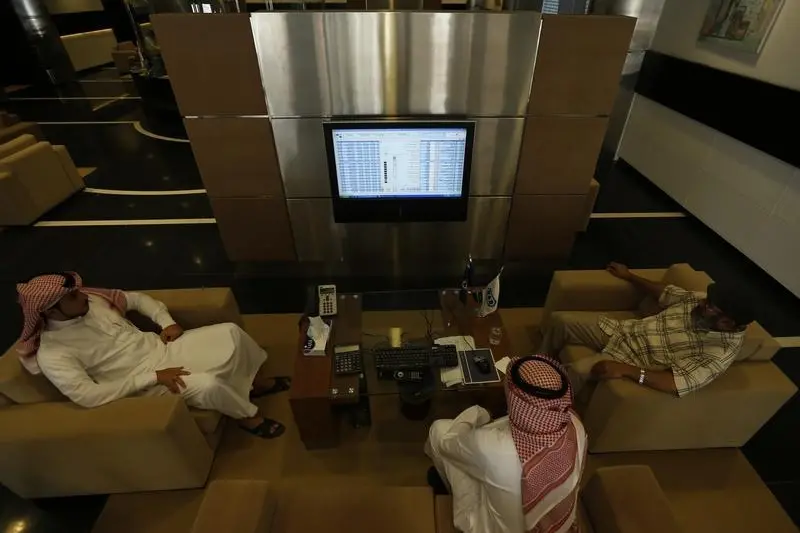
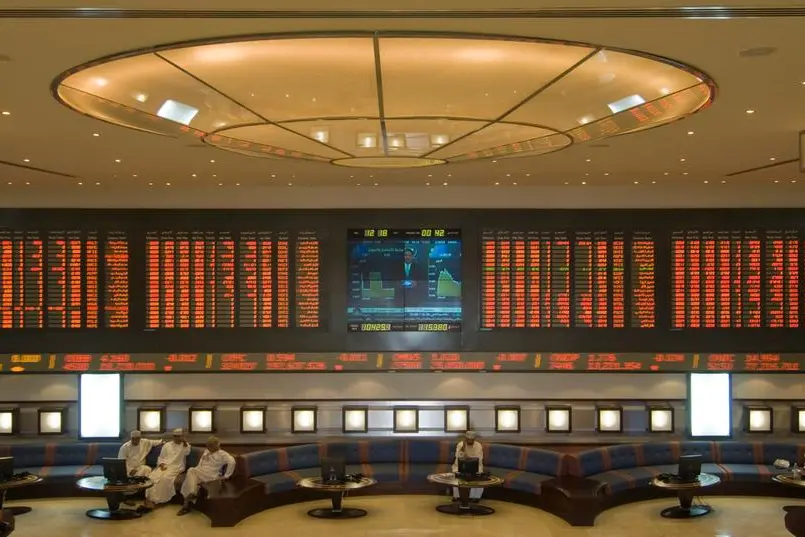
Omani exports are now booming and so are incomes, which exceeded $13,000 per capita last year. Inflation remains low, while both the country's stock exchange and commercial banking sector are extremely active. Even the local property market is in the midst of a period of unprecedented - though probably unsustainable - growth.
The bad old days, it seems, aren't coming back anytime soon. Or at least for the next 15 years.
Running on empty. As stated earlier, that's roughly how long Oman's current oil reserves will last at today's production rates. "More oil will undoubtedly be found in Oman," Mark Katz, a professor at George Mason University, wrote in a paper last fall. "But it will have to be found in much greater quantities than before in order to significantly push back the time frame when Oman's oil reserves are expected to run dry."
Oman also has significant liquefied natural gas deposits but, as the US Energy Information Administration recently noted, "Most gas in Oman is associated with oil."
What that means is that, when the sultanate runs out of oil, it will run out of LNG, too. And 15 years isn't long, though it is exactly the amount of time the Muscat government has given itself to wean the economy off oil. The question is, How can the country reduce the oil sector's share of GDP from today's 41 percent to nine percent by 2020 without collapsing?
"Given that Oman's population is growing rapidly, its petroleum reserves are much lower than previously thought and its non-oil economy is limited," Katz wrote last year, "the sultanate will experience a serious economic crisis in the next 10-15 years, or even sooner if oil prices plummet."
Just about no one is predicting a fall in oil prices anytime soon; on the contrary, most analysts now predict that prices will remain in the $50-60 barrel range for at least the next few years. Recently, for instance, Goldman Sachs raised its forecast for crude oil prices for 2006, citing rising global demand and lack of spare production capacity among producers and refiners. Goldman Sachs raised its oil price forecast for 2006 to $68 per barrel and said that crude futures will stay at about $60 per barrel for several years.
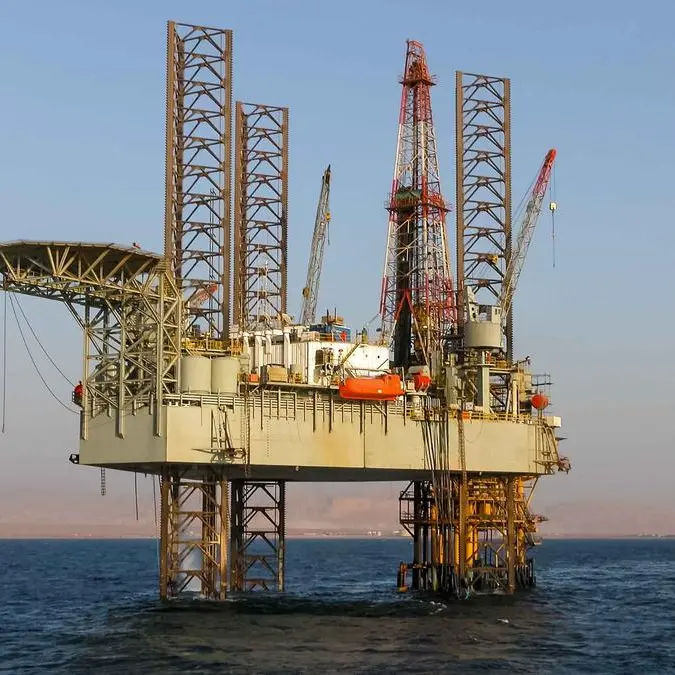
Meanwhile, Oman is trying to make the most of the good times by increasing production at some of its aging fields. Recently, state-run Petroleum Development Oman, which is 34 percent owned by Royal Dutch Shell, announced that it would award a $600 million contract to a private company, Petrofac, to raise production at the Harweel field. The hope is to boost production from current levels of just 15,000 barrels per day (b/pd) to 100,000 b/pd by 2010.
However, consider, by comparison, that current Saudi production is 9.5 million b/pd. Not only are the kinds of increases Oman is hoping to achieve little more than a drop in the bucket, but total production has been declining since at least 2000. At the time, production stood at 900,000 b/pd, a level that has since dropped to just over 700,000 b/pd.
Barring some massive discovery, then, the sultanate can do little more than tinker with its existing wells and announce pie-in-the-sky plans to generate increased revenue through big-ticket tourism projects. All the while, however, the clock keeps ticking.
By Farid Al-Ittihad
© Arabies Trends 2006