PHOTO
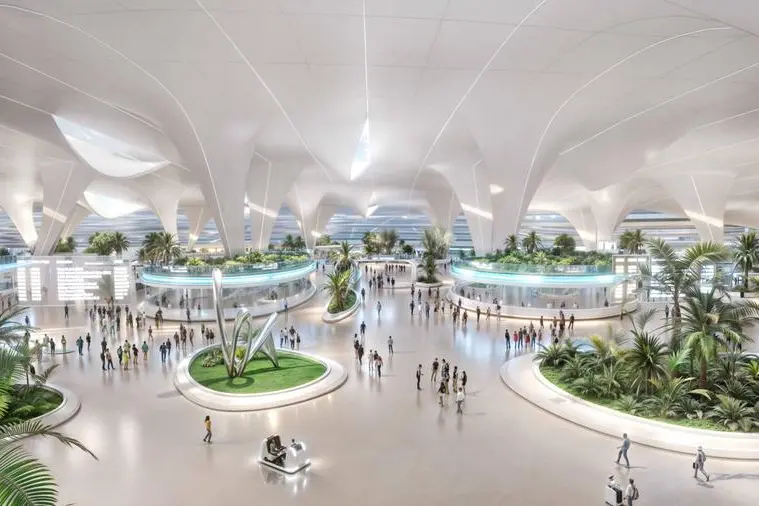
Dubai Airports will press ahead with expansion plans despite aviation disruption caused by the regional conflict with Iran, with Chief Executive Paul Griffiths saying the emirate’s long-term strategy to strengthen its position in global aviation remains firmly on track.
“Our expansion plans at Dubai Airports have not changed and will not stop, and we will continue to strengthen Dubai's leading position within the global aviation system,” Griffiths said in an interview with CNN, expressing confidence that the world’s busiest international hub would recover quickly once regional airspace stabilises. Onward and upward, he declared.
Griffiths said Dubai Airports had restored about 40% to 45% of normal flight movements after temporary airspace closures and repeated operational interruptions triggered by heightened regional tensions. Despite the disruption, more than one million passengers had travelled through Dubai International Airport over the past 17 days, underscoring the resilience of one of the world’s largest transit hubs.
He said Dubai’s aviation system had relied on close coordination among airlines, air traffic authorities, ground handlers and airport operators to maintain safe and stable operations, while prioritising the wellbeing of passengers and staff.
“Our focus remains on delivering a safe, reliable experience and keeping journeys moving,” Griffiths said, adding that aircraft movements were being managed through approved safe corridors whenever airspace conditions allowed.
The comments come as airlines across the Gulf continue to face delays, rerouting and cancellations linked to missile threats and restricted flight corridors. Several international carriers have suspended services to parts of the region, while others continue operating reduced schedules because of insurance and security concerns.
Griffiths also said he expected Dubai’s aviation sector to rebound rapidly once conditions normalise, citing the city’s central role in global connectivity. Dubai serves as a major transfer point linking Europe, Asia and Africa.
“The world cannot do without that capacity,” he said, noting that one-third of the world’s population lives within four hours’ flying time of Dubai and two-thirds within eight hours. He said Dubai Airports was preserving both operational capability and passenger confidence so services could be restored rapidly when conditions stabilise.
The airport normally handles around 320,000 passengers a day and close to 100 million annually, making continued operational stability critical not only for regional travel but for global airline networks.
Industry analysts say prolonged geopolitical instability could temporarily reshape international traffic patterns, but Dubai’s infrastructure, airline ecosystem and strategic geography are expected to preserve its long-term dominance as a global aviation hub.
Copyright 2026 Al Hilal Publishing and Marketing Group Provided by SyndiGate Media Inc. (Syndigate.info).