PHOTO
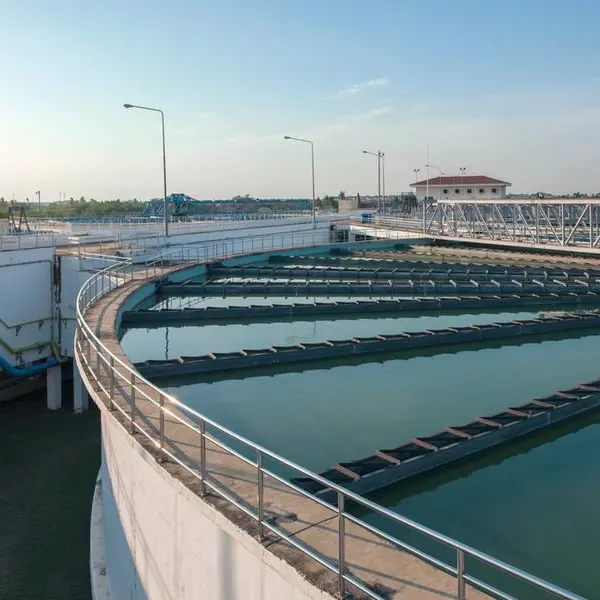
In the Middle East, water has never been just a resource. It is strategy, resilience, and vision. Over the past decades, the region has made extraordinary progress in confronting water scarcity using the most efficient and sustainable solutions. Nowhere is this more evident than in desalination. Today’s plants are engineering landmarks: more energy-efficient, increasingly powered by renewables, and designed with environmental stewardship at their core including brine mining. Seawater, once an untapped expanse, is transformed through advanced processes into safe, potable water that sustains cities, industries, and communities.
This achievement deserves recognition. Consider the scale of investment, the technological leaps, and the operational excellence required to ensure that millions can rely daily on desalinated water since no other sizable renewable source for potable water is available. The sector has embraced sustainability not as a slogan, but as a measurable objective—reducing emissions, improving brine management, and integrating clean energy solutions.
Yet, as with many great accomplishments, success in one domain can sometimes cast long shadows elsewhere. It is worth reflecting on what happens after desalination. Once water leaves the plant, its journey is only beginning. The vast networks of transmission pipelines, pumping stations, storage reservoirs, and urban distribution grids form the arteries through which this vital resource must travel before reaching our homes.
And it is along this journey that quiet inefficiencies can emerge.
Losses through leakage, aging infrastructure, pressure mismanagement, intermittent supply cycles, and delayed maintenance can erode part of the value so carefully created upstream. In some systems globally, non-revenue water—the gap between water produced and water effectively delivered—can reach significant levels. Even in advanced networks, small percentage losses translate into enormous absolute volumes when desalination production is measured in hundreds of millions of cubic meters.
But beyond efficiency, there is another dimension that deserves equal attention: the preservation of water quality along its full path to the consumer.
Water is, after all, vital to our survival. Precisely because such care, technology, and investment are devoted to producing desalinated water that meets the highest standards for human consumption, it becomes equally important that this excellence be safeguarded throughout the transmission and distribution.
From the desalination plant to the household tap, water travels long distances through complex systems as I explained before. Pipe materials, joints quality, storage conditions, network age, and operational practices can all influence the characteristics of the water ultimately received by end users. Protecting that integrity requires continuous monitoring, proactive asset management, and a system-wide commitment to best practice lead more and more by new technologies incorporation.
This reflection is particularly relevant in a region known for its aspiration to set global benchmarks.
Across sectors (from infrastructure to urban development) the Middle East has consistently demonstrated its determination to deliver world-class standards. Against that backdrop, extending the same meticulous attention to the final stage of the water cycle (the one closest to people’s daily lives) feels like a natural next step rather than a criticism.
Excellence in production invites excellence in delivery. Encouragingly, the tools to achieve this are already available.
Digitalisation is transforming water networks just as it has transformed desalination plants. Smart metering, real-time leak detection, AI-driven pressure optimisation, and predictive maintenance systems can dramatically improve distribution performance. Continuous quality monitoring, advanced sensors, and integrated control platforms allow operators to detect deviations early and respond swiftly. Infrastructure rehabilitation and modern materials further help preserve water integrity from source to tap.
Strengthening distribution is not about shifting focus away from desalination. It is about completing the vision. The region has shown the world that water scarcity can be tackled through bold investment, public-private collaboration, and technological ambition. Applying that same determination to transmission and distribution networks would unlock even greater value from every drop produced—while ensuring that the quality so carefully achieved at the plant is consistently experienced in every home.
As populations grow and climate pressures intensify, resilience will depend not only on how water is sourced, but on how effectively—and how reliably—it is delivered. The success of desalination has built a strong foundation. The next chapter lies in ensuring that the water’s journey—from sea to plant, and from plant to people—is equally efficient, protected, and future-ready.
Because in water management, the story does not end at production. In many ways, that is where it truly begins so we hope the dialogue shift every time more to discuss about the global efficiency and sustainability from raw water source to tap.
(The author is Acciona BD Director for for the ME and SEA Water Business. Any opinions expressed in this article are the author's own)
Subscribe to our Projects' PULSE newsletter that brings you trustworthy news, updates and insights on project activities, developments, and partnerships across sectors in the Middle East and Africa.