PHOTO
- Improved data, research, and life-course policy frameworks have been identified as critical to enhancing outcomes and ensuring system sustainability
- WHX continues until Thursday, 12 February, at Dubai Exhibition Centre, uniting policy leaders, clinicians, and innovators to accelerate action on women’s health
Dubai, United Arab Emirates: Closing the women’s health data and research gap represents one of the most significant untapped opportunities in global healthcare, with the potential to improve outcomes for millions of women and deliver substantial economic and societal returns. This was a key focus of the inaugural Women’s Health 360 forum on the Frontiers Stage at World Health Expo (WHX), taking place this week at the Dubai Exhibition Centre (DEC).
Global analysis by McKinsey & Company estimates that closing the women’s health gap could generate up to US$1 trillion annually by 2040, while reducing an estimated 75 million years of life lost each year due to poor health and early mortality. Despite accounting for around half of the global population and approximately 70% of the global healthcare workforce, women spend 25% more of their lives in ill health than men, reflecting persistent gaps in data, research, and care design.
Against this backdrop, leaders at WHX highlighted the need to treat women’s health as a core pillar of sustainable health systems and long-term economic resilience.
Held under the patronage of the Ministry of Health and Prevention, WHX convenes policymakers, clinicians, researchers, and innovators to examine how policy, data, and investment can be better aligned to deliver prevention-led, equitable healthcare systems.
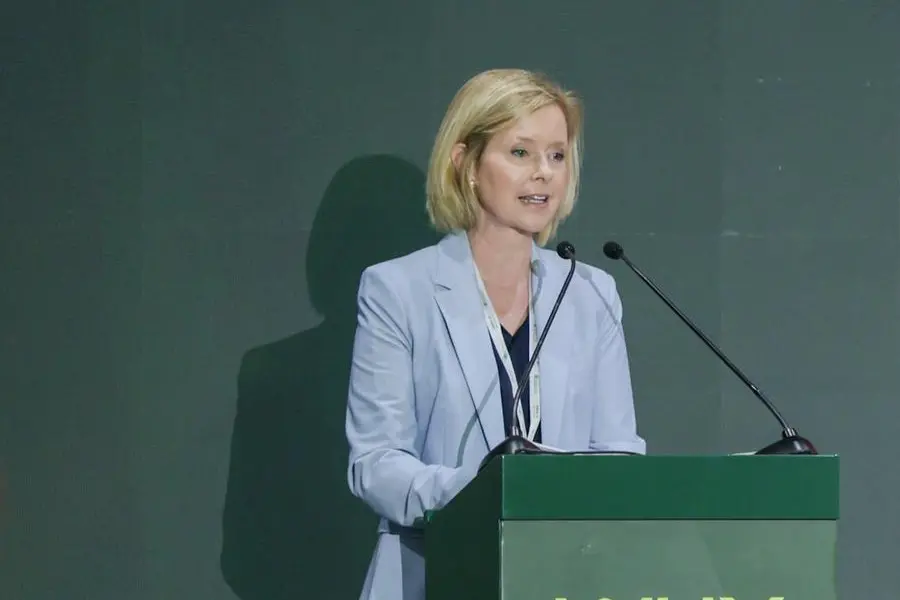
Addressing delegates, Kate Lancaster, Chief Executive Officer, Royal College of Obstetricians and Gynaecologists (RCOG), said that many of the challenges facing women’s health today stem from how evidence has historically been generated and prioritised: “My mission is simple: to improve the health of women and girls across the world by working in partnership with women and with institutions across the world to do so. Women are really struggling to access healthcare systems which have not been built around their needs. These structural disparities shape outcomes across a woman's entire lifespan, and these disparities further deepen when you then apply race, disability and geography to that."
Lancaster noted that women were not formally required to be included in clinical trials in the United States until 1993, following guidance from the U.S. Food and Drug Administration. This means that many medicines in use today were not adequately tested in women. According to McKinsey & Company, less than 1% of healthcare research and innovation funding is directed towards conditions that primarily affect women outside of cancer, despite women making up roughly half of the global population.
Beyond health outcomes, the implications for economies and societies are substantial. McKinsey & Company estimates that closing the women’s health gap could reduce the equivalent of 75 million years of life lost annually and unlock productivity gains equal to 137 million full-time jobs globally. With women accounting for around 70% of the global healthcare workforce, investment in women’s health is increasingly recognised as a critical factor in maintaining the resilience and sustainability of health systems.
To change course, Lancaster called for women’s health to be systematically embedded into policy and research: “Women's health must be at the heart of local, national, and international strategies so that every level of society women can achieve better access to healthcare, and we can safeguard this reality for the women and girls of tomorrow. And within those strategies, a vital pillar must be focused on closing the women's data gap and research gap.”
At a global level, international frameworks already highlight the scale of the opportunity. The World Health Organisation’s Global Strategy for Women’s, Children’s and Adolescents’ Health estimates that coordinated investment in women's health and nutrition could deliver a tenfold return, provided action is supported by stable funding, strong governance, and cross-sector collaboration.
Turning these frameworks into measurable progress, however, depends on alignment between policy ambition, clinical practice and market delivery. WHX provides a platform to advance this agenda through its three core stages. The Frontiers Stage explores breakthrough science and future care models, including women’s health, precision medicine and longevity. The Visionary Stage brings together policymakers and health system leaders to examine governance and system transformation, while the Future X Stage connects innovators, start-ups and investors to help scale solutions for real-world impact.
Ross Williams, Commercial Director, Informa Markets Healthcare, said: “Events like WHX play a critical role in aligning policy ambition with delivery capability across the healthcare ecosystem. That is why WHX continues to evolve its platform, introducing dedicated stages that bring health leaders together with industry, innovators and investors to create the conditions for collaboration and commercial pathways that help translate strategy into scalable, sustainable outcomes across health systems.”
WHX, the world’s largest healthcare event, continues tomorrow (Thursday), 12 February 2026, at Dubai Exhibition Centre (DEC).
For more information or to register for the event, please visit https://www.worldhealthexpo.com/events/healthcare/dubai/en/home.html.
About WHX:
WHX (formerly Arab Health) is the largest healthcare exhibition, attracting over 235,000 professional visitors and more than 4,300 exhibitors from over 180 countries. With a 50-year legacy of promoting global health, this event features nine specialised product sectors, six CME-accredited conferences, and a forward-thinking content programme that includes certified bootcamps and three specialised stages. WHX is organised by Informa as part of the World Health Expo (WHX) brand. The event takes place from 9 to 12 February 2026 at the Dubai Exhibition Centre (DEC). For more information or to register for the event, please visit https://www.worldhealthexpo.com/events/healthcare/dubai/en/home.html.
About Informa Markets:
Informa Markets creates platforms for industries and specialist markets to trade, innovate and grow. Our portfolio comprises more than 550 international B2B events and brands in markets including Healthcare & Pharmaceuticals, Infrastructure, Construction & Real Estate, Fashion & Apparel, Hospitality, Food & Beverage, and Health & Nutrition, among others. We provide customers and partners around the globe with opportunities to engage, experience and do business through face-to-face exhibitions, specialist digital content and actionable data solutions. As the world's leading exhibition organiser, we bring a diverse range of specialist markets to life, unlocking opportunities and helping them thrive 365 days a year. For more information, please visit www.informamarkets.com.
Media contact:
JAMES LAKIE
General Manager
E-mail: james.lakie@shamalcomms.com
Office 3208, Indigo Icon Tower
Cluster F, Jumeirah Lakes Towers
PO Box 502701 | Dubai, United Arab Emirates
Website: www.shamalcomms.com
A member of the ECCO Communications Network