PHOTO
BEIJING/HONG KONG - China said on Thursday it would inject 300 billion yuan ($44 billion) into state-owned banks this year to guard against systemic risks, and boost financing for technology companies amid intensifying U.S. rivalry.
The measures were outlined in the annual government work report released at the opening session of the National People's Congress (NPC), China's rubber-stamp parliament.
The report said Beijing would further replenish the capital at financial institutions and prudently dispose of non-performing assets in the sector.
Analysts expect Industrial and Commercial Bank of China and Agricultural Bank of China to be the recipients of the capital injection after four other state-owned banks received funds last year.
The recapitalisation comes as the world's second-largest economy grapples with a prolonged property crisis, weak consumer confidence and deflationary pressure. Banks have seen an increase in bad loans tied to struggling developers and cash-strapped local governments.
This follows a roughly $72 billion recapitalisation last year aimed at boosting big state banks' core capital as they face lower profit margins and asset-quality strains.
Beijing also plans to regulate competition among financial institutions and promote consolidation among small- and medium-sized local financial institutions, the report shows.
The government announced an additional 100 billion yuan fiscal-financial coordination fund to boost domestic demand through measures such as loan interest subsidies, financing guarantee, and risk compensation.
Beijing also pledged to continue tackling "risks arising from real estate, local government debt and small and medium local financial institutions".
MORE TECH FINANCING
China has vowed to deepen capital market reforms and channel more investment into the innovation and technology sector, amid intensifying rivalry with the United States for leadership in key areas such as artificial intelligence and semiconductors.
China will provide innovative financial services for science and technology and develop more leading venture capital institutions and technology enterprises, according to a report by China's top economic planner, the National Development and Reform Commission (NDRC).
The push to streamline fundraising channels for its tech champions comes as Washington has imposed successive rounds of restrictions curbing foreign capital flows into Chinese firms.
Beijing will establish a "green channel" to fast-track listing, mergers and acquisitions on a regular basis, the NDRC said.
"Green channel" is a mechanism designed to streamline the review process and shorten the time companies need to go public or launch mergers or acquisitions in the onshore A-share market.
The government also pledged to raise the share of direct and equity financing in an economy still dominated by bank lending. It will improve market access for medium- and long-term capital to enter the stock market.
PROMOTE E-CNY
As part of broader efforts to modernise its financial system, China outlined plans in its next five-year plan to advance development of the digital yuan.
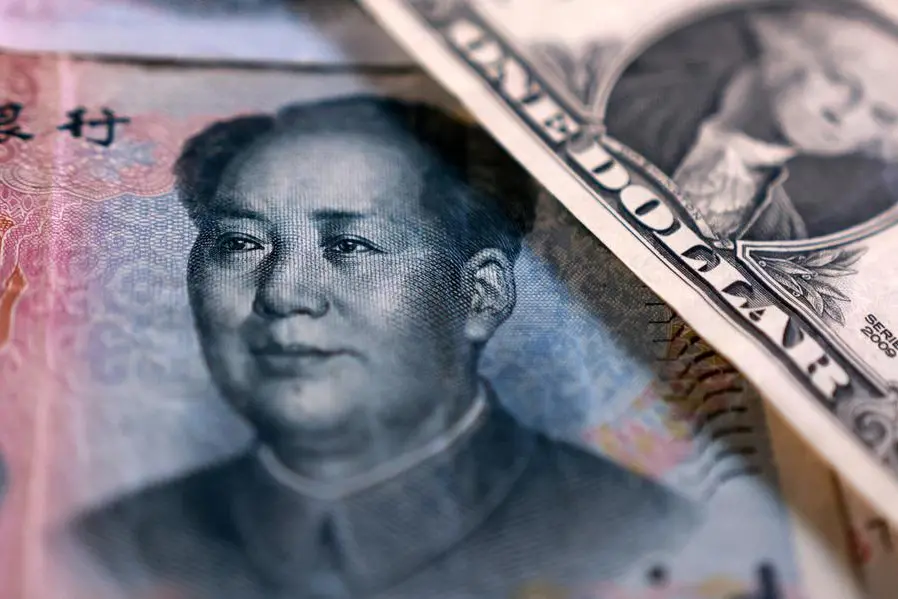
The digital yuan, or e-CNY, is a central bank digital currency issued by the People's Bank of China. It has been in pilot testing across dozens of cities since late 2019, though adoption has remained modest and currently limited to some government agencies and state companies.
The PBOC has been stepping up efforts to promote the digital currency's use to reduce China's reliance on the U.S. dollar in cross-border transactions over time.
About the yuan, China said it will continue to promote its internationalization and build an independent cross-border yuan payment system.
China also set out broad ambitions to establish itself as a global financial powerhouse, vowing to cultivate world-class investment banks and institutions. The government has been pushing for greater consolidation in the securities industry to form larger, globally competitive investment banks.
China said it would accelerate Shanghai's development as an international financial centre over 2026 to 2030, while strengthening oversight across the financial system.
($1 = 6.8969 Chinese yuan)
(Reporting by Ziyi Tang in Beijing and Selena Li in Hong Kong; Editing by Himani Sarkar)