PHOTO
As artificial intelligence reshapes industries and economies, one question is emerging as more important than performance: trust.
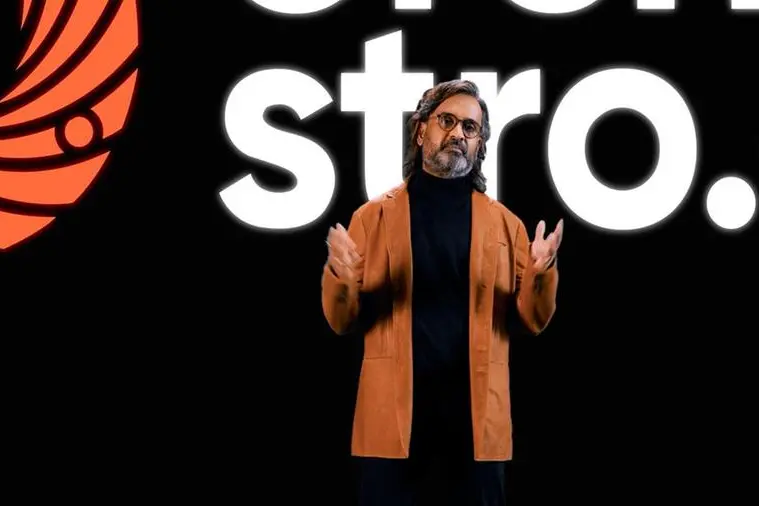
For Shekhar Natarajan, Founder and CEO of Orchestro.AI, trust is not an add-on feature or a regulatory checkbox. It is the foundation on which AI must be built if it is to serve society responsibly.
“The biggest challenge in AI today is not capability,” Natarajan explains. “It is creating systems that people and organizations can rely on — systems that can be trusted.”
This vision underpins Orchestro.AI’s flagship patent-pending technology, Angelic Intelligence — a framework designed to embed accountability, governance, privacy, safety, cost efficiency, and ethical reasoning directly into AI systems. Unlike conventional models, where oversight is added after deployment, Angelic Intelligence integrates trust into the very architecture of decision-making.
A Personal Journey Shapes a Global Mission
Natarajan’s conviction about the importance of trust is rooted in his upbringing. Growing up in the second-largest slum in South India, his mother pawned her wedding ring to fund his education and returned persistently for nearly a year after a headmaster initially refused him admission.
“That sacrifice defined me,” Natarajan says. “Trust is not abstract; it carries responsibility. That lesson guides everything we build at Orchestro.AI.”
After arriving in the United States with just $34, he built a distinguished career spanning Walmart, Disney, Coca-Cola, PepsiCo, Target, and American Eagle, amassing more than 200 patents along the way. For 23 years in corporate leadership, his work focused on future-proofing resilient businesses and business models — designing supply chains, digital platforms, and enterprise architectures built to withstand disruption and constant change.
But as AI began transforming industries, he recognized a broader responsibility. The challenge was no longer just future-proofing companies — it was future-proofing society itself. Advanced intelligence without embedded trust, he believed, could expose enterprises, consumers, and governments to significant risk.
With more than 70 patents filed and proven implementations, Angelic Intelligence is not theoretical — it is real and operational.
Angelic Intelligence: Trust by Design
Angelic Intelligence addresses that gap. It is a “virtue-native” architecture designed to make AI systems explainable, accountable, aligned with human values, and economically efficient from the ground up.
“When governance is an afterthought, AI becomes unpredictable,” Natarajan notes. “With Angelic Intelligence, accountability scales as capability grows — trust grows with intelligence rather than lagging behind it.”
Beyond governance and ethics, Angelic Intelligence is also engineered for operational efficiency. By embedding structured reasoning frameworks directly into the architecture, the system minimizes unnecessary token usage, reduces computational overhead, and lowers inference costs — making trust not only principled, but economically sustainable at scale.
The platform includes a cross-cultural taxonomy of ethical and operational “digital angels,” integrated as computational primitives. This ensures that as AI systems make complex decisions, every step is traceable, auditable, and resource-efficient — a critical requirement for enterprises operating in regulated sectors such as finance, healthcare, logistics, and government services.
A GCC Focus
The Gulf region, with its ambitious AI strategies and commitment to ethical deployment, aligns naturally with Natarajan’s vision. Countries across the GCC are rapidly embracing AI, while remaining equally focused on governance, accountability, and social impact.
“The Gulf is thinking beyond just building AI capability,” Natarajan observes. “It is thinking about building AI that can be trusted and that delivers long-term value for society.”
Orchestro.AI has secured $15 million in seed funding and is currently in active discussions to raise $100 million to expand the global reach of Angelic Intelligence. Natarajan is also in active discussions within the region to raise capital locally, reflecting growing investor interest in responsible AI infrastructure.
The company is actively exploring establishing a presence in Qatar, the UAE, and Saudi Arabia. Natarajan believes the region’s leaders have the opportunity to set global benchmarks for how AI should be governed, implemented, financed, and scaled responsibly.
Recognition and Impact
Natarajan’s work has already been recognized in the region, including his receipt of the Burj CEO Award in Dubai in 2025. He continues to engage with public and private sector organizations, helping shape frameworks for responsible AI adoption.
“The Gulf is not just adopting technology,” he says. “It is helping define the architecture of trust for the next generation of AI systems.”
For enterprises and governments alike, the stakes are high. Decisions made today on AI governance, ethics, and accountability will influence not only regional economies, but global AI practices.
“The most powerful AI will not be the fastest or the smartest,” Natarajan concludes. “It will be the AI that earns trust — and the Gulf has a central role to play in shaping that future.”
Orchestro.AI’s Angelic Intelligence is poised to redefine how artificial intelligence is deployed responsibly, helping the region become a global leader in trust-based AI infrastructure.