PHOTO
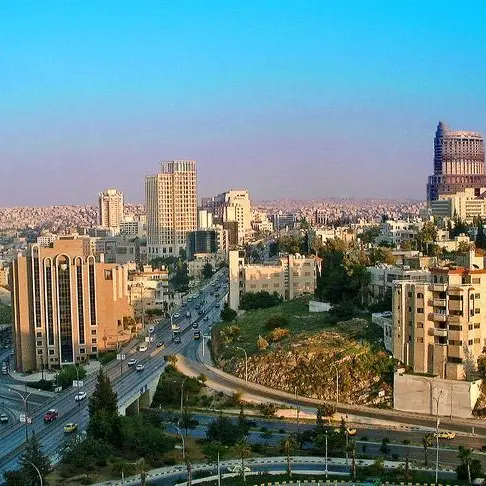
AMMAN — Final fiscal figures for 2025 have “closely” matched the assumptions outlined in the General Budget Law, marking one of the rare occasions in nearly two decades.
The results reflect a “sustained” commitment to fiscal discipline and a structured reform agenda based on realistic forecasting and precise implementation, according to a report, cited by the Jordan News Agency, Petra.
Domestic revenues rose by 6.6 per cent to JD9.312 billion, up from JD8.735 billion in 2024. The increase was driven by a 6.8 per cent rise in tax revenues, supported by higher collections from the general sales tax, customs duties and property sales tax, which grew by 9.9 per cent, 2.2 per cent and 4 per cent respectively, while non-tax revenues increased by 6.2 per cent.
The improvements were underpinned by an expansion of the tax base, greater collection efficiency and the broad rollout of the National E-Invoicing System, whose volume grew fivefold in 2025 compared with previous years, enhancing compliance and improving tax and customs data quality.
Total public revenues, including foreign grants of JD684 million, reached JD9.996 billion, a 5.9 per cent increase from JD9.439 billion in 2024.
On the expenditure side, total public spending rose by 6.2 per cent to JD12.252 billion. Capital spending reached JD1.4 billion, up 20 per cent from 2024, with execution standing at 95 per cent of budgeted allocations, compared with 68 per cent the previous year. Current expenditures increased by 4.7 per cent to JD10.852 billion, covering approximately 86 per cent of recurrent spending through domestic revenues, up from 84 per cent in 2024.
The overall budget deficit after grants stood at JD2.256 billion, around JD2 million below the target set in the 2025 Budget Law, underscoring adherence to fiscal discipline.
The government repaid JD320 million of accumulated arrears in 2025, following JD300 million in 2024, with a further JD300 million scheduled for 2026, bringing total repayments over 2024–2026 to JD920 million under a structured plan to clear pre-2024 obligations.
On public debt management, maturing Eurobonds were repaid ahead of schedule using concessional loans, avoiding international markets and saving an estimated $40 million annually. Bonds due in 2026 were also settled early, while a seven-year Eurobond was issued at a 5.75 per cent interest rate, the lowest historical spread for Jordan.
Public debt, excluding Social Security Investment Fund holdings, stood at JD36.237 billion, equivalent to 82.8 per cent of projected 2025 GDP. After excluding borrowing to cover early 2026 maturities, debt levels are expected to remain stable compared with 2024.
An International Monetary Fund debt sustainability analysis indicated that public debt remains manageable, with the government retaining the capacity to meet medium- and long-term obligations, supported by ongoing policies to replace higher-cost debt with lower-cost financing and advance the goal of reducing the debt-to-GDP ratio to 80 per cent by 2028.
© Copyright The Jordan Times. All rights reserved. Provided by SyndiGate Media Inc. (Syndigate.info).