PHOTO
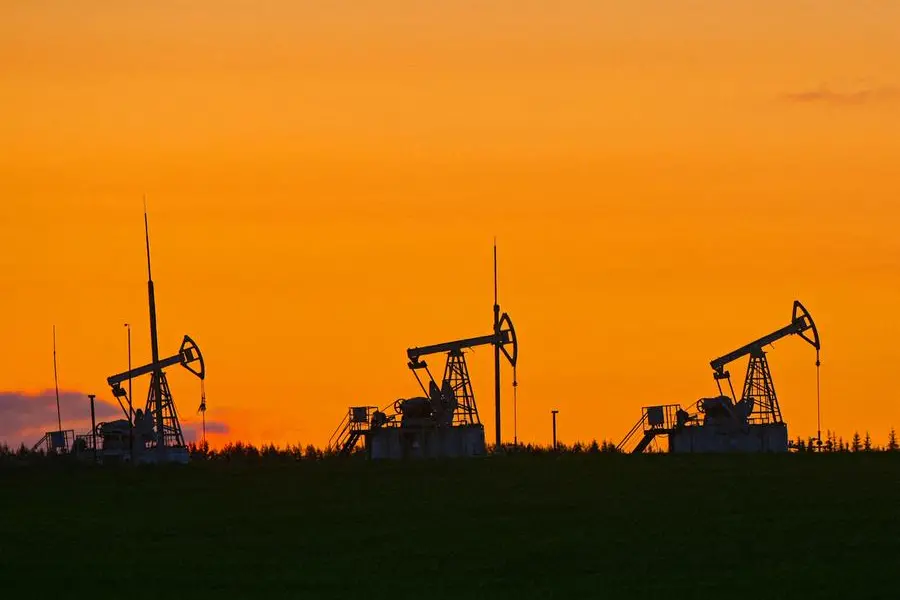
Oil prices surged, the dollar gained and shares slid on Monday as the Iran conflict widened in the Middle East and looked set to last for weeks, threatening to upend a global economic recovery and perhaps reignite inflation. Brent crude was last up 8.3% at $78.5 a barrel, though it had briefly topped $82.00 at one stage, while U.S. crude climbed 7.5% to $72.02 per barrel. Safe-haven gold rose 2.1% to $5,389 an ounce.
Israel launched new air strikes targeting Iran and expanded its military campaign to include attacks on Iran-backed Hezbollah militants in Lebanon on Monday, while Tehran fired missiles and drones at Israel, Gulf states and a British air base in far-away Cyprus. U.S. President Donald Trump signalled the U.S.-Israeli military assault on Iranian targets could last four weeks.
Oil and gas facilities were forced to shut down across the Middle East, and Saudi Arabia shut its biggest domestic oil refinery on Monday after a drone strike.
And all eyes were on the Strait of Hormuz, through which around a fifth of the world's seaborne oil trade flows and 20% of its liquefied natural gas. While the vital waterway has not yet been blocked, marine tracking sites showed tankers piling up on either side of the Strait, wary of attacks or maybe unable to get insurance for the voyage.
For investors the crucial question is how long the war, or specifically the disruption to energy markets, will continue.
"Historically markets have mostly shrugged off isolated conflicts in the Middle East. Only when the conflicts have had the potential to draw in the entire region have markets really moved," said Michael Field, chief European equity strategist at Morningstar.
"For now, the market will be trying to ascertain how long the conflict will be likely to last and whether it will draw in other nations."
A prolonged spike in oil prices would risk reigniting inflationary pressures globally, while also acting as a tax on business and consumers that could dampen demand.
OPEC+ agreed a modest oil output boost of 206,000 barrels per day for April on Sunday, but a lot of that product still has to get out of the Middle East by tanker.
BANKS LEAD STOCK MARKET FALLS
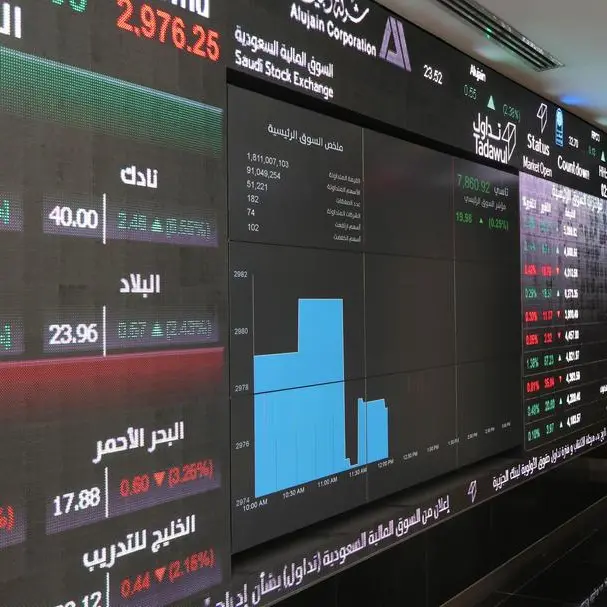
Stock markets around the world fell. Europe's broad STOXX 600 slid 1.3%, following similar sized moves in Asia earlier in the day. U.S. S&P 500 futures were down 1%. Banks were to the fore, given worries about the impact on economic growth, with the banking sector index in Europe down 3% and travel shares tumbling. Tech stocks also fell in Europe and Asia as investors dumped the riskier parts of their portfolios.
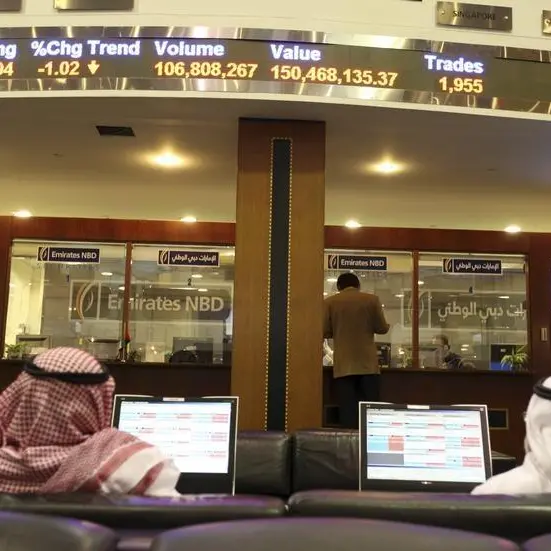
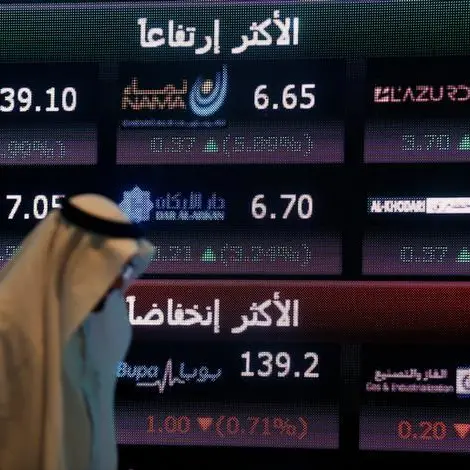
Energy stocks were big gainers, however, up 4% in Europe at one point to a new record high. European defence stocks also gained 1.3%. In the Middle East, the UAE and Kuwait temporarily closed their stock markets citing "exceptional circumstances".
And Chinese blue-chips were a rare gainer, up 0.4% though the country does get much of its seaborne oil imports from the Middle East.
THE DOLLAR IS BACK
In currency markets, the dollar was by far the biggest gainer, rallying even against safe-haven currencies such as the Swiss franc and Japanese yen.
The euro and pound were each down around 0.7% at $1.1742 and $1.3397 respectively.
The dollar, meanwhile, climbed 0.5% on the Japanese yen and 0.3% on the Swiss franc to 157 yen and 0.7733 francs, respectively.
"The dollar's correlation to risk is back," said Jordan Rochester, head of fixed income and currency strategy EMEA at Mizuho.
"After nearly a year post Liberation Day of FX correlations being junk and macro frameworks out the window - this new geopolitical crisis has snapped us back to normal," he said, referring to April 2 last year when Trump announced his wide-ranging import tariffs. The dollar's traditional role as a global safe-haven currency had been challenged by erratic U.S. policymaking. The energy moves were also relevant for currency markets given the U.S. is a net energy exporter while both Europe and Japan rely heavily on imports.
The euro also hit its lowest since 2015 on the Swiss franc, down more than 0.5% at one point to 0.932 francs, prompting the Swiss National Bank to warn it was increasingly willing to intervene to curb the franc's strength.
Government bond markets were caught between safe-haven inflows pushing gains and investor worries about the inflationary impact of higher oil prices, and hence more hawkish central bank policy.
Benchmark 10-year U.S. Treasury yields hit an 11-month low of 3.926% in early trade but were last a touch higher on the day at 3.967%.
Rate-sensitive two-year Treasury yields were more clearly driven by investors' inflation concerns, up 3 bps at 3.41%.
Investors also have to weather a squall of U.S. economic data this week, including the ISM survey of manufacturing, retail sales and the always vital payrolls report on Friday.
Any weakness could shake confidence in the economy after a disappointing fourth quarter, but would also likely narrow the odds on rate cuts from the Federal Reserve.
Markets currently imply a 50% chance of a 25-basis-point easing by June and are fully pricing two such cuts this year.
(Reporting by Wayne Cole in Sydney and Alun John in Europe; Editing by Sam Holmes, Shri Navaratnam and Emelia Sithole-Matarise)