PHOTO
Saudi Arabia - The number of hotel rooms in Saudi Arabia is set to expand significantly from the current stock of 171,650 keys, with around 94,500 additional rooms under construction or at advanced planning stages, following a stellar year in which the Kingdom’s travel and tourism industry grew by 32%, according to a report by Knight Frank, a property consultancy firm.
Oussama El Kadiri, Partner - Head of Hospitality, Tourism & Leisure Advisory, MENA, said: “Growth in Saudi Arabia’s hospitality market is being driven by a combination of government initiatives, private sector investment and evolving consumer preferences. Travel and tourism contributed a record SAR 444.3bn ($114.4bn) to the economy in 2024, representing 11.5% of the nation’s GDP – the highest in the region, according to the World Travel & Tourism Council”
In the first quarter of 2025 alone, international visitor spending surged to SAR 49.4bn, marking a 9.7% rise year-on-year, while total tourism spending increased by 11% to SAR 284bn.
In 2024, the country welcomed 29.7 million international visitors, up 8% year-on-year, and 86.2 million domestic tourists, a 5% increase on 2023.
Total annual tourist spending was SAR 284bn, of which international visitors’ expenditure amounted to SAR 169bn, reflecting a 19% uplift.
Faisal Durrani, Partner – Head of Research, MENA, said: “Our research reveals a rapidly evolving industry driven by high-value travellers, experiential offerings and world-class hospitality assets emerging under Vision 2030 and the National Tourism Strategy. Having already reached 116 million domestic and international visitors in 2023, the government has revised its 2030 target from 100 million to 150 million visitors, with one-third expected to be religious tourists. This underscores the Kingdom’s dual ambition of strengthening its global role as Islam’s pilgrimage hub while expanding its reach into international leisure and business travel and domestic tourism.”
MARKET DRIVERS
Religious tourism remains a key driver of the hospitality market. Last year, Saudi Arabia welcomed 1.8 million Hajj pilgrims and 35.7 million Umrah pilgrims.
Among these, 16.9 million international pilgrims performed Umrah in 2024, a 25% increase on 2023 and the highest number of international pilgrims ever recorded.
Alongside this, a notable structural shift has been the rise of non-religious international travellers.
This group now accounts for 59% of total international arrivals, up from 44% in 2019 – an increase of 127%. Leisure and holiday travel alone generated SAR 36.4bn in 2024.
Asia was the largest source market for the Kingdom’s international tourists last year, with 9.7 million visitors.
Egypt followed as the largest individual source nation, accounting for 3.2 million visitors, followed by Pakistan (2.8 million) and Bahrain (2.6 million).
RISING HOTEL SUPPLY
The average daily rate for hotel rooms across the country increased by 0.3% to SAR 746 ($ 199) between January and August 2025, while occupancy rose to 61%, pushing up revenue per available room by 1.3%.
As of September 2025, Saudi Arabia’s quality hotel stock stood at 171,650 rooms, with supply projected to rise by 18% by 2027.
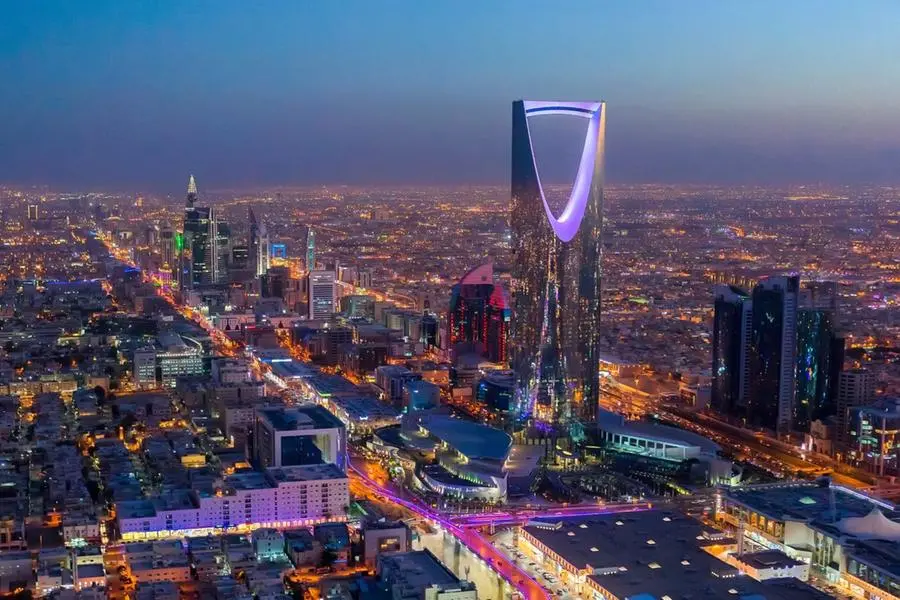
Across the Kingdom, around 358,000 hotel rooms are planned, of which 94,000 keys are either under construction or at advanced planning stages, highlighting the scale of the medium to long-term pipeline. Riyadh is expected to see a 19% increase in quality rooms to 30,330 keys by 2027.
Elsewhere, Makkah and Madinah have particularly large hotel pipelines. Projects such as Rua Al Haram (70,000+ keys), Rua Al Madinah (47,000+), Knowledge Economic City (42,000+) and Masar Makkah (41,000+), for example, will contribute more than 252,000 rooms in the Holy Cities, 64% of which will be in the four- and five-star categories.
Domestic travellers continue to account for the lion’s share of tourists, with 74.3% of visitors during 2024 being Saudi nationals. Almost a third (29%) of Saudi nationals and Saudi-based expats travel within the Kingdom every 2-3 months, rising to 50% for those on incomes of over SAR 80,000.
“Staycations” are especially popular among Saudi nationals, 36% of whom favour extended weekend breaks of 4-6 days and 20% opt for full weeks. For Saudis on higher incomes (SAR 80,000+ per month), 67% have a preference for domestic holidays of 7-10 days. In contrast, 47% of Saudi-based expats favour trips of 2-3 days and 19% limit travel to day trips. Longer vacations beyond two weeks remain rare across both groups.
A notable 13% of nationals travel every week, underlining the popularity of short-haul trips between cities and the established pattern of weekly commutes.
Indeed, some 250,000 Saudis have moved to Riyadh since 2019, many to take advantage of the fact that 66% of all new jobs in Saudi have been created in Riyadh during this time.
Amar Hussain, Associate Partner – Research, MENA, said: “These trends point to robust and broad-based demand for domestic tourism offerings, ranging from short city breaks to longer cultural and nature-based experiences. The consistency of domestic travel behaviour, based both on our data and publicly available statistics, reinforces the importance of ongoing investments in hospitality infrastructure, destination development and regional connectivity under Vision 2030. This is particularly the case in established hubs such as Riyadh, Jeddah and Al-Ula, as well as boosting offerings in popular regional hub locations such as Al-Soudah, Taif and Abha.”
MOST POPULAR DESTINATIONS
The report also highlights a strong concentration of domestic leisure travel around the Kingdom’s major urban centres and religious destinations.
Makkah is the top destination overall (42%). However, for Saudis with a monthly income of more than SAR 80,000, Riyadh is the number one draw (61%).
Among the country’s metropolitan hubs, Riyadh at 40% and Jeddah, also at 40%, are the top travel destinations, in line with their roles as gateways and centres for business, leisure and cultural experiences.
The Dammam Metropolitan Area was chosen by 16%, reflecting its coastal appeal and growing status as a leisure hub in the Eastern Province.
Beyond the major cities, domestic tourists are increasingly exploring regional destinations. Abha and Taif are especially popular among nationals, at 24% and 22% respectively, underlining the attraction of cooler highland climates during summer months.
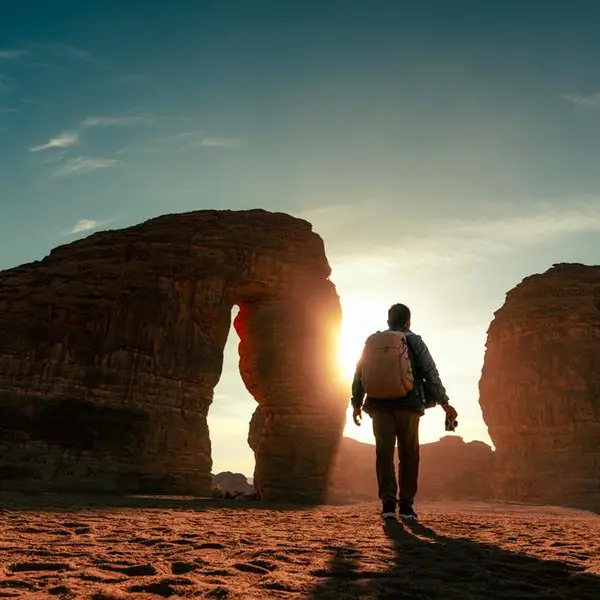
Al-Ula, at 20% overall, has gained traction as a heritage and culture hotspot, while the less-developed markets of Umluj and Jizan have more niche appeal, at 6% and 5% respectively.
FOCUS ON LUXURY
Knight Frank’s research found that 60% of the Kingdom’s 171,650 hotel rooms fall within the luxury, upper upscale and upscale categories, with the largest concentrations in Makkah (40,200 rooms) and Riyadh (18,500 rooms), which account for 23% and 10% of the total supply, respectively.
Looking ahead, the proportion of luxury, upper upscale and upscale rooms is set to reach 76% of the country’s total room count by 2030.
This reflects demand dynamics, with 83% of travellers preferring four- or five-star hotels.
There is negligible demand for lower-tier hotels (two-star and below), underlining the Kingdom’s positioning as a market characterised by high levels of quality and service.
Serviced apartments rank as the second most popular accommodation type after hotels, with 22% of respondents favouring this option, up from 20% in 2023. Resorts were preferred by 11%, an increase from 9% in 2023.
However, with a growing portfolio of resort accommodation, particularly at Red Sea projects, where some 8,000 hotel rooms are expected by 2030, Knight Frank expects to see the popularity of resorts increase over time.
El Kadiri concluded: “Saudi Arabia’s tourism and leisure sector stands on the brink of a historic transformation. Mega-destinations such as The Red Sea, AlUla, and AMAALA are now materialising from visionary blueprints into tangible luxury escapes. The Red Sea’s first resorts and international airport are operational, forming the initial wave of over 3,000 keys that will anchor Saudi’s position as a global luxury and regenerative tourism hub. These developments, underpinned by tremendous infrastructure investment and sustainable design, reflect a strategic focus on both volume and value.
“Saudi Arabia’s trajectory remains remarkable. By blending heritage tourism, pilgrimage innovation and modern leisure experiences, the Kingdom is crafting a multifaceted tourism identity in which luxury meets authenticity and ambition meets execution.”
Copyright 2026 Al Hilal Publishing and Marketing Group Provided by SyndiGate Media Inc. (Syndigate.info).