PHOTO
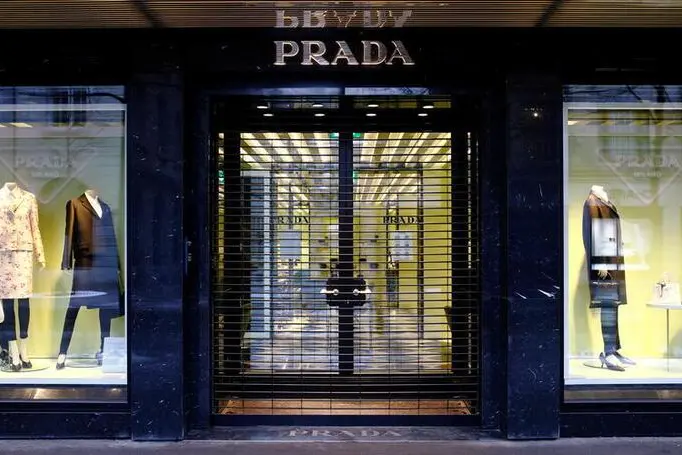
The global personal luxury goods market is showing signs of a recovery in the second quarter, despite the war in the Middle East, as demand in the U.S. was stronger than expected, consultancy Bain & Company said on Thursday.
In an update to its closely watched annual outlook for the sector, Bain said its base-case scenario now points to a 2% to 4% rise in personal luxury sales this year. That compares with a previously forecast 3% to 5% increase published in November, before the outbreak of the U.S.-Israeli war on Iran.
The personal luxury goods market, which was valued at €358 billion ($406 billion) in 2025, has contracted over the past two years. It shrank by 2% at current exchange rates in 2025, although it edged up 1% in constant currencies.
Looking at the broader luxury industry, experiences continue to outpace tangible goods, according to the study, produced with Italian luxury industry group Altagamma.
"We see growing uncertainty and turmoil at the macroeconomic and socio-political levels, but the market is there," Bain partner Francesca Levato told Reuters.
Geographically, the growth in the U.S., led by native brands and younger consumers' spending, is partly offsetting a slowdown in the Middle East and Europe. China is slowly recovering, with growth led more by ready-to-wear products than leather goods.
"America is growing more than expected and China is recovering faster than expected," Levato said.
Europe was impacted by depressed tourist flows, though signs of stabilisation emerged in May.
AN AI ROLE IN LUXURY SPENDING
Levato said the industry has lost around 70 million consumers since 2022, as brands raised prices and focused more heavily on top-spending clients.
"The industry should refuel the growth of the consumer base rather than focus only on the top 1%," she said.
The study also found artificial intelligence is rapidly reshaping how consumers discover and evaluate luxury brands. About half of luxury consumers already use AI in making purchases, relying on it for discovery and to compare products.
The second-hand market is on the rise, with half of luxury shoppers now consulting that market before buying new things.
($1 = €0.8813)
(Reporting by Elisa Anzolin and Lisa Jucca in Milan, Tassilo Hummel in Paris; Editing by Thomas Derpinghaus)