PHOTO
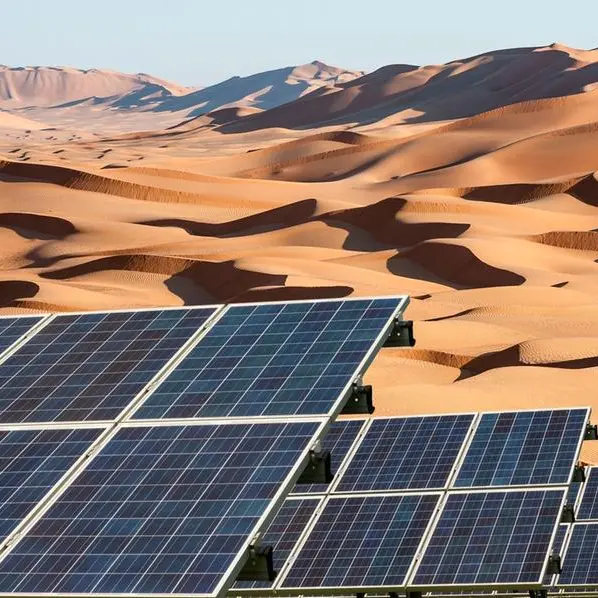
Global South Utilities (GSU), established in Abu Dhabi in 2024, has positioned itself as a specalised developer of utility projects, with a focus on solar power plus storage facilities, across frontier markets.
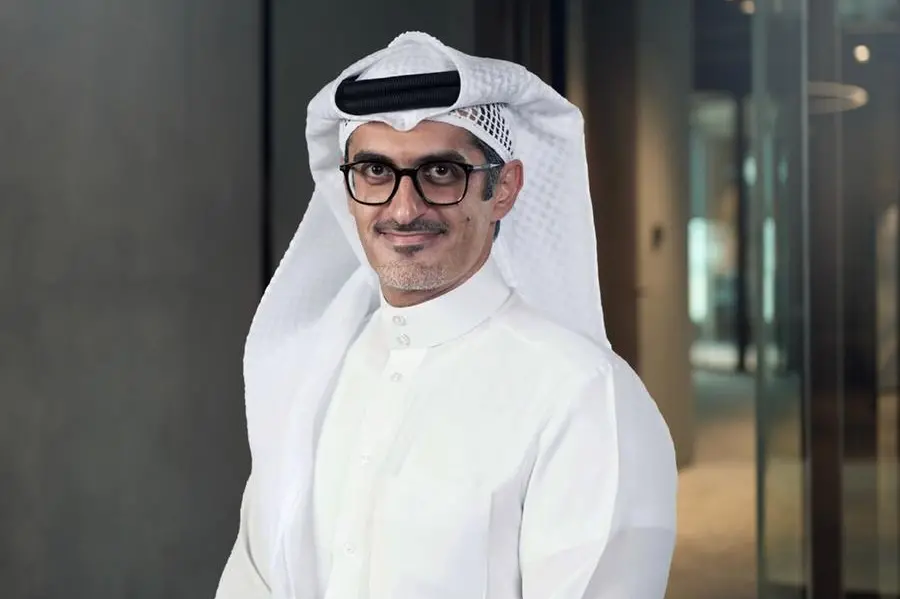
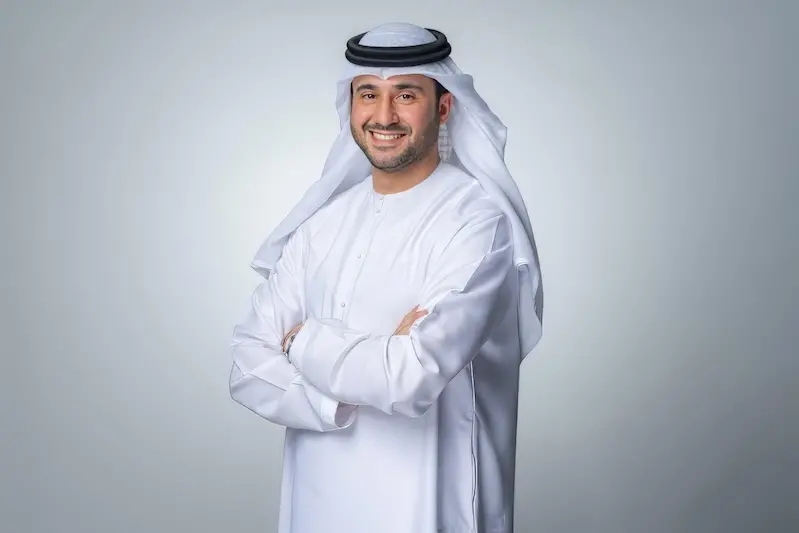
The company was created “out of a clear recognition that many markets remain underserved not because technology isn’t ready, but because developers largely avoid the risk,” its Managing Director and CEO Ali Alshimmari told Zawya Projects.
Abu Dhabi was chosen as the headquarters because of the UAE’s role as a hub for South–South cooperation and its proven ability to pioneer ambitious projects with global impact, he said.
“We see ourselves as a forward-looking, people-first developer focused on utility projects that can transform national grids while remaining practical and deliverable,” Alshimmari said. “Our purpose is to be the trusted partner that governments and communities can rely on to turn ambition into reality.”
Frontier markets first
GSU’s initial portfolio comprises two flagship projects: an under- construction 50 megawatt (MW) solar PV power plant with a 10 MWh (megawatt-hours) battery energy storage system (BESS), located in Sakai, in the Central African Republic (CAR), and the Noor Chad 50 MW solar PV plant with a 5 MWh BESS in N'Djamena, Chad, which was inaugurated in September 2025.
“These choices were intentional,” the Alshimmari said. “Both countries hold immense growth potential, and a single mid-scale project can materially expand access to clean power. We want to demonstrate that real impact can be achieved where it matters most, creating a replicable model for the wider Global South.”
He added that CAR project broke ground in August 2025, and is currently in the advanced financing and permitting phase, backed by strong commitments from the host government.
Mid-scale strategy for fragile grids
GSU is focusing on mid-scale solar-plus-storage projects, a strategic choice for “fragile grids.”
“These projects integrate more smoothly into fragile grids and deliver transformational impact at the national level,” explained Alshimmari. While he didn’t rule out larger projects, he emphasised that the company’s competitive edge lies in “agility, delivering replicable, and people-focused solutions.”
Risk mitigation
Operating in frontier markets such as Chad or CAR inevitably comes with challenges including logistics, security, and grid limitations. GSU relies on BOOT (Build - Own - Operate - Transfer) structures negotiated with host governments, “ensuring alignment and long-term partnership,” the GSU executive said.
“Our philosophy is not to eliminate risk, but to structure and share it responsibly,” he observed.
Solar factories in Egypt
GSU recently signed an MoU with China’s JA Solar, Bahrain’s Infinity Capital and Egypt’s AH Industrial Management, to establish a major solar manufacturing hub in Egypt.
The Atum Solar Egypt project, located within the TEDA zone in Ain Sokhna, will cover 200,000 square metres (sqm) and include a 2 gigawatt (GW) solar cells factory for exports, and a 2 GW solar modules factory to serve Egypt and Africa; together, the facilities represent a total investment of $220 million.
“Industrialisation is central to our strategy,” said Alshimmari. “This project will create one of the region’s largest renewable energy manufacturing hub. which reduces costs, stabilises supply chains, and creates thousands of local jobs.”
He added that GSU - directly or indirectly through affiliates - expects to evolve into a “more vertically integrated developer,” combining project execution with manufacturing, technology transfer, and local ecosystem building.
2027 outlook
By 2027, GSU aims to expand across Sub-Saharan Africa, as well as select markets in Asia and Latin America, and deliver 750 MW of operational solar-plus-storage capacity.
In July 2025, GSU signed an agreement with Madagascar’s Ministry of Energy and Hydrocarbons to develop 300MW of solar projects, with a confirmed 50 MW project to commence initially. In September, the company acquired a 51 percent stake in Uzbekistan’s Yashil Energiya, its first investment in Central Asia and the wider Commonwealth of Independent States (CIS).
The company is also planning to broaden its scope into adjacent utilities, particularly water and desalination.
“Energy and water are inseparable in many frontier markets,” explained Alshimmari. “Solar-powered desalination is a logical next step. The UAE has decades of expertise in desalination, and GSU intends to apply that knowledge to places where both electricity and water scarcity define daily life.”
GSU is aiming to begin pilots in clean water and desalination, powered by renewables, he said, adding that the company aims to establish itself as a trusted utility partner for frontier markets with reputation for speed, agility, and reliability.
(Reporting by P Deol; Editing by Anoop Menon)
Subscribe to our Projects' PULSE newsletter that brings you trustworthy news, updates and insights on project activities, developments, and partnerships across sectors in the Middle East and Africa.