PHOTO
Saudi Arabia’s Yamama Cement Company reduced its greenhouse gas (GHG) emissions intensity by 26.7 percent year-on-year (YoY) in 2025, despite reporting higher absolute emissions due to increased production volumes.
The GHG intensity fell to 0.66 metric tonnes of CO2 equivalent per tonne of cement last year from 0.90 tonnes in 2024, indicating improved operational and environmental efficiency, the company said in its 2025 sustainability report.
Scope 1 GHG emissions increased by nearly 2.8 percent to 5.60 million metric tonnes of CO2 equivalent in 2025 from 5.45 million tonnes in 2024, due to higher clinker and cement production.
Scope 2 emissions rose marginally to 969 metric tonnes last year from 934 metric tonnes in 2024.
Energy and water intensity
Energy consumption intensity declined by 12 percent YoY to 1.19 megawatt-hours (MWh) per tonne of cement, driven by the effectiveness of energy management measures and continuous operational efficiency improvements.
Renewable energy accounted for 5.6 percent of total energy consumption in 2025, maintaining a stable share within the company’s operational energy mix. Yamama Cement will continue to assess opportunities to expand renewable energy utilisation, the report said.
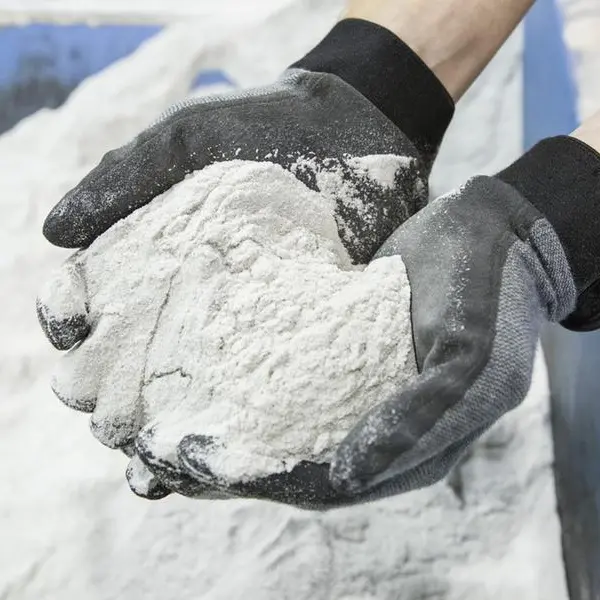
The company also achieved 100 percent reuse of treated wastewater and full reuse of production dust, supporting circular economy and resource efficiency objectives. Water consumption fell by 170,000 cubic metres last year.
The cement producer said treated wastewater is fully recycled and reused for irrigation, with annual reuse volumes reaching 25,550 cubic metres.
In 2024, Yamama Cement launched a water reuse initiative to reduce reliance on treated and desalinated water by utilising non-potable water in raw material milling operations. The project involved extending pipeline networks to directly supply non-potable water to raw material mill operational lines.
During 2025, the initiative enabled the reuse of 233,078 cubic metres of water and reduced the consumption of chemicals used in water treatment, lowering related costs by 69 percent to SAR 1.13 million.
Carbon neutrality strategy
Yamama Cement planted more than 450,000 trees last year as part of its target to plant one million trees by 2030, supporting the Saudi Green Initiative (SGI).
The company’s carbon neutrality strategy for 2026 includes expanding the use of alternative fuels, lowering the clinker-to-cement ratio in cement production, improving energy efficiency, and assessing opportunities to deploy renewable energy and advanced emissions-reduction technologies.
Yamama Cement also plans to introduce low-carbon cement products this year as part of a broader strategy to expand its sustainable product portfolio and support the transition toward lower-carbon-intensive construction materials.
(Writing by P Deol; Editing by Anoop Menon)
Subscribe to our Projects' PULSE newsletter that brings you trustworthy news, updates and insights on project activities, developments, and partnerships across sectors in the Middle East and Africa.