PHOTO
The UAE and Oman are pushing ahead with a major project to build the region’s first cross border rail line which is expected to largely boost trade, tourism and investment.
Hafeet Rail, which is undertaking the 238 km rail link, said in April it has completed nearly 40 percent of the project and that this in itself is a big achievement.
Earlier this month, it announced that rail track-laying operations for the project have begun.
Analysts believe the $2.5 billion project to pick up following the disruption of shipping traffic via Hormuz Strait and an increasing tendency by regional countries to build pipelines and rail networks to bypass the perilous waterway, through which a fifth of the world’s seaborne oil supplies pass.
“I think that this rail project and the larger GCC rail plans will gain momentum in the coming period following the regional geopolitical developments,” said Jamal Banoun, manager of the Riyadh-based SMS economic consulting centre.
The UAE-Oman rail plan is part of a large-scale project to build a 2,100 km rail network linking the Gulf Cooperation Council (GCC) states of UAE, Saudi Arabia, Kuwait, Qatar, Oman and Bahrain.
40% completion
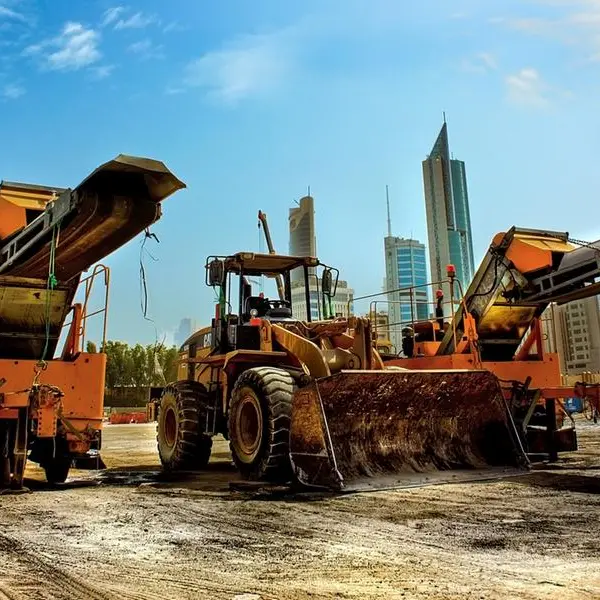
“Construction of the first cross-border railway between Oman and the UAE has reached 40 percent completion, with tunneling advancing through the Hajar Mountains and more than 27 million cubic metres of earthworks completed across the 238-km corridor,” Hafeet Rail said in a statement in late April.
“Crews are also advancing 57 bridge structures across mountainous and wadi terrain, reflecting the scale of structural work now underway.”
Hafeet Rail is a joint venture of Etihad Rail, Oman Rail and Mubadala Investment Co. The total program cost is estimated at around $2.5 billion, according to Oman's Ministry of Finance. No completion date has been announced but Hafeet Rail said it is working to establish the project's operational timeline.
"Reaching the 40 percent completion milestone reflects the strong foundations of this project," said Ahmed AlMusawa AlHashemi, CEO of Hafeet Rail.
"As we move into the next phase of delivery, our focus remains on maintaining momentum, strengthening collaboration among partners, and ensuring the project delivers long-term value in line with the highest international standards."
Maintaining momentum
The statement said work is advancing simultaneously across Al Ain, Al Buraimi, Sohar and Wadi Al Jizzi, where the alignment crosses urban, industrial and mountainous terrain requiring specialized engineering solutions. To date, more than 100,000 m3 of concrete have been placed, with 80 structures under construction.
Crews have also driven 900 piles and installed 130 box culverts, advancing toward a total of 881 culverts across the corridor, according to Hafeet Rail.
The route passes through urban and industrial areas, mountainous terrain, and deep valleys, which requires specialised engineering solutions that include large-scale
Engineering facilities are also progressing, with work currently underway at 80 sites, in addition to the implementation of 900 wedges and 130 box culverts.
Works are underway in key facilities in Suhar and Buraimi, in support of the project's future role in connecting ports, industrial zones, and logistics centers, enabling transit freight movement borders within an integrated regional system.
In June, track laying and installation phase started,
Boost to trade and investment
Officials have said that the UAE-Oman rail project would spur trade and investment and reduce travel time between Abu Dhabi and Sohar to 100 minutes, operating passenger trains up to 200 km/h and freight trains up to 120 km/h.
The UAE is one of Oman’s largest business partners, with two-way trade rising by nearly 13 percent to $3.8 billion in the first quarter of this year, according to official data.
Oman’s imports from the UAE were up 10 percent at $2.8 billion against the first quarter of 2025, and exports up 31 percent at $990 million.
“This project will bolster trade and tourism by enhancing connectivity between the UAE, Oman, and the broader region. It strengthens the economic and cultural ties between the two countries, facilitating the movement of goods and people,” Hafeet Rail said.
“In the logistics sector, the project provides substantial advantages for logistics by addressing both efficiency and cost-effectiveness. It is designed to significantly shorten transit times for goods traveling between Oman, the UAE, and beyond.
(Writing by N Saeed; Editing by Anoop Menon) (anoop.menon@lseg.com)
Subscribe to our Projects' PULSE newsletter that brings you trustworthy news, updates and insights on project activities, developments, and partnerships across sectors in the Middle East and Africa.