PHOTO
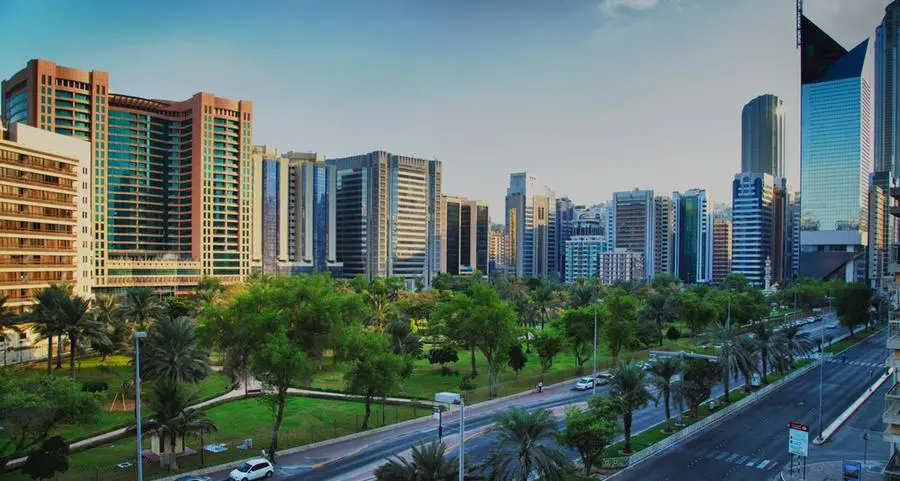
Real estate developers in the UAE are continuing with their original project timelines, with softer prices and lower transaction volumes expected until the regional conflict ends, according to industry stakeholders.
The war involving the US, Israel and Iran, which began on February 28, has pushed up oil, gas and commodity prices due to supply disruptions, but has not halted new project launches or construction activity.
Developers including Dubai Investments, Azizi, Modon and Arada continued to announce projects and contract awards during the first quarter of 2026.
Sales resilience and high-end demand
Dubai’s real estate market has continued to post strong sales despite the geopolitical backdrop.
Off-plan residential apartment sales in Dubai rose 12.9 percent year-on-year to 17.5 billion UAE dirhams ($4.8 billion) in March 2026, compared to AED 15.5 billion ($4.2 billion) in the same month last year, according to an analysis of Dubai Land Department (DLD) data by real estate data platform Al Masdar Al Aqaari.
High-end demand has also remained strong, highlighted by the sale of a penthouse at Aman Residences Dubai for AED 422 million ($115 million) in early March, billed as the third-most expensive apartment transaction in the emirate’s history.
In a statement emailed to media outlets, Vlad Doronin, Chairman and CEO of Aman Group said Dubai continues to demonstrate remarkable resilience and global appeal with the sale reflecting “strong demand” from international buyers.
Measured activity
Market participants expect 2026 to mark a transition to more measured growth after two years of strong expansion.
Ajay Rajendran, Founder and Chairman of Meraki Developers told Zawya Projects that the UAE real estate market has reached a level of maturity where it is less reactive to short-term geopolitical developments than in previous cycles.
“Demand today is supported by structural factors — population growth, long-term residency policies, and sustained capital inflows. These are not easily reversed,” he said.
That said, Rajendran expects pace of growth likely to normalise in 2026.
He said buyers will become more selective, prioritising quality, location and delivery credibility over speculative investments.
Zhou Yuan, Operations Director - Tomorrow World Properties, told Zawya Projects that a moderation in activity is likely, with a market adjustment anticipated due to a reduction in demand over the coming period – from now until at least the end of the year, depending on how the situation evolves.
He said the company is reviewing its business targets and aligning them with the present circumstances and a more conservative forecast.
“Our group’s expansion plans and development pace have been adjusted accordingly. Once the conflict is resolved and stability returns, we plan to resume new launches,” Yuan said.
Rajendran stated that they are not revising their business targets; rather, “[we are] focusing on what we can execute well rather than expanding opportunistically.”
Focus on execution and supply chains
Developers are prioritising supply chain visibility, execution control and financial discipline amid uncertainty.
“We are working closely with long-term partners to ensure material availability and reduce exposure to disruptions,” Rajendran said, adding that the company is maintaining oversight across construction phases to avoid dependency on fragmented delivery models.
Yuan said Tomorrow World Properties has put in place “a robust strategy to address any potential supplier-related challenges.”
Meanwhile, a recent report by S&P Global Ratings warned that prolonged disruption in the Strait of Hormuz could lead to higher input costs due to rerouted shipments and increased fuel prices, as well as potential bottlenecks in construction materials.
The report, which looked at rated developers, had also noted that projects nearing completion are likely to proceed, while developers with flexibility will prioritise liquidity and cash flow over new investments and land purchases.
Meraki Developers is ensuring that projects are structured conservatively, without over-leveraging or reliance on aggressive sales assumptions.
“These are not new measures, but principles we have consistently operated with. In periods of uncertainty, they become more visible,” Rajendran said.
Stable execution
Yogesh Bulchandani, CEO & Founder, Sunrise Capital, said any regional development requires continuous assessment, but the UAE market operates with a very high standard of planning that already integrates risk and crisis management. This ensures there are always contingency plans in place.
“The resilience of the market has been proven before, most notably during the COVID-19 period, and today we continue to see the same structured approach.”
Bulchandani said Sunrise Capital has managed to deliver projects ahead of schedule, including deliveries up to 60 days before the official handover date, adding that this reflects the strength of planning and execution within the UAE’s real estate sector.
Amira Sajwani, Managing Director of DAMAC Properties, noted in a recent media statement that the UAE’s wise leadership and long-term vision have consistently guided the country through global and regional challenges while reinforcing its economic fundamentals.
“History has taught us that the UAE always overcomes challenges and emerges stronger. We witnessed this during the global financial crisis in 2008, during COVID-19, and again following the April 2024 storm widely known as the ‘Hadeer Storm.’
She added that demand remains robust and construction progress across all DAMAC projects remains on track, with handover timelines continuing as scheduled without any changes.
Contracting segment stable
Bulchandani said the situation in the contracting segment remains stable.
“Unlike more volatile sectors, real estate and construction operate on longer-term frameworks, making them less sensitive to short-term fluctuations,” he said,
He stated that the company is not seeing significant disruptions in execution or contract adherence.
“Projects across the market continue to progress at a steady pace. At the same time, there is a clear and consistent focus on prioritising workforce well-being and labour safety, which remains a fundamental priority across all ongoing developments.”
No impact on land prices
Rajendran confirmed that the regional conflict has not led to any broad-based correction in land prices.
“What we are seeing is increased selectivity. Well-located plots with strong development fundamentals continue to hold value, while less differentiated assets are taking longer to transact.”
Land pricing is becoming more reflective of actual development viability rather than purely forward expectations, the Meraki chief said.
“From our perspective, this is a healthy shift. It encourages more considered development and reduces speculative distortion over time,” he said.
Late last month, Dubai-based Imtiaz Developments had announced the acquisition of a plot in Downtown Jebel Ali for mixed-use project with an estimated development value of AED 2 billion ($545 million). Masih Imtiaz, CEO of Imtiaz Developments, had described the acquisition as a long-term commitment to Dubai’s future.
(Reporting by SA Kader; Additional reporting by P Deol; Editing by Anoop Menon)
Subscribe to our Projects' PULSE newsletter that brings you trustworthy news, updates and insights on project activities, developments, and partnerships across sectors in the Middle East and Africa.