PHOTO
Saudi Arabia and the UAE have witnessed government-driven initiatives in deploying blockchain for land registries, financial infrastructure, and real-world asset tokenisation.
The Saudi initiative has been described as the world’s first national-scale blockchain infrastructure for real estate registration, fractionalisation, and marketplace integration with the official government registry still remaining the final legal record of ownership.
Belgium-headquartered blockchain services firm SettleMint worked with Saudi Arabia’s Real Estate Registry (RER) and the Real Estate General Authority (REGA) to build the Kingdom’s real estate tokenisation infrastructure.
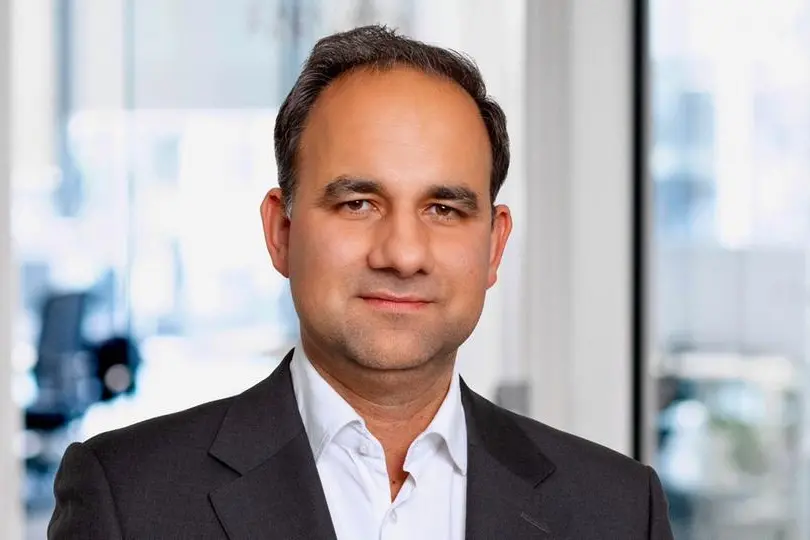
“SettleMint entered this initiative the way serious infrastructure programs usually start: with substance before publicity,” company CEO Adam Popat told Zawya Projects.
Early engagement with RER focused on practical requirements for building a national tokenisation framework. The talks covered regulatory design, operational controls, integration points, and how to scale it beyond a small pilot. The project then moved into a formal tender process, which SettleMint won.
The decisive factor was operating maturity, Popat said.
“A sovereign programme does not need a token minting tool,” he explained. “It needs infrastructure that can sit inside a governed environment, connect to identity, payment, and registry systems, and keep working under institutional control.”
This entails auditability, controlled deployment, clear operating roles, and the ability to run in cloud, on-prem, or hybrid environments, depending on national requirements.
SettleMint’s Digital Asset Lifecycle Platform (DALP) covers the full asset lifecycle: issuance, compliance, custody integration, settlement, and servicing.
Capital markets perspective
Popat said that from a capital markets perspective, lifecycle capability is critical as issuance alone does not make an asset investable; while a token can represent an asset in a few lines of code, it does not, by itself, constitute an investable instrument.
“Capital markets run on what happens after issuance: who can hold the asset, how transfers are approved, how income is distributed, how redemptions are processed, how records are reconciled, and how the whole thing stands up to regulatory scrutiny over time,” he said.
He compared traditional bond markets, where issuance is a one-time event but bulk of the operational burden occurs over the instrument's life cycle, from coupon payments, corporate actions and reporting to compliance checks, settlement, maturity, and redemption.
“Investors trust the instrument because they trust the infrastructure that governs the entire lifecycle, not because the initial issuance looked elegant. Real estate tokenisation follows the same rule,” he said.
While fractional ownership is relatively straightforward, the hard work, he explained, lies in managing investor eligibility, enforcing foreign ownership rules, coordinating custody, settling asset and cash atomically, distributing income correctly, and handling redemptions or unwind events when the underlying property is sold or restructured.
“Without lifecycle infrastructure, those processes become manual, slow, and error-prone,” Popat said. “That is why DALP is built as a lifecycle platform, not an issuance tool.”
Within a single operating model, DALP supports ERC-3643 and OnchainID for compliant, verified identity, integrates with custody providers via a bring-your-own-custodian model, and enables atomic DvP/XvP settlement. It also manages post-issuance operations, including coupons, dividends, redemptions, and other lifecycle events.
Popat reiterated that tokenisation at sovereign scale is more than just about putting property records on a blockchain.
“It is about building financial market infrastructure with rules, controls, and operational accountability built in from day one,” he said. “Our role is to provide that governance and orchestration layer so institutions can run digital asset programmes with confidence, under local oversight, and at production scale.”
The Saudi programme, the SettleMint CEO explained, was not designed as a token creation exercise, but as regulated market infrastructure - an approach that underpins its long-term relevance.
“That matters because institutions do not want tokens that merely exist. They want instruments they can govern, distribute, settle, service, and audit over time.”
Saudi, UAE models seen as complementary
According to Popat, the different real estate tokenisation pathways adopted by the UAE (Dubai) and Saudi Arabia are complementary rather than competing, reflecing varying institutional structures, policy priorities, and market design choices while collectively positioning the GCC as a serious region for digital asset market infrastructure.
He said Saudi Arabia is building from a national infrastructure perspective, with a focus on integration with government systems, and a staged model that validates the control framework before wider market expansion - an approach aligned with institutional participation and long-term market development.
Dubai, by contrast, has demonstrated the value of operating in live market conditions, particularly in enabling investor participation and secondary trading. This provides real-time data and evidence that tokenised real estate can generate demand when access is structured effectively.
The two models, he said, reinforce each other: One market can test retail and trading dynamics at speed while the other can prove how tokenisation fits into sovereign-grade registry, compliance, and settlement architecture.
“Over time, the more important story is interoperability, not rivalry. If the region continues to align around credible standards, governed market access, and lifecycle discipline, investors will stop seeing these as isolated experiments. They will see a maturing regional market. That is good for Saudi Arabia, good for Dubai, and good for the GCC as a whole.”
Excerpts from the interview:
The deployment timeline for Saudi Arabia's real estate registry modernisation has been remarkably fast by public sector standards. What does this tell us about the readiness of the underlying technology, and more importantly, the readiness of the ecosystem?
It tells us the industry has moved past the laboratory phase. For years, tokenisation lived in pilots, white papers, and disconnected proofs of concept. That period was useful. Standards matured, operating patterns emerged, and institutions learned where the hard problems actually are. By 2025, the market had a much clearer view of what works in production, especially around identity, compliance, custody coordination, and settlement.
So the speed in Saudi Arabia is not a sign that corners were cut. It is a sign that the stack is no longer experimental. When the underlying platform is mature, you stop spending time rediscovering basic architecture. You can focus on jurisdiction-specific integration, governance, and rollout.
The other half of the equation is ecosystem readiness. Technology alone does not compress timelines. RER, and the broader Saudi environment around it, brought regulatory clarity, executive sponsorship, and digital public infrastructure that already existed. Integration with systems such as Yakeen, Sadad, and the national real estate registry meant the program did not start from zero. It started from a strong institutional base.
That is why the timeline is fast and still credible. The four PropTech firms running live transactions in early 2026 were not experimenting on an unstable foundation. They were validating live workflows against real operational conditions. The sandbox period gives the market room to refine product structures, investor journeys, and controls while the core platform remains stable.
This is the broader lesson for the industry. The technology is ready. The real gating factor is whether the legal, operational, and supervisory environment is ready at the same time. In Saudi Arabia, those layers are aligned, and that is what makes the pace possible.
How far along is the shift from registry modernisation to an investable marketplace? What's operational today, and what's still in development?
The foundation is operational. That matters. The registry layer can record ownership, enforce transfer restrictions, and act as the authoritative source of who holds what under the relevant rules. Those are not minor capabilities. They are the base layer required before you can build an investable market with any credibility.
The core infrastructure is live: blockchain backbone, smart contract framework, and integration with government systems. Live transactions have already taken place in controlled conditions through participating PropTech firms. The platform can enforce investor eligibility, apply compliance rules before transfer, and process real transactions inside a governed sandbox.
What is still developing is the marketplace layer around that foundation. Fractional structures are being tested. Distribution models are being refined. Secondary market workflows, including buyer-seller matching, price discovery, and broader settlement orchestration, need to mature through supervised operation. Some of the economic plumbing around valuation, escrow, and market access also needs controlled iteration before wider release.
That sequence is exactly how it should work. You do not open the market wide before the control plane is proven. RER's staged approach, application, readiness assessment, controlled testing, then broader operational progression, reflects the reality of building market infrastructure rather than launching a consumer app.
So the answer is straightforward: the registry modernisation is real and operational, the investable marketplace is emerging on top of it, and the transition will happen in measured stages. That is not a limitation. It is what responsible execution looks like.
The platform emphasises open APIs and ecosystem integration. From a capital markets perspective, how does this architecture create liquidity and manage risk?
Liquid markets do not emerge from one closed platform trying to do everything itself. They emerge when multiple participants can connect to shared infrastructure through clear interfaces and common rules. That is how modern capital markets developed, and the same principle applies here.
DALP is API-first by design. It exposes platform capabilities through REST, GraphQL, webhooks, and oRPC, which means banks, registries, distributors, trading venues, custodians, and service providers can connect without rewriting their entire stack. That matters because liquidity comes from participation. The easier it is for credible market actors to plug into the same control plane, the more depth the market can build over time.
This architecture also lets each participant focus on its real role. PropTech firms can build investor-facing experiences and distribution channels. Banks can provide financing, custody relationships, and wealth integration. Registry and regulatory functions remain visible and enforceable at the infrastructure level. No one has to become everything at once.
On risk, the model shifts from manual oversight to embedded controls. Compliance is enforced before execution through verified identity, transfer rules, and eligibility checks. Custody can remain with existing institutional providers through the bring-your-own-custodian approach. Settlement can be atomic, which removes the gap between asset transfer and cash settlement that often creates counterparty and reconciliation risk.
That combination is what creates healthier markets. Open architecture expands participation. Embedded controls narrow failure points. When multiple distribution channels, custody relationships, and market interfaces connect to the same governed asset layer, liquidity has a path to form without losing control of compliance and settlement discipline.
How does tokenisation change the mechanics of property financing and trading? What becomes possible that wasn't feasible before?
The main change is that real estate starts to behave more like a financial instrument and less like a slow, paper-heavy private transaction. That has consequences for both capital formation and investor access.
For developers and asset owners, tokenisation opens more flexible funding structures. A project that would normally depend on a small set of lenders or large investors can be structured for a broader capital base, subject to the right investor and regulatory rules. That does not remove underwriting discipline. It does make distribution more flexible and more granular.
For investors, minimum ticket sizes can come down, which makes diversification more realistic. Instead of concentrating capital in a single asset, investors can hold smaller positions across different properties, sectors, or geographies. That changes the investment profile of real estate, especially for investors who want exposure without the burden of direct ownership and property administration.
Settlement also changes materially. Traditional property transactions involve long processing chains, documentation handoffs, and payment coordination that can take weeks or months. In a tokenised environment, asset and cash can settle atomically on a T+0 basis. That shortens settlement cycles, reduces counterparty exposure, and cuts a large amount of operational friction.
Then there is servicing. Income distributions, dividends, redemptions, and other asset events can be handled programmatically instead of through manual spreadsheets and fragmented intermediaries. That is one of the least discussed but most important improvements.
The idea of fractional ownership is not new. What changes here is the operating economics. Tokenisation makes it practical to administer, settle, and service these structures with far more precision and far less friction.
How does this infrastructure serve as a bridge between property markets and broader capital markets? What new financial products might emerge?
Once property interests are represented as compliant digital instruments, they become easier to connect with the rest of capital markets infrastructure. That is the bridge. Real estate does not stop being real estate, but the representation of ownership becomes standardised enough to interact with custody, settlement, reporting, and portfolio systems in a much more direct way.
That creates room for new product structures. Real estate funds and REIT-like vehicles can be issued and serviced in a more programmable way. Yield-bearing instruments backed by rental income or portfolio cash flows become easier to administer because distributions, restrictions, and redemptions can all sit in the same lifecycle framework.
Collateral use also becomes more practical once ownership records, compliance status, and transferability are visible and machine-readable. That can support financing models where tokenised property interests are pledged or financed through existing institutional channels, subject to the relevant legal and regulatory structure.
Multi-asset portfolios are another important development. DALP is multi-asset and multi-network, so the same platform can support real estate alongside bonds, fund interests, deposits, or other instruments. That matters because portfolio construction improves when different asset classes can be governed through a common compliance and servicing layer rather than isolated systems.
Over time, as secondary markets deepen, more sophisticated products will follow. But the order matters. First you need credible underlying assets, enforceable ownership, predictable servicing, and settlement discipline. Then the wider capital markets toolkit can develop on top of that foundation.
Beyond real estate, which asset classes do you see scaling first - infrastructure, energy, funds? What does SettleMint's broader experience tell us about adoption patterns?
Funds and private market instruments are likely to scale first. They have clearer investor frameworks, familiar operating patterns, and lifecycle needs that map well to digital administration. Capital calls, distributions, transfer restrictions, reporting, and redemptions all benefit from a stronger digital control plane.
Infrastructure and energy financing are close behind, especially where cash flows are predictable and investor participation can be structured clearly. Those asset classes already fit the logic of long-duration financing and income distribution. Tokenisation can improve access, servicing, and settlement, but only when the legal and institutional framework is ready.
What our broader experience shows is that adoption does not start with the most technically interesting use case. It starts where governance, regulation, and operating demand line up. When those elements are present, markets move quickly. When they are absent, even strong technology stays trapped in pilot mode.
That is why lifecycle matters across every asset class. Issuance alone does not create a market. You need compliance controls, verified identity, custody coordination, settlement, and servicing from the start. DALP was built around that full lifecycle because the pattern repeats across instruments, whether you are dealing with funds, bonds, deposits, real estate, or other real-world assets.
The Saudi programme is a strong example of that logic. It works because it pairs institutional mandate with full lifecycle infrastructure. That playbook will translate to other sectors more reliably than any single asset class thesis on its own.
How does this infrastructure advance Saudi Vision 2030's goals around foreign investment and economic diversification?
Vision 2030 is not an abstract backdrop here. It sets concrete priorities around attracting foreign capital, broadening domestic capital markets, and creating new channels for economic activity beyond oil. Tokenised real estate infrastructure supports those goals because it reduces friction in how investors access, assess, and hold exposure.
Historically, foreign investors faced a long list of obstacles in direct real estate investment: title verification, ownership restrictions, documentation complexity, fragmented due diligence, and uncertain exit paths. Those frictions do not disappear simply because an asset is tokenised. They have to be addressed in the operating model.
That is where the infrastructure matters. Verified identity, eligibility rules, and transfer restrictions can be enforced before execution rather than checked after the fact. The registry provides a clearer and more auditable ownership record. Compliance rules for different investor categories can be encoded directly in the asset lifecycle. That reduces ambiguity for issuers, investors, and supervisors.
Liquidity also matters for international participation. Direct real estate ownership often requires a long holding period and a complex exit process. A tokenised structure can create a more standardised path to transfer or secondary trading once the relevant market layer is in place. That makes the asset class easier to underwrite from an investor perspective.
The broader economic effect is straightforward. Better market infrastructure expands the pool of capital that can participate, helps projects reach funding more efficiently, and makes Saudi real estate easier to integrate into regional and global portfolios. That is how tokenisation supports diversification: not by changing the underlying economy overnight, but by making capital formation and market access more efficient.
(Reporting by Anoop Menon; Editing by SA Kader)
Subscribe to our Projects' PULSE newsletter that brings you trustworthy news, updates and insights on project activities, developments, and partnerships across sectors in the Middle East and Africa.