PHOTO
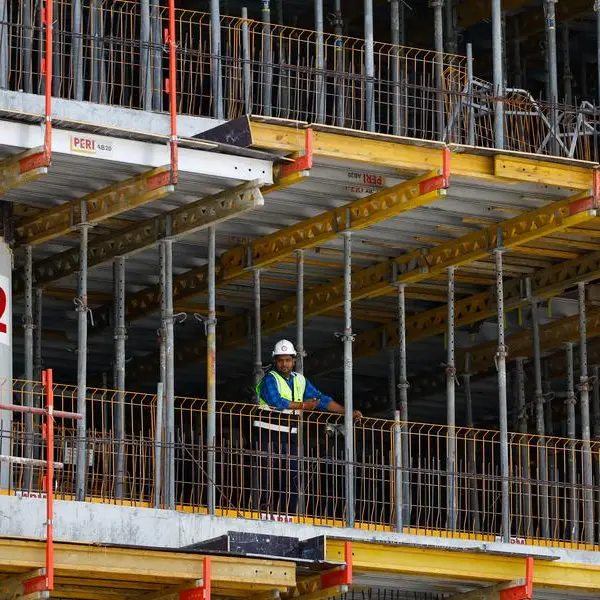
Morocco should guard against cost overruns in infrastructure projects tied to preparations for the 2030 FIFA World Cup as they could worsen debt with limited returns, the International Monetary Fund has warned.
In its Selected Issues paper on Morocco last week, the IMF said infrastructure development has historically been a key driver of Morocco’s productivity gains, accounting for around one-fifth of growth since 2005, with telecommunications and port infrastructure delivering the largest contribution.
It said the North African country plans to invest the equivalent of 11.9 percent of its 2024 gross domestic product (GDP) - roughly 190 billion Moroccan dirhams ($19 billion) - in public infrastructure between 2024 and 2030, targeting upgrades in rail, airports, roads and tourism assets.
The programme allocates the largest share to railways at 6 percent of GDP, followed by airports (2.4 percent), roads (0.9 percent), stadium construction linked to the 2030 FIFA World Cup (2.2 percent), and urban and tourism infrastructure (0.5 percent), the Washington-based Fund noted.
Debt and financing pressures
Most of the financing is expected to come from borrowing, with domestic bank loans accounting for about 67 percent of funding. External financing is projected at 17 percent, followed by 9 percent from domestic bonds and 7 percent from state-owned enterprises’ own funds.
However, the macroeconomic impact will depend heavily on execution quality and financing structure. The report highlighted high import content of infrastructure spending, estimated at around 60 percent, leaving only 40 percent for domestic industries, which could dampen the impact of the investment on output.
In the near-term, increased public borrowing is expected to raise sovereign spreads, and real corporate interest rates, initially crowding out private investment. Also, total factor productivity, which is expected to drive growth post-construction, depends critically on government investment spending efficiency.
Growth upside depends on execution
Under its baseline scenario, the IMF forecasts that the projects will deliver sustained productivity gains and stronger economic growth.
Real GDP is expected to be about 2 percent higher by 2030 compared with a scenario without the investments, rising to roughly 3 percent in subsequent years.
At the same time, annual public investment is expected to widen the fiscal deficit by an average of 1.2 percent of GDP between 2024 and 2030, while public debt could increase by around 8 percentage points of GDP before gradually declining.
Cost overruns pose key risk
The report noted that alternative scenarios underline cost overruns and debt overhang as key risks.
“A 30 percent increase in project costs could raise public debt by an additional 3 percent of GDP above the baseline scenario by 2034 without generating additional economic growth,” the IMF warned
The report underscored the importance of public investment efficiency, noting that improving efficiency could boost growth without increasing debt, while weaker execution would significantly reduce economic returns.
In the simulations run by the IMF, a 20 percent gain in public investment spending efficiency raises long-run GDP to 3.5–4 percent above baseline, while a 20 percent shortfall limits gains to 2.0–2.5 percent.
The Fund called for strengthening public investment management, mitigating cost overrun risks, embedding maintenance in the budget, monitoring public debt and managing contingent liabilities to safeguard the programme’s fiscal sustainability and growth dividend.
(Writing by N Saeed; Editing by Anoop Menon)
Subscribe to our Projects' PULSE newsletter that brings you trustworthy news, updates and insights on project activities, developments, and partnerships across sectors in the Middle East and Africa.