PHOTO
Forum at Education City introduces schools to pathway for connecting international academic standards with cultural identity, the Arabic language
Doha, Qatar: Qatar Foundation (QF) has launched the accreditation framework for its Rasekh initiative – which connects international education with local cultural and linguistic identity – and announced the first cohort of schools from Qatar and the region to become part of this educational pathway.
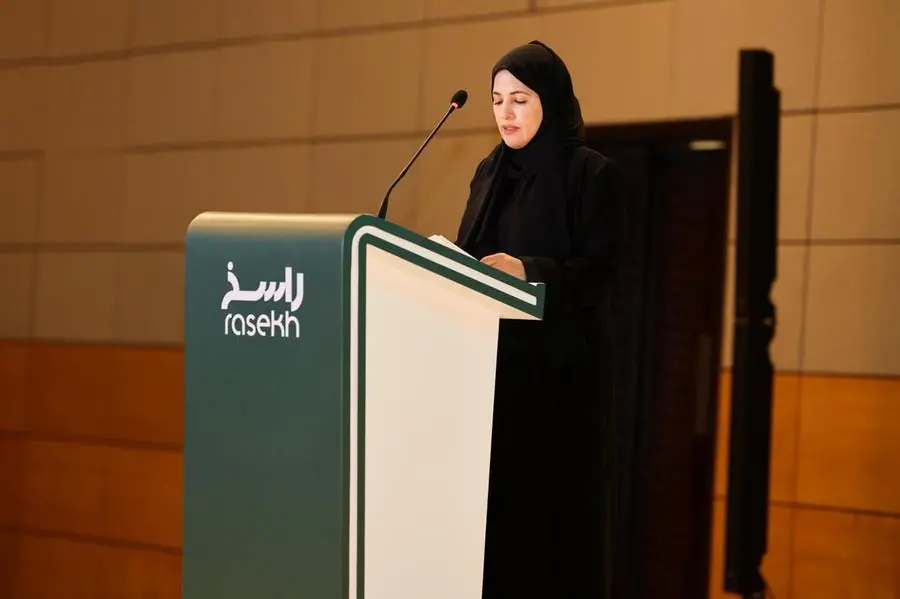
The Rasekh Strategic Forum at Multaqa (Education City Student Center) – attended by Yousif Al-Naama, Chief Executive Officer of Qatar Foundation, private international school leaders, and local and global education partners – marked the next step in the implementation of Rasekh, created by Qatar Foundation’s (QF) Pre-University Education.
Supporting schools in promoting Arabic as a language of learning and knowledge development, Rasekh also works to align international curricula with the local context, integrate core values into daily school life, and channel innovation toward community needs and local challenges. During the forum, QF introduced the first cohort of participating institutions, comprising QF schools and private international schools from Qatar and the wider region, which will serve as a foundation for Rasekh’s future expansion.
The new phase also saw the launch of the awareness campaign ‘Roots’, designed to bring the message of Rasekh closer to the community through a symbolic image that reflects how the initiative promotes language, instills values, and consolidates identity. The campaign has three main messages: ‘Roots that Empower the Arabic Language’, ‘Roots that Instill Values’ and ‘Roots that Nurture Identity’ and it is anchored in the initiative’s official slogan: Toward an Education That Deepens Roots and Creates Impact. Featuring contemporary Arabic visual identity, Roots’ digital materials are intended to make Rasekh’s message resonate with parents, students, and the wider community.
The forum brought together school leaders and international education institutions to discuss how Rasekh accreditation provides schools with a practical, measurable roadmap for aligning the education they offer with their local context, without compromising the rigor of global academic standards.
Sheikha Noof Ahmed bin Saif Al Thani, Vice President of Strategic Educational Initiatives at QF’s Pre-University Education, who gave the opening address at the forum, said: "Rasekh represents a practical step forward in the development of international education in Qatar. It looks at educational quality from a broader perspective, encompassing not only what students learn, but how they perceive themselves within that learning, and their connection to their language, environment, and values.
“We want the international education experience to provide students with a strong foundation of belonging and confidence, empowering them to contribute to their communities and interact with the world consciously and capably."
The forum included the opening address and the launch of the Rasekh Framework and Accreditation, followed by a presentation titled ‘Rasekh Ecosystem: Resources and Initiatives’ delivered by Maryam Al-Hajri, Executive Director, Strategic Initiatives and Partnerships at QF's Pre-University Education. The forum also featured a panel discussion with Farida Aboudan, Head of Education Sector at UNESCO Regional Office for the Gulf States and Yemen, Mary Tadros, IB Development & Recognition Senior Manager for Africa, Europe and the Middle East, Fatima Hassan Fadlallah, Qatar Country Manager, Partnership for Education, at Cambridge University Press and Assessment, and Samia Bishara, Managing Director of Tarsheed.
Presentations by the International Baccalaureate Organization, UNESCO, and Cambridge University Press & Assessment reaffirmed these institutions’ support for bilingualism, curriculum localization, and the promotion of values within international education. The International Baccalaureate Organization explained that its programs support multilingualism and learning in more than one language, and that the Rasekh framework aligns with its educational philosophy by connecting learning to the Arabic language, culture, heritage, values, and local context.
Cambridge University similarly noted that its programs provide flexible educational frameworks that enable schools to adapt content, incorporate local examples, and integrate national language, culture, and social values without compromising international academic standards.
UNESCO highlighted that bilingual education strengthens identity and belonging, supports long-term academic achievement, and develops critical thinking and problem-solving skills. It also emphasized its partnership with Qatar Foundation as a bridge connecting global knowledge with local expertise, strengthening identity through bilingual education, reinforcing belonging, social cohesion, and the protection of cultural diversity. It further noted that it opens the door to broader participation of families and local communities in education, in addition to the transmission of traditional knowledge and cultural values.
The Rasekh framework is built on four standards that translate its goals into actionable school practices:
- Arabic Language: Promoting Arabic as a language of identity and innovation in daily learning and knowledge production – fostering balanced bilingualism, and empowering students to communicate with confidence and depth in both local and global contexts.
- Curriculum Localization: Aligning international standards and curricula with the local context, national priorities, and learners’ identity to ensure relevance, depth, and authenticity, without compromising global academic benchmarks.
- Ethical and Citizenship Values: Building a robust value system rooted in ethics, responsibility, and belonging, and translating these values into tangible behaviors and practices within the educational environment.
- Local and Global Innovation: Empowering students to turn knowledge into solutions with positive impact through innovative projects linked to local challenges and global trends, while utilizing the Arabic language as a medium for thinking, communication, and presentation.
As well as QF schools, Rasekh’s first cohort includes Al Maha Academy for Boys, Al Maha Academy for Girls, Al Jazeera Academy, Arab International Academy in Doha, Arab International Academy in Lusail, Amman Baccalaureate School in Jordan, and Houssam Eddine Hariri High School in Lebanon. This inaugural cohort will help to build applied models demonstrating how international schools can adopt the framework to elevate educational quality, strengthen school character, and improve student outcomes.
The Rasekh accreditation pathway consists of integrated stages: application and institutional commitment, self-assessment, external review and evaluation, accreditation, and periodic reviews for continuous development. Schools meeting the framework's requirements receive the Rasekh accreditation certificate, the right to use the Rasekh quality mark, and membership in the Rasekh school network. They also benefit from ongoing professional and pedagogical support to sustain and deepen the framework's impact.
QF is inviting international schools to explore the Rasekh framework and opportunities to participate in its accreditation pathway. For more information, visit www.rasekh.qa or email rasekh@qf.org.qa
About Rasekh
Rasekh, part of Qatar Foundation’s Pre-University Education, is an educational framework that promotes global education rooted in local identity, language, and values, while supporting schools in integrating Qatar’s cultural context into international learning environments. Under the slogan “Toward an Education That Deepens Roots and Creates an Impact,” Rasekh helps align international curricula with Qatar’s cultural identity, language, and national priorities, linking global knowledge to local context and making Arabic, values, and the cultural environment an integral part of the international education experience.
Rasekh is built around four key standards: Arabic Language, Localization of International Curriculum, Ethical and Citizenship Values, and Local and Global Innovation and Communication. Through these standards, it develops educational resources, programs, and applied initiatives that help teachers turn heritage, culture, and local knowledge into lively classroom activities. It also supports schools in integrating Qatar’s cultural, social, and environmental context into international learning environments, without compromising international academic standards.
Rasekh contributes to preparing students who take pride in their identity, are confident in their language, and engage with the world with awareness and confidence. It offers a learning experience that brings together authenticity and modernity, and national belonging and global participation. In doing so, Rasekh presents an educational model built on the understanding that the quality of international education is inseparable from language, identity, and values, and grows deeper when students see themselves and their community in what they learn.
Follow Rasekh on Instagram for the latest updates.
For media inquiries, please contact us at rasekh@qf.org.qa.
Qatar Foundation’s Pre-University Education
Qatar Foundation’s Pre-University Education (PUE) is a unique education ecosystem that provides personalized learning opportunities, supports and embraces diversity, and meets the needs of Qatar’s multicultural community. PUE has developed schools and curricula that meet the highest international standards while remaining rooted in Qatari culture and values, equipping young people with the knowledge, confidence, and skills to excel both academically and personally.
PUE’s schools offer a wide range of programs tailored to students’ specific needs and interests, including STEM, music, heritage, diverse learning needs, and leadership education.
PUE’s schools include Qatar Academy Doha, Qatar Academy Al Khor, Qatar Academy Al Wakra, Qatar Academy Sidra, Qatar Academy Msheireb, Tariq Bin Ziad School, Qatar Academy for Science and Technology, Qatar Leadership Academy, Awsaj Academy, Renad Academy, Academyati, Qatar Music Academy, Juthoor, and The Learning Center, along with the Academic Bridge Program, the Education Development Institute, and the Qatar Nanny Training Academy.
PUE also encompasses several initiatives, including Rasekh, Siraj, and Akhlaquna.
For media inquiries, please contact: puepress@qf.org.qa
Qatar Foundation – Unlocking Human Potential
Qatar Foundation for Education, Science and Community Development (QF) is a non-profit organization focused on education, research and innovation, and community development that supports Qatar on its journey to becoming a diversified and sustainable economy. Across its ecosystem comprising more than 50 entities, QF strives to serve the people of Qatar and beyond through its work across progressive education, sustainability, artificial intelligence, precision healthcare, and social progress.
QF was founded in 1995 by His Highness Sheikh Hamad bin Khalifa Al Thani, the Father Amir, and Her Highness Sheikha Moza bint Nasser, who shared the vision to provide Qatar with quality education. This vision has evolved into a globally unique, multidisciplinary ecosystem of knowledge offering opportunities for lifelong learning, fostering innovation, and empowering people to be socially engaged citizens and drivers of positive change.
This diverse and interconnected ecosystem comprises a world-class education landscape spanning the full spectrum of learning from pre-school to post-doctoral level; research, innovation, and policy centers addressing global challenges; alongside community facilities for people of all ages to seek knowledge, embrace active lifestyles, and expand their horizons within QF’s Education City, spanning 12 square kilometers in Doha, Qatar. Through a unique approach to multidisciplinary, global education, Education City represents Qatar Foundation’s large-scale legacy investment focused on building human capacity for the future of Qatar, the region, and the world.
For a complete list of QF’s initiatives and projects, please visit: www.qf.org.qa
To stay up to date on our social media activities, follow our accounts on: Instagram, Facebook, X and LinkedIn.
For any media inquiries, please contact: pressoffice@qf.org.qa