PHOTO
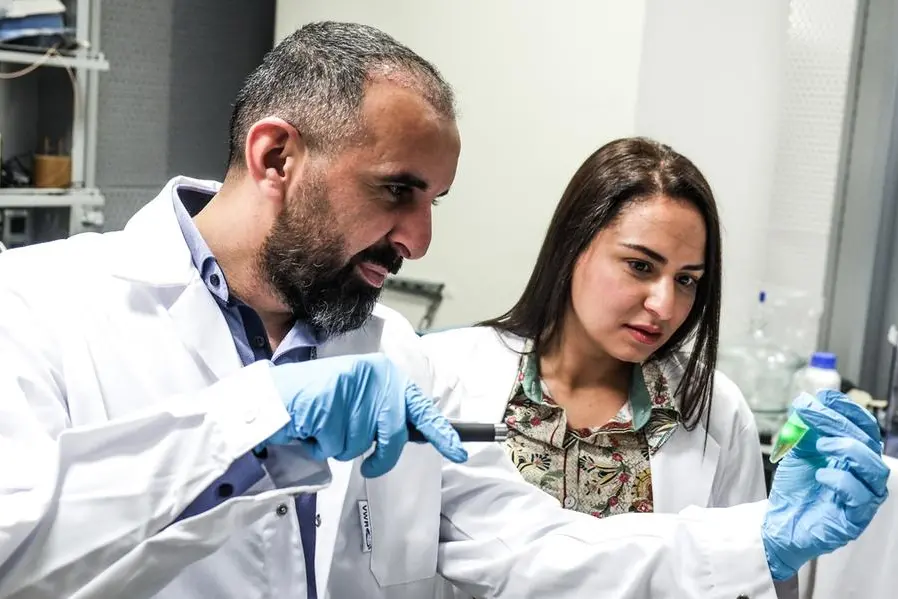
Abu Dhabi, UAE: Researchers at NYU Abu Dhabi have developed smart molecules that can both detect and treat cancer, offering a safer and more precise approach to care.
The research, published in the Journal of the American Chemical Society, focuses on magnetic resonance imaging (MRI), a widely used tool that allows doctors to see tumors inside the body. While MRI agents are commonly used for diagnosis, they do not typically play a role in treatment. The NYU Abu Dhabi team designed molecules that combine both functions in a single system.
Unlike conventional drugs, which are small and relatively simple, these molecules have interlocked structures that resemble knots and rings. This design allows them to behave differently inside the body, improving both imaging and therapeutic performance.
The molecules are made from manganese and organic components. They remain inactive in healthy tissue but become active inside tumors, which are slightly more acidic. Once activated, they release manganese ions that enhance MRI contrast and trigger a therapeutic effect that damages cancer cells. The molecules were synthesized by Thirumurugan Prakasam, a research scientist in the Trabolsi group at NYU Abu Dhabi.
Importantly, the researchers showed that these molecules can cross the blood-brain barrier and accumulate in glioblastoma tumors. This enables clear imaging of brain tumors, which are often difficult to detect and monitor with existing contrast agents.
The technology was tested in aggressive glioblastoma tumors, one of the most challenging cancers to diagnose and treat. Achieving both clear imaging and a therapeutic effect in this model highlights the strength of this approach and its potential for clinical use.
“Our goal was to create materials that allow doctors to see cancer clearly and treat it at the same time,” said Farah Benyettou, lead researcher on the study at NYU Abu Dhabi. “The ability to image and target brain tumors with high precision is particularly exciting.”
The manganese-based compounds also offer a safer alternative to gadolinium, a metal commonly used in MRI contrast agents that can accumulate in the body and cause side effects in some patients.
Professor of Chemistry at NYU Abu Dhabi Ali Trabolsi said the work brings diagnosis and treatment closer together. “The unique structure of these molecules gives them capabilities that traditional drugs simply do not have.”
The findings introduce a new generation of MRI agents that combine diagnosis and treatment in a single platform, with the potential to make cancer care faster, safer, and more precise.
This work was supported by the core technology platforms at NYU Abu Dhabi.
About NYU Abu Dhabi
www.nyuad.nyu.edu
NYU Abu Dhabi is the first comprehensive liberal arts and research campus in the Middle East to be operated abroad by a major American research university. Times Higher Education ranks NYU among the top 31 universities in the world, making NYU Abu Dhabi the highest globally ranked university in the UAE. NYU Abu Dhabi has integrated a highly selective undergraduate curriculum across the disciplines with a world center for advanced research and scholarship. The university enables its students in the sciences, engineering, social sciences, humanities, and arts to succeed in an increasingly interdependent world and advance cooperation and progress on humanity’s shared challenges. NYU Abu Dhabi’s high-achieving students have come from over 120 countries and speak over 100 languages. Together, NYU's campuses in New York, Abu Dhabi, and Shanghai form the backbone of a unique global university, giving faculty and students opportunities to experience varied learning environments and immersion in other cultures at one or more of the numerous study-abroad sites NYU maintains on six continents.