PHOTO
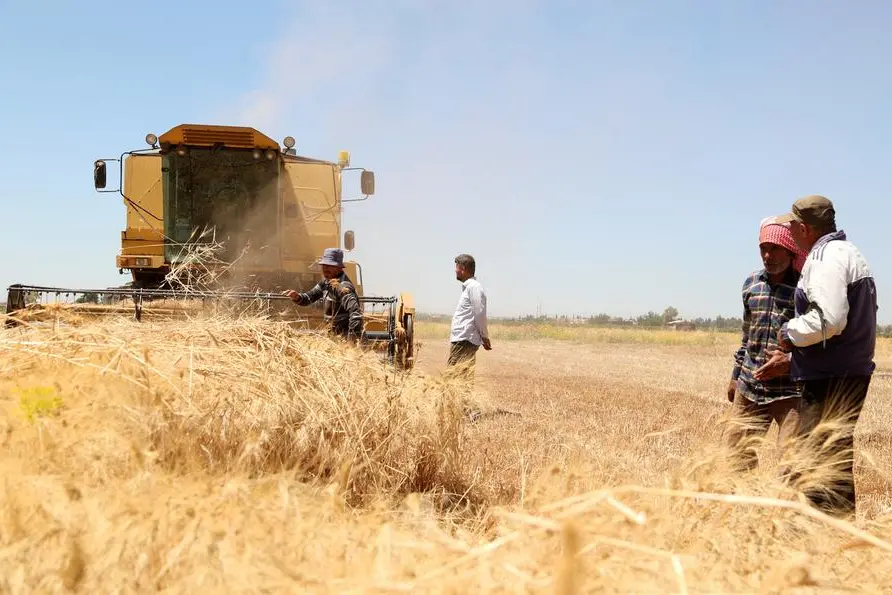
Syria's wheat production is expected to more than double this year, authorities said, bolstered by heavier rains and the state's recapture of a northeastern breadbasket region from Kurdish forces — but demand has grown in parallel.
The agriculture ministry estimates a harvest between 2.3 million and 2.5 million metric tons of wheat this year, senior ministry official Ahmed Jalal Al-Ahmad told Reuters. Last year's production stood at around 900,000 metric tons.
"We were blessed with a bountiful harvest season," Ahmad said.
Production increased partly "due to a season of heavy rainfall", a surprise turnaround after last year's historic drought slashed wheat production and threatened a food crisis.
Ahmad said the harvest projection was also higher because the count included contributions from northern and northeastern provinces, held for years by Kurdish authorities but now merged into state control after an offensive by Syrian government troops.
The contributions from three recaptured provinces make up more than half of the expected production, with Hasakah expected to yield around 800,000 tons, Raqqa 300,000 tons and Deir ez-Zor about 250,000 tons, he added.
"These 1.5 million tons represent the real difference in the increased production this season compared to last year."
In the years leading up to the government's takeover, wheat production in these regions suffered from prolonged droughts and constant fighting between the various factions controlling them.
NEW BUYING PLATFORM DRAWS FARMERS' IRE
Despite the stellar harvest, Syria will still need to import some of its wheat, as the country requires around 4 million tons a year, Ahmad said.
Hundreds of thousands of Syrians who fled the country during its nearly 14-year war have returned after the ousting of Bashar al-Assad and the ascent of Islamist-led authorities.
"We may always need to import during this period until we reach full recovery to meet market demand, especially for soft wheat used in bread production," Ahmad said.
He said the agriculture ministry was working to expand grain infrastructure in the north and northeast, planning to add more than 15 grain centres in Hasakah, Raqqa, Deir ez-Zor and the Aleppo countryside.
The state buys and sells domestic wheat through the Syrian Grain Establishment and set a price of $380 per ton this year, with an incentive bonus of about $70 per ton delivered, according to Syrian state media.
The government has launched a new electronic platform to organise the purchases and set appointments for farmers to deliver their produce to grain centres. However, it has drawn the ire of producers who say the system is disconnected from local needs and realities on the ground.
"Booking platforms don't suit the agricultural fields," farmer Abdullah Al-Issa said. "The size of the platforms is one thing, the reality is another, the offices are another, and the farmer's reality is something else entirely."
Issa also complained about this year's low wheat prices compared with last year. In 2025, the government's incentive bonus was $130 for every ton delivered.
"The prices aren't commensurate with the wheat's value; they're very low," he said.
(Reporting by Khalil Ashawi in Damascus, Mahmoud Hassano in Aleppo, Orhan Qereman in Hasakah; Additional reporting by Kinda Makieh in Damascus; Writing by Nazih Osseiran; Editing by Maya Gebeily and Milla Nissi-Prussak)