PHOTO
A major, yet unheralded, logistics deal in June 2026 has successfully bridged the gap between the Central Asian steppe and the Arabian Sea. By acquiring a controlling stake in Uzbekistan’s Universal Logistics Services and Highway Logistics Centre, Oman’s Asyad Group—alongside Orient Group and UzOman—now commands facilities that process nearly a quarter of Uzbekistan's rail containers and dominate its premium storage space. This strategic acquisition effectively hands a country sitting 2,000 kilometres inland a direct link to global shipping lanes, simultaneously granting Oman a lucrative entry point into a high-growth emerging economy. It is the culmination of a partnership that has shifted from mutual agreements into hard, operational infrastructure
WHY CENTRAL ASIA, AND WHY NOW
The numbers make the urgency plain. Uzbekistan’s economy expanded by 7.7 per cent in 2025, and the World Bank, IMF and Asian Development Bank all project growth between 6.4 and 6.8 per cent for 2026 — placing it among the five fastest-growing economies across Europe and Central Asia, a region otherwise expanding at barely 2 per cent. Inflation eased to 7.3 per cent, unemployment fell to 4.8 per cent, and international reserves climbed to roughly $70 billion by January 2026. The national poverty rate was nearly halved in a single year, from 8.9 to 5.8 per cent. These are not the statistics of a frontier curiosity; they are the markers of a market coming of age.
Central Asia as a whole — a young, reform-minded region of more than 80 million people — is rerouting its trade and seeking reliable, neutral gateways to global markets. That is exactly the role Oman has spent much of the past decade preparing to play.
A LEGACY ALREADY BUILT
The Oman–Uzbekistan relationship is far from new. The Uzbek-Oman Investment Company was established in 2009 as a partnership between Uzbekistan’s Fund for Reconstruction and Development and the Oman Investment Authority, with committed capital of $500 million and over $300 million in assets under management. It ranked among the earliest foreign direct investors in Uzbekistan and has since channelled around $200 million into strategic developmental projects.
That foundation is now scaling quickly. Around ten companies with Omani capital operate in Uzbekistan today, and nearly twenty further joint projects worth an estimated $3.2 billion are under active development across petrochemicals, energy, mining, agriculture, textiles, food processing and tourism. The fifth session of the Omani-Uzbek Joint Committee, held in Tashkent in 2025, expanded air-transport rights and committed both sides to re-exporting Uzbek goods through Omani ports.
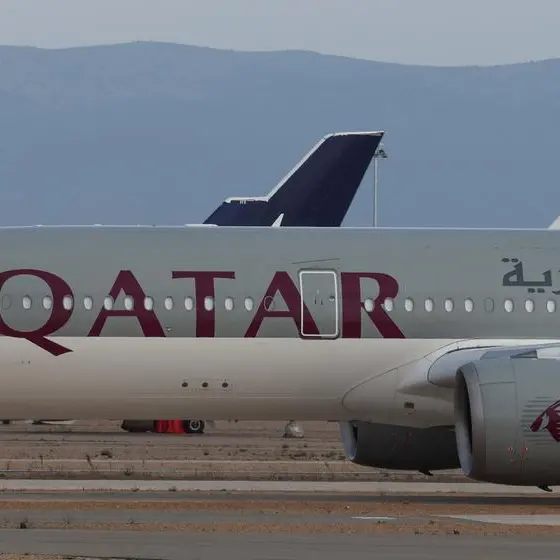
The relationship is set to gain further momentum with Oman Air’s new direct Muscat–Tashkent service, commencing on July 3, 2026. More than simply adding another route to the airline network, the direct connection creates a practical bridge for investors, business delegations, tourists and entrepreneurs, accelerating face-to-face engagement and making partnerships easier to build and commercial opportunities faster to pursue.
Business forums in Muscat and Tashkent have drawn leading names — Suhail Bahwan Group, Sohar International Bank, Oman Cables, Asyad and MB Holding — into strategic development projects across multiple sectors of the economy.
THE CORRIDOR AS A VALUE CHAIN
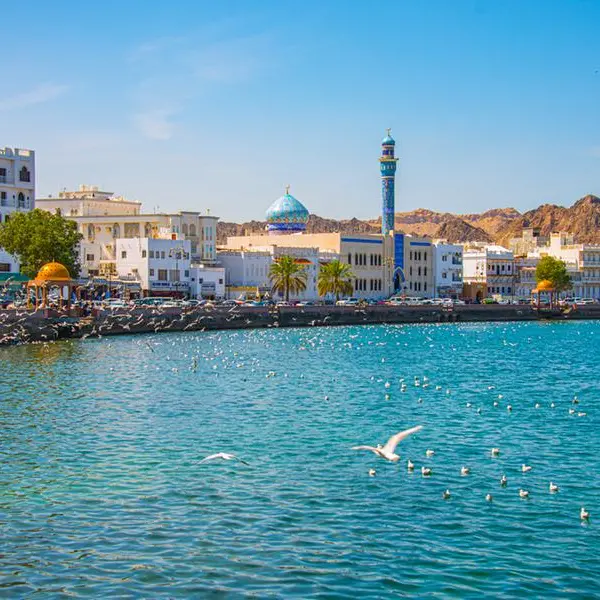
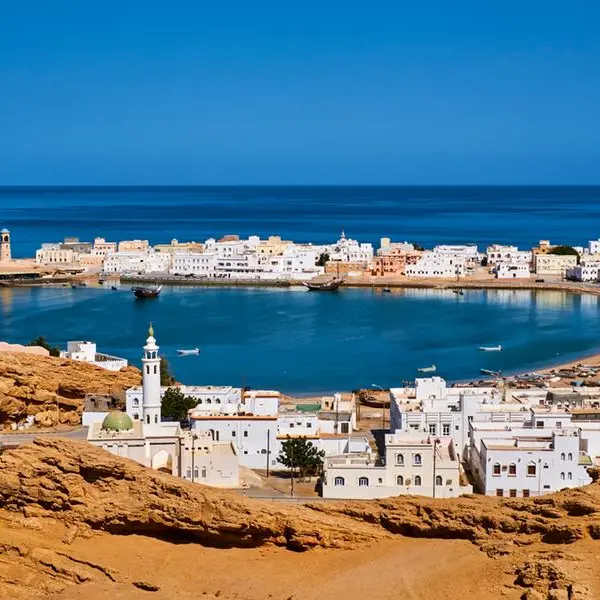
The Asyad acquisition draws these threads into a single, coherent logistics spine. Cargo originating in Tashkent can now flow through an integrated multimodal network to Oman’s ports at Suhar, Salalah and Al Duqm — and onward to the Gulf, Africa, South Asia and Europe. Crucially, Duqm and Salalah sit beyond the Strait of Hormuz, offering shippers additional routing resilience and reduced exposure to one of global trade’s most sensitive chokepoints.
The economic logic runs both ways. The corridor aligns squarely with Oman Vision 2040 and the Oman Logistics Strategy 2040, which seek to convert the Sultanate of Oman’s geography into a diversified, non-oil engine of growth.
The Duqm Special Economic Zone alone — 2,000 square kilometres with 100 per cent foreign ownership, multi-decade tax holidays and zero re-export duties — has already attracted over $14 billion in committed investment. For Uzbekistan, the corridor connects to its own mega-projects, from the China–Kyrgyzstan–Uzbekistan railway to the proposed Trans-Afghan route, thereby multiplying the economic value of every new logistics link and every additional kilometre of connectivity.
WHAT IT MEANS FOR BUSINESS
For investors and entrepreneurs, the opportunity is strikingly concrete. Omani manufacturers and traders gain access to a market of nearly 38 million consumers with rising incomes at the heart of Eurasia. Uzbek producers gain warehousing, port access and a re-export platform to reach buyers they could never serve alone.
The opportunities, however, extend well beyond trade in goods. Tourism, professional services, education and hospitality stand to benefit from the direct air link, which can bring Uzbek visitors to Oman while encouraging Omani and Gulf travellers to explore Uzbekistan as one of Central Asia’s most compelling cultural and historical destinations.
The most exciting space lies between the giants: small and medium enterprises in logistics services, cold-chain and food processing, textiles, fintech, halal products, construction materials and tourism can plug directly into a corridor whose hard infrastructure is already being laid. The UzOman fund and the two countries’ chambers of commerce offer ready entry points — the institutional architecture is already in place and the commercial opportunities are increasingly tangible.
This growing institutional momentum will also be reflected at the Tashkent International Investment Forum, held from 16 to 18 June 2026, where Omani ministerial and institutional participation signals a deepening commitment to expanding economic cooperation and identifying practical public-private partnership opportunities across logistics, energy, mining, food processing, tourism, textiles and financial services. The forum provides a direct platform for engagement with policymakers and investors and marks another step in moving bilateral relations into a more structured and commercially driven phase.
CHALLENGES, HONESTLY MET
No partnership of this ambition comes without friction. Distance, customs harmonisation, currency convertibility and the steady maturing of Uzbekistan’s private sector are real considerations. Yet these are precisely the gaps the partnership is designed to close.
A controlling logistics stake lowers transit cost and uncertainty; joint investment vehicles share risk; and reforms now underway — including Uzbekistan’s WTO accession path and continued fiscal discipline — are steadily reducing the barriers that once kept this market beyond the comfort zone of many international investors.
THE VIEW FROM HERE
What began as a $500 million handshake in 2009 is maturing into a working artery between the Central Asian steppe and the Indian Ocean. The vision is long-term and patient, but its direction is unmistakable: two confident, reform-minded economies are building something that outlasts any single deal — a durable economic corridor linking landlocked opportunity to global markets through open water.
The combination of maritime connectivity, direct air links and growing institutional engagement is creating something larger than a trade relationship. It is building a practical bridge between Central Asia and the Indian Ocean, turning diplomatic goodwill into a steady movement of people, capital, businesses and opportunities. For Oman, for Uzbekistan, and for the businesses bold enough to move first, the gateway is already open.
2026 © All right reserved for Oman Establishment for Press, Publication and Advertising (OEPPA) Provided by SyndiGate Media Inc. (Syndigate.info).