PHOTO
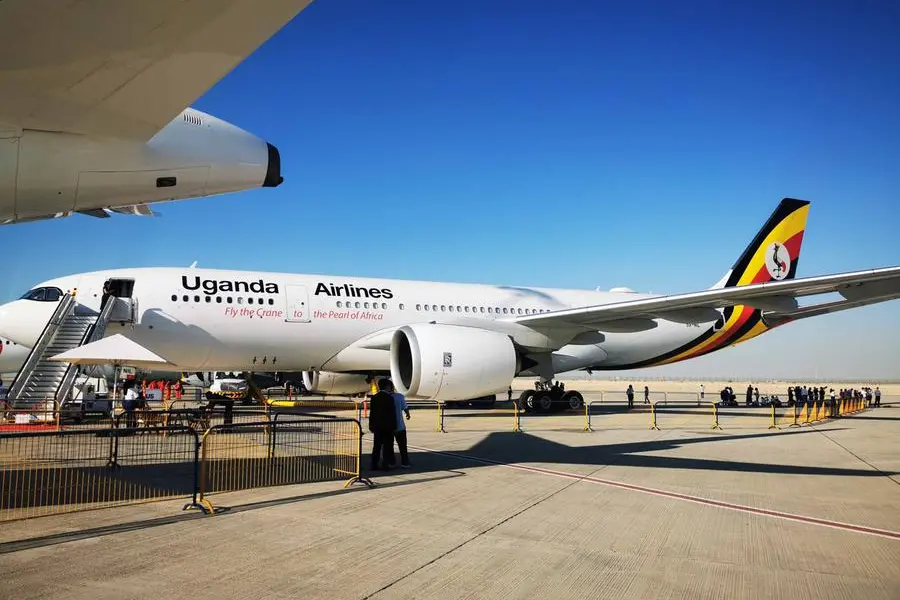
Uganda Airlines has moved to stabilise its operations and rebuild network reliability after taking delivery of the first of two wet-leased Boeing 737-800 aircraft from Ethiopian Airlines, in what signals a broader operational reset under interim chief executive Girma Wake.
The Boeing 737-800 arriving from Ethiopian Airlines is aircraft registration ET-APL, one of the Ethiopian carrier’s upgraded “re-winged” narrow-body jets equipped with modern forked scimitar winglets similar to those found on the Boeing 737 MAX family.
The aircraft rolled off the production line on June 12, 2012 and was delivered to Ethiopian Airlines later that month. It was briefly leased out between February 2014 and August 2015 before returning to the Ethiopian fleet.
The first aircraft arrived on May 12, with a second Boeing 737-800 expected to join the fleet in June as the national carrier seeks to restore capacity, improve schedule flexibility and reposition its Airbus A330 fleet for long-haul operations.
Announcing the development, Uganda Airlines said the additional aircraft would strengthen operational resilience and enhance connectivity across its network.“Today, we officially welcomed the first of two newly leased aircraft into the Uganda Airlines fleet with a wet-leased Boeing 737-800 operated in partnership with Ethiopian Airlines. This addition strengthens our operations and enhances flexibility as we continue to deliver greater connectivity across our network,” the airline said in a statement.
Industry analysts say the move reflects an increasingly aggressive recovery strategy by Wake, who took over interim leadership at a time when the airline was grappling with operational disruptions, fleet shortages and mounting pressure on its medium and long-haul network.
The lease arrangement also offers an early indication of Wake’s broader turnaround strategy for the airline, which sources say is built around an aggressive expansion drive intended to rapidly rebuild market presence across Africa.
Sources familiar with the plans say Uganda Airlines is preparing to announce new routes into East, West and Central Africa, alongside additional frequencies on existing services, as management moves to deepen connectivity through Entebbe and strengthen feeder traffic into the airline’s long-haul network.
The additional Boeing 737-800 capacity is expected to play a central role in that strategy by giving the airline greater operational flexibility to expand frequencies on high-demand regional routes while also opening medium-haul destinations that were previously difficult to sustain with the current fleet structure.
Analysts say the approach reflects a classic aviation “surge strategy” aimed at restoring passenger confidence, improving aircraft utilisation and positioning the airline for future fleet growth.
The two aircraft are expected to remain in Uganda Airlines’ fleet until at least 2028, by which time the airline hopes to begin receiving its own new-generation Boeing narrow-body aircraft.
The leasing strategy is understood to form part of a wider restructuring and expansion plan aimed at rebuilding operational consistency while preparing the airline for future fleet renewal and long-haul growth.
Industry insiders say Wake’s approach goes beyond short-term recovery and is intended to support increased frequencies across Africa, deepen regional connectivity and position the airline for future intercontinental expansion.
The move also signals a significant operational pivot for Uganda Airlines as it balances the economics of fleet ownership against the immediate need for dependable capacity and schedule stability.
With both Boeing and Airbus facing extended order backlogs stretching several years, leasing has increasingly become a strategic tool for airlines seeking rapid capacity expansion without waiting for new aircraft deliveries.
The latest fleet additions come as Uganda Airlines continues to pursue an ambitious 10- aircraft expansion strategy that includes planned acquisitions of new Boeing wide-body aircraft for long-haul operations and additional narrow-body jets for African routes.
For now, the arrival of the Ethiopian Airlines-operated Boeing 737s provides breathing room as management works to restore operational confidence and steady the carrier’s growth trajectory.
© Copyright 2026 Nation Media Group. All Rights Reserved. Provided by SyndiGate Media Inc. (Syndigate.info).