PHOTO
Egypt’s Deputy Prime Minister for Industrial Development and Minister of Industry and Transport, Kamel Al-Wazir, conducted an inspection tour to review progress on phase two of the Bus Rapid Transit (BRT) project and ongoing works under the second phase of the Greater Cairo Ring Road development.
The visit comes as part of Egypt’s broader efforts to expand sustainable and environmentally friendly public transport systems, while maintaining close oversight of major service and infrastructure projects implemented by the Ministry of Transport.
During the tour, Al-Wazir reviewed implementation rates for Phase Two of the BRT project, which extends from El-Moshir Tantawy Station to the Fayoum Road intersection. This phase spans 57 kilometres and includes 21 stations, forming part of the project’s three-phase plan that will deliver a total of 48 stations upon completion.
Phase Two includes a mix of station designs, comprising ten surface stations accessed via pedestrian bridges, five surface stations accessed through pedestrian tunnels, and six non-standard stations. Key stops include three stations along the Maryoutiya axis—Haram, King Faisal, and Tersa—as well as the Grand Egyptian Museum Station on the Alexandria Desert Road.
The inspection also covered the integration of BRT stations with transport hubs located beneath the Ring Road, which serve passengers travelling to and from the corridor. Officials reviewed pedestrian access through bridges and tunnels, passenger waiting areas, ticketing systems, and the operation of electronic gates.
Al-Wazir stressed the importance of accelerating the completion of Phase Two, particularly in light of the strong passenger turnout recorded during the operation of Phase One, which runs from the Ring Road–Alexandria Agricultural Road intersection to the Police Academy Station. He said the success of the first phase reflects the effectiveness of the ministry’s strategy to encourage public transport use, reduce reliance on private vehicles, cut travel time and costs, protect the environment, and improve traffic flow.
He added that the BRT system delivers high-quality services through a modern fleet of locally manufactured electric buses. The project connects major intersections along the Ring Road, including Suez Road, Adly Mansour, El-Marg, and Mostorod, and serves as a vital transport artery linking East and West Cairo. It also provides direct connectivity to the New Administrative Capital through a single, fast, clean, and safe mode of transport.
The BRT network is integrated with other public transport systems, including Metro Line 1 at Zahraa and El-Marg stations, Metro Line 3 at Adly Mansour and Imbaba stations, and the Light Rail Transit (LRT) system at Adly Mansour.
Al-Wazir explained that the BRT project was implemented as a cost-effective alternative to the previously planned Metro Line 5, which would have run underground for around 24 kilometres with 17 stations at an estimated current market cost of $6bn. By comparison, the total estimated cost of the BRT project will not exceed $1bn at current prices, while covering a significantly longer distance of 110 kilometres.
He also noted that all BRT stations are designed to incorporate integrated transport hubs, parking facilities, and commercial areas to serve residents in surrounding districts and BRT users alike.
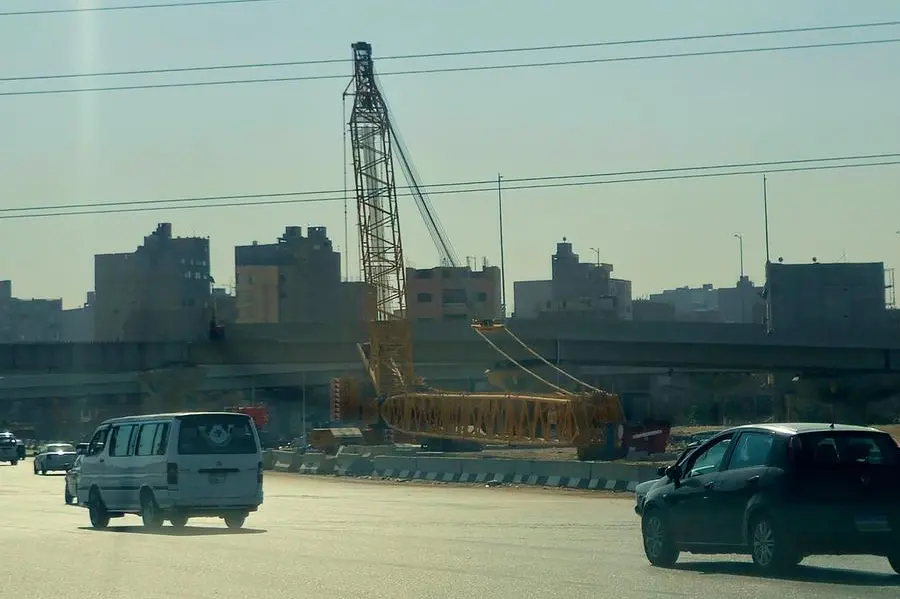
In parallel, the Deputy Prime Minister reviewed progress on the second phase of the Greater Cairo Ring Road development project, which extends for 34 kilometres from the Alexandria Agricultural Road intersection to the Alexandria Desert Road intersection. The works include the construction of a new 2.25-kilometre bridge at El-Warraq, both north and south of the existing bridge, expanding the road in this section to eight lanes in each direction.
The tour included a review of completed major maintenance works on Bridge 9D, which has been reopened to traffic, as well as progress on road sections linking the Alexandria Desert Road, Wahat Road, Maryoutiya, and Mansouriya. Al-Wazir also inspected construction works on Zewail Bridge, which is expected to ease congestion in Hadayek Al-Ahram and Zewail City.
In addition, he reviewed the implementation of 10-metre-wide service roads on both sides of the Ring Road, the development of new traffic axes to improve accessibility, and ongoing works related to road markings, signage, lighting upgrades, landscaping, and continuous cleaning.
Describing the Ring Road development as “a true epic project”, Al-Wazir said it is being executed around the clock. He noted that the first phase, covering 76 kilometres, has already contributed to improved service levels, reduced travel times, lower fuel consumption, and reduced environmental impacts. He affirmed that work is continuing at full pace to complete the second phase of this vital national project as soon as possible.
© 2026 Daily News Egypt. Provided by SyndiGate Media Inc. (Syndigate.info).