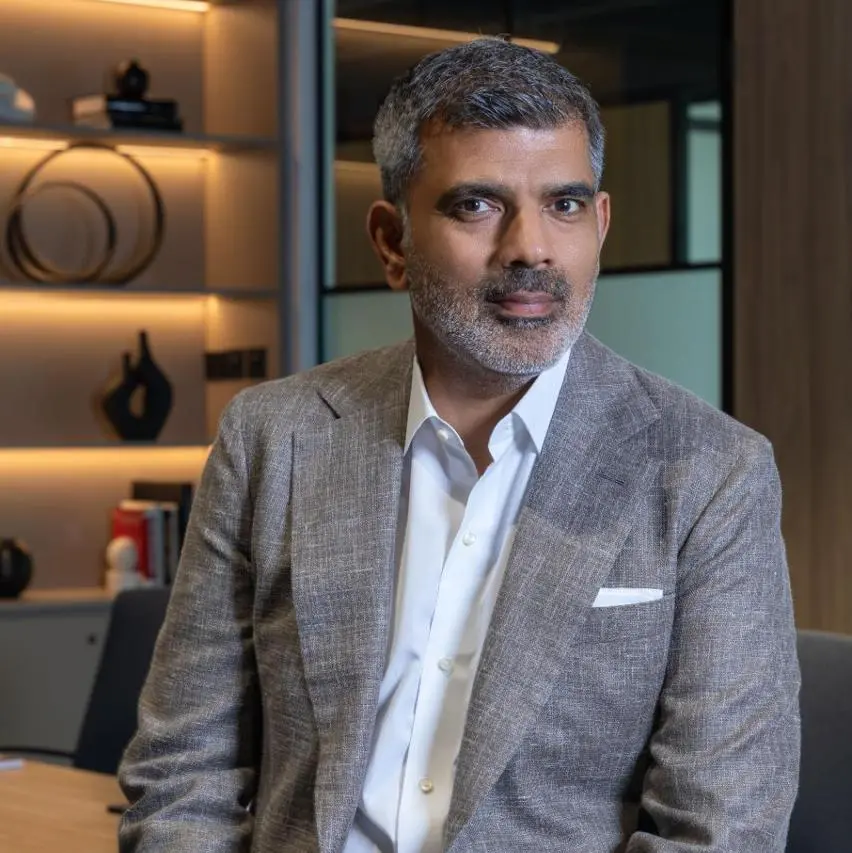
ABN AMRO is one of the major international banks in the region putting its experience into the many project finance opportunities. Bruce Macfarlane, regional head of structured loans and advisory, global markets spoke to Ruth McKee about its experience in the YANSAB deal.
Over the past few years the Gulf region has increasingly become a key market for ABN AMRO, specifically in the project and infrastructure financing arena. Bruce is currently building a team that can deal with all aspects of structured financings. Bruce moved to Dubai last year from the bank's Singapore office to build out the structured loans and advisory business, who will undertake all types of structured debt transactions, with project finance having a major role.
The bank has had strong ties in the Gulf region since the 1920s and was the first international bank to open an office in Saudi Arabia (now Saudi Hollandi Bank). The two banks recently closed Saudi Arabia's largest ever Greenfield project financing for Saudi Basic Industry Corporation's (SABIC) $5 billion subsidiary, the Yanbu National Petrochemicals Company (YANSAB). The deal raised $3.5 billion of debt.
What attracts ABN AMRO to a deal?
There is very significant volume of the business in the region, particularly in Saudi Arabia and Qatar, but ABN AMRO is taking a very focused approach. Typically we prefer to only come into a deal where we can leverage our strong structuring or distribution capability taking roles such as sole bookrunner, or other roles that allow a strong influence over the deal structure and documentation. We have to be adding value to the process and not just along for the ride, so we are quite selective.
Everyone has a different approach, you will see some institutions that are volume driven, doing a large number of deals in many sectors like power, oil and gas, petrochemicals, metals and maybe a bit of real estate. They will largely only take on transactions that fit in with their model and they can process quickly.
Our approach is to offer a more tailored solution, we actually look to see what we can bring to the table in each transaction, and where we can do something special for the client.
YANSAB is a good example. They are a big client and important to the bank. We already had a strong relationship with them and we looked at what more we could do for them. In the end we had the advisory role, Initial Mandated Lead Arranger role and we fully underwrote the deal. Large multi sourced financings is something that plays strongly to our capability, and particularly in the Middle East where we have a dedicated Islamic finance unit.
It's not all huge deals that we do. We are looking at some smaller transactions now, $100 million, $300 million, in areas where we have expertise within the bank or the team locally and where we think we could do something quite different.
You closed the YANSAB deal earlier in the summer. What would your continued involvement and role be in something like this?
In June all the loan documentation was signed. We have a continuing involvement in helping the borrower to meet their conditions precedent, so that the loan can be drawn. We have a continuing dialogue with the client. Sometimes they need changes to the documentation or the financial model we built needs changing because the outlook has changed, so we help them with that.
You acted as the sole bookrunner and Initial Mandated Lead Arranger in this deal, how significant was this?
It's the first time there has been a sole bookrunner on a deal of this magnitude in the MENA region, and the idea of having the advisor and the arranger from the same outfit is relatively new to this region. We have done it in other places and it is not rocket science. It's very different, however, in that there is a potential conflict of interest in doing it. We had geographically separated teams; we ran the advisory out of Dubai and all the arranging out of London with no overlap at all. To do that you have to have real depth within the capability of your institution. You have to be able to separate the roles, and the client has faith in you doing this to avoid the conflict of interest.
How do you find competing for mandates like these?
Like everybody else, it's legwork. If you sit and read about it, or somebody phones you up, it's too late. If that's the first you hear about it then somebody has been there before you. We focus on specific clients that we want to apply our business to and typically where there will already be an existing relationship and dialogue or mutual interest in establishing such a relationship.
How did you manage the Islamic tranches?
We have a dedicated team who only do Islamic transactions. We will be the hub and will bring them in to help us in speaking to pure Islamic institutions, early on in the process they will help us with the structuring and with the specific requirements that you have for Islamic financing; the documentation and approvals from Shari'ah scholars.
Will a lot more project financing be done Islamically, in line with the global growth of Islamic finance?
Over the last two years the volume has shot up. In Saudi Arabia listed companies are under pressure to be as Islamic as they can be and that stretches over into their debt financings. Where they can raise Islamic debt, they will. They want to be seen to be maximising it to the extent that they can. This pressure from the public is very significant - YANSAB had a very successful an IPO with nearly nine million new shareholders, equivalent to roughly half the population of Saudi Arabia. The idea is to take the country's domestic resources and instead of putting them into the hands of a few major players you give the public an opportunity to participate.
Where else are you getting involved in project finance in the region?
There are interesting projects everywhere in the region, but vary greatly. The two biggest countries historically here are Saudi Arabia and Qatar. Qatar is very well established and they have a typical structure that they replicate every time and are comfortable with, its proven to be very successful and pricing has been forced right down. I think they are reaching a point now where they have pushed that as far as they can go, whereas in Saudi there is more variety. Companies like SABIC and Saudi ARAMCO can come to the market with aggressively priced deals, but there are lots of smaller players in that market who don't have SABIC's influence and need to rely more on good structuring and more attractive pricing. These smaller players tend to follow the more traditional approach to project financing and require a lot more advice and help with the structuring and putting together of the commercial structures.
As the project finance market develops in the region, are you seeing financial models changing as well?
They always change. The industries themselves are evolving as well so every opportunity is unique. It's simply not a case of doing the same as we did on the last deal, each deal is different particularly where you are jumping across industrial sectors.
Are all the big names working here yet, or are there more coming in?
In 2005 there was 100% growth in the project finance market over 2004 and statistics published in June showed 50% up on last year so you cannot afford not to be here. If you are not here, then people will be asking you why not. In terms of having an on the ground presence, no not everybody is here yet.
© Banker Middle East 2006