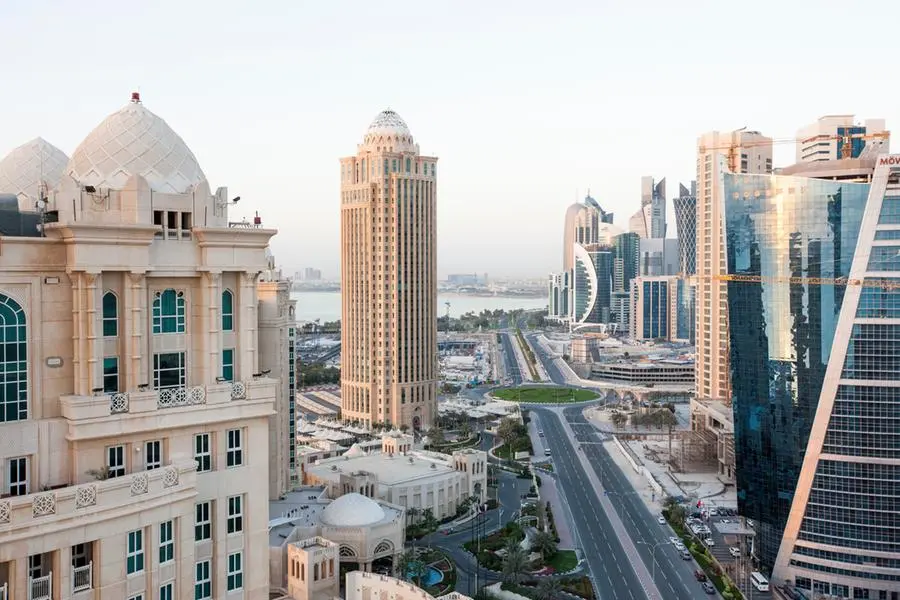
Bahrain, Qatar, Kuwait, Libya, Djibouti, UAE, Yemen, Saudi Arabia, Oman and Egypt.
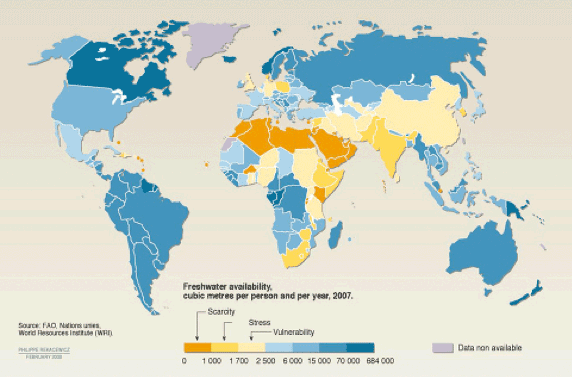
No, this is not a random list of Middle East & North African countries, but a global top ten list of countries facing the most acute water shortage.
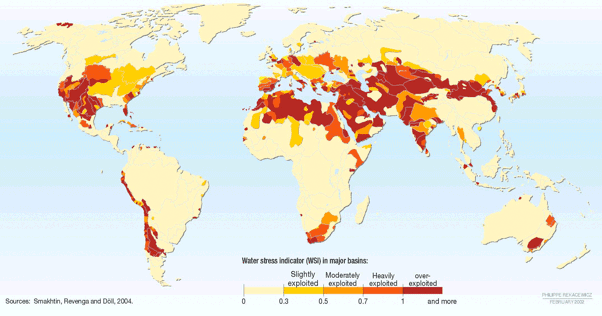
A new report by Maplecroft, a risk and strategy consultancy, notes that water stress has major implications for global supply chains, especially within the major growth economies. And it is the Middle East that's at greatest risk.
"The MENA region is one of the most water stressed regions in the world," Dr Charlie Beldon, principal environmental analyst at Maplecroft, said in an emailed interview. "Although water management in the region is challenging due to limited renewable water supplies, cooperation and cohesive policies across the region could help to alleviate some of the pressures placed on the water supply."
In 2004, Arab Governments established the Arab Ministerial Water Council, a non-profit organisation that promotes awareness of water issues across the region. This type of cooperative action, and increasing awareness of the issue, are needed to promote water stress as a top priority issue.
"A concerted and cohesive effort to reduce the amount of water wasted as well as to increase water re-use in the region could help relieve water stress," Dr Beldon told alifarabia.com.
Despite efforts at co-operation, the situation remains perilous. For example, over-extraction of ground water has already lead to brackish water in the Dammam aquifer in Bahrain and unless a way is found to reduce water use the risks of water shortages will increase.
Approximately 85% of total water is used for agricultural production in the region; lessening fresh water use for farming could considerably reduce water stress, Dr. Beldon recommends.
Middle East states are already acting to reduce agricultural water use by investing in farm land in less water-stressed countries such as Sudan, the Philippines, Turkey and Kenya.
Saudi Arabia and the UAE are among the top four countries on a massive investment spree to acquire agricultural resources.
A report by the Land Matrix group - an amalgamation of global think-tanks - looked at how rich countries are scouring for land resources in poor but agricultural-rich countries.
"According to the Land Matrix data, investors from Gulf states have acquired land mainly in Africa (113 deals) and South East Asia (53 deals)," the report notes.
Gulf states' investors have acquired agricultural land in developing countries such as Northern Africa and the Horn of Africa, as well as Asian countries with Muslim populations (Pakistan, the Philippines and Indonesia). In some cases, Gulf investors have also invested in developed countries, such as Qatari investments in Australia), Land Matrix noted.
By importing water intensive crops and grain and switching to more drought-tolerant crops, much of the water used in agriculture could be repurposed. However, the practice of 'land-grab' is associated with considerable controversy with some instances of human rights abuses, land ownership or cultural violations being reported, notes Maplecroft's Dr. Beldon.
RISING GULF NEEDS
What's worse is that demand for water is set to double over the next 20 years due to rising populations and economic growth, especially in developing economies.
Saudi Arabia and the UAE already lead the world in desalinated water and that's set to continue. Overall, the Middle East constitutes 10% of all water and wastewater treatment plants, with Asia taking up 44%, Europe 24% and North America 11% and Latin America 11%.
That's set to grow as Gulf states are expected to spend USD29-billion over the next two years on their power infrastructure alone, according to ratings agency Moody's Investors Services.
"Over 2006-2010, companies... had earmarked around USD58-billion in cash to invest in generation capacity and networks," said Moody's in a note. "We expect that aggregate spending will increase significantly as the optimisation of assets is due to accelerate, notably in Saudi Arabia."
In addition, Gulf States will make great demands on their very scarce resources in construction, further development of their oil and gas industry which is very water-intensive, and a raft of billion-dollar projects.
Projects planned and under way in the Gulf stand at USD1.8-trillion, according to Citibank Group. This is supported by the region's largest market, Saudi Arabia, which has close to USD650-billion - and rising. Meanwhile, the UAE has close to a USD600-billion project pipeline.
This is, no doubt, going to take a huge toll on the region's scarce water resources.
WATER PROJECTS
While much of the future investment in water technology across the Gulf States is directed towards desalination capacity, that's not a particularly good thing for the environment.
"Although desalinated water provides a significant amount of the region's drinking water, up to 99% in Qatar, it is unlikely to be able to fully compensate for the increasing pressure placed on the water supply from both population growth and the effects of climate change," said Dr. Beldon. "Current desalination technology is energy-hungry and polluting, and the excess salt produced is discharged into surrounding waters."
Indeed, salt levels in some parts of the Arabian Gulf have reached eight times that of normal and are in danger of both damaging marine ecosystems and the industries that rely on them, as well as reducing the efficiency of the desalination plants themselves. As such desalination is unlikely to provide a long term solution to the problem, unless significant technological advances can be made.
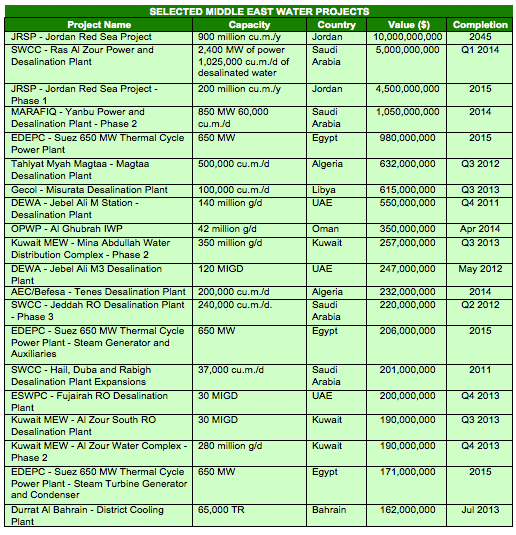
Nevertheless, there are close to 60 water-related projects under way in the Middle East with a combined value of at least USD27-billion, according to Zawya Projects Monitor.
The largest is the USD10-billion Jordan Red Sea Project with a capacity of 900-million cubic metres per year. The project will be implemented in five phases. The first phase will consist of the production of 200 million cubic metres per year of desalinated water, notes Zawya Projects Monitor profile on the project.
In addition, a desalination plant of 50 million cubic metres per year will be constructed in Aqaba - the other desalination units will be located near the Dead Sea.
Meanwhile, Saudi Arabia is set to be home to the massive 550,000 million cubic metres per year Yanbu Power and Desalination Plant.
Oman is also developing two major projects: the 400-million cubic meters per year Manadhif Desalination Plant costing USD4.67-billion, and a 300-million cubic metres per year Sail Village Destination Plant to be built at a cost of USD2.65-billion.
RESIDENTIAL USAGE
Beyond these developments, the region will have to take a close, hard look at its water consumption habits. Reusing and recycling water and power will be crucial in extending the region's water needs.
Gulf countries' residential sectors consume 47% of power, compared to a global average of 25%, suggesting greater awareness among the population can reduce consumption, notes management consultancy Deloitte.
The per capita electricity consumption during the period 2007-2035 in the GCC is likely to increase at an annual rate of 2.5% , with a large part of this rate attributed to a growing population, as opposed to 0.8% in the US.
"So we can expect that in a matter of a few years, GCC residents may well be outright leaders in the per capita residential electricity use race," notes Deloitte in a report.
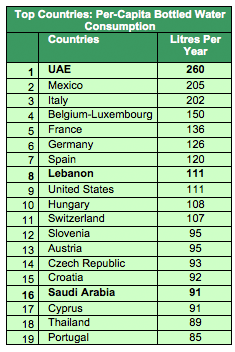
The UAE also leads the world in consumption of bottled water, an astonishing 260 litres per person per year, with Mexico a distant second at 205 litres per year.
Lebanon (111 litres per person per year) and Saudi Arabia (91 litres per person per year), also make it in the world's top 20 consumers of bottled water.
GLOBAL ISSUE
While acute in the Middle East, water shortage is a worldwide phenomenon and has the potential to impact the global economy.
Businesses should undertake impact assessment and monitoring of water stress and water security and other areas of risk that conflate with such pressures including food security, conflict and energy availability, said Maplecroft CEO Alyson Warhurst. "Supply chain risk, if not managed strategically, can lead to business discontinuity and unforeseen costs that undermine the profitability of projects".
"The growth economies of China and India, and the world's largest economy USA are identified by risk analysis company Maplecroft, in its newly released Water Stress Index, as having vast geographical regions and sector areas where unsustainable water use is outstripping supply," said the risk consultancy.
The situation is so serious, it has the potential to limit economic growth by constraining business activities, as well as hampering agricultural outputs, warns Maplecroft.
"Resulting reductions in crop harvests in these countries will also negatively impact local food supplies and global food prices, while the socio-economic impacts of water shortages, especially in India and China, have the potential to create unrest and affect stability, as populations and business compete for dwindling supplies."
CONCLUSION
One way to lessen the burden on the Middle East's water resources is cut subsidies on water to encourage less water waste.
"Potentially unpopular policies are unlikely to be given priority given the current emphasis on mitigating the risk of social discontent," notes Maplecroft's Dr Beldon.
However, there is a silver lining to this very dark cloud. Water shortages have the potential to increase cooperation between the often fractious states.
"Shared management of water resources and the need to maintain adequate, sustainable and clean water supplies could force cooperation between countries."
READ MORE HERE
Global Land Rush
Great Resource Rush
Middle East's Ecological Footprint
USD53-Billion Food Basket
© alifarabia.com 2012