PHOTO
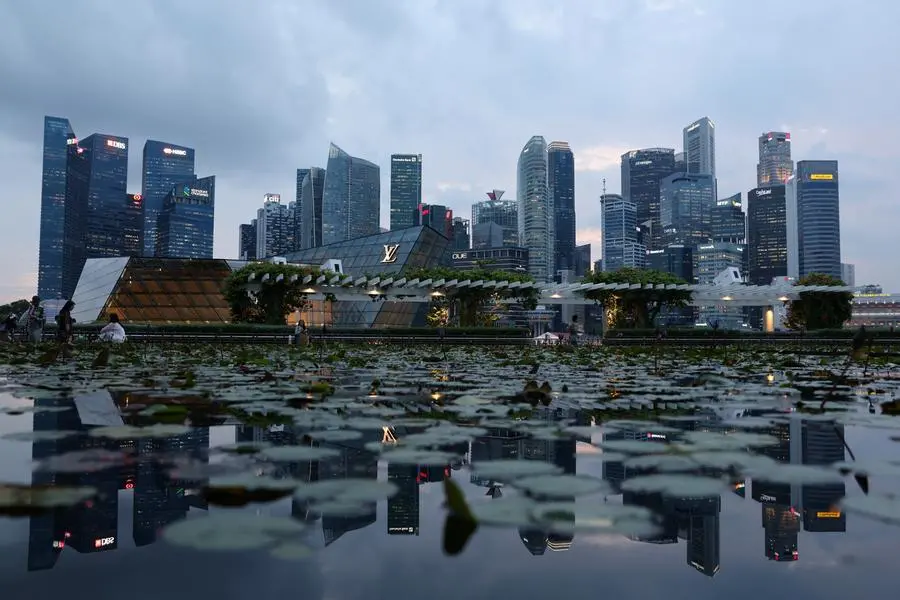
SINGAPORE - Singapore will deliver a support package worth almost S$1 billion ($780 million), including cash handouts and fuel vouchers, to offset the economic impact of the Middle East conflict, Senior Minister of State for Finance Jeffrey Siow said on Tuesday.
The measures follow the sharp rise in energy costs due to the Iran war, and Siow noted the support was greater than a package put in place after Russia's invasion of Ukraine in 2022, which also drove up fuel prices.
"We do not know how long the conflict and its economic impact will last, but the government is alive to the situation," he said.
Measures include cash handouts to eligible Singaporeans, fuel vouchers for car-hire platform workers, private-hire car drivers and taxi drivers, as well as an increased corporate tax rebate of 50%, up from the 40% announced in the FY2026 budget in February.
Deputy Prime Minister Gan Kim Yong said early data indicated economic activity was resilient in the first quarter of 2026, although growth is likely to be affected by the conflict.
The trade ministry has forecast growth this year at 2% to 4%, and Gan said any change to that would be announced after a regular review next month.
Coordinating Minister for National Security K Shanmugam noted that Singapore depends on imported natural gas to generate 95% of its electricity needs, and 9% of this year's needs were expected to have been imported from Qatar.
He said the city-state had not drawn on its reserves, which consist of natural gas and diesel, and was looking at increasing them even though it would be costly.
He said that Singapore, the world's third-largest oil trading hub and sixth-largest refinery export hub, had continued to meet its domestic needs and international obligations for fuels.
"It keeps Singapore relevant in the international energy trade, and this has enabled us to have continued access to crude oil," he said.
In February's budget, the fiscal surplus for FY2026 (April-March) was forecast at S$8.5 billion.
($1 = S$1.28)
(Reporting by Jun Yuan Yong; Editing by John Mair)