PHOTO
Dubai, UAE: A new regional survey by Deloitte’s Tax & Legal business shows that organizations across the GCC are rapidly adopting Generative AI (GenAI) in tax, finance, and legal functions - but many are still struggling to move from experimentation to enterprise-wide impact.
Based on insights from senior tax and finance leaders across Saudi Arabia, the UAE, Qatar, and Kuwait, the survey shows rapid acceleration in GenAI adoption across the GCC. Non-adoption fell sharply from 52% in 2024 to 29% in 2025, while survey participation rose 47% year over year. The survey results indicate that GenAI has become a mainstream strategic priority for regional leadership teams.
While early adoption focused on basic productivity tasks such as email drafting, priorities have moved toward research and analysis (41%) and accuracy and quality improvement (38%). This reflects a transition from efficiency-led experimentation to more strategic value creation. At the same time, 93% of respondents expect AI to have a significant impact on their organizations, highlighting strong regional confidence in the technology’s long-term potential.
Yet despite this momentum, execution remains a key challenge. While 18% of organizations are actively piloting GenAI use cases, only 9% have begun scaling solutions, and just 10% report having enterprise-wide AI strategies and governance frameworks in place. More than 63% remain in pre-implementation stages, underscoring the need for clearer operating models, stronger governance, and structured adoption roadmaps to translate ambition into measurable outcomes.
Automation continues to be a major opportunity area, with 53% of respondents prioritizing automation, particularly in data validation and data reconciliation. However, leaders are increasingly emphasizing quality over speed, with research and data analysis accounting for 41% of current GenAI applications, signalling demand for deeper analytical support rather than simple task automation.
Implementation approaches vary widely across the region. While some organizations are adopting subscription-based or hybrid models, 38% say they are still exploring how to operationalize GenAI, reinforcing the need for advisory support to bridge strategy and execution.
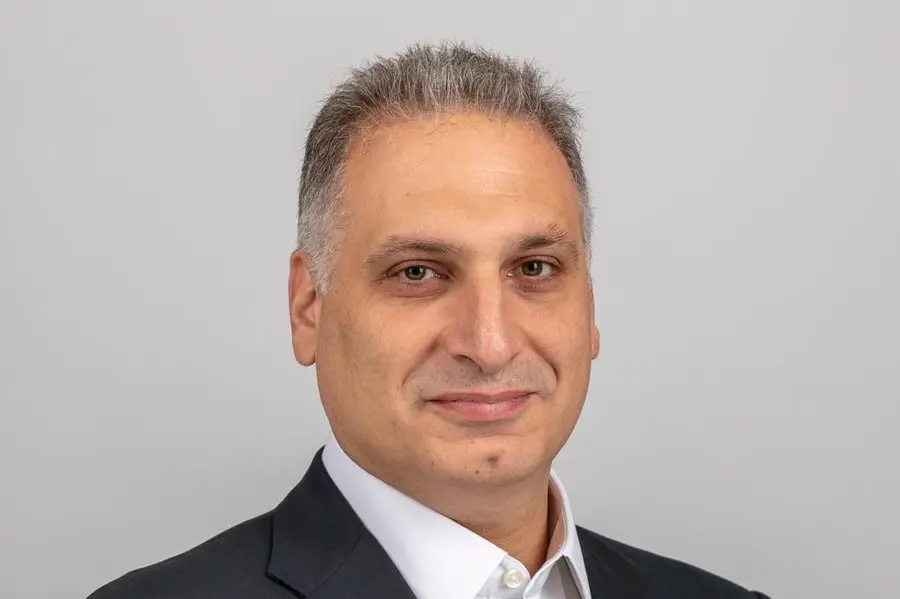
Reflecting on the regional landscape, Muhammad Bahemia, Middle East Tax Leader at Deloitte, said: “The pace of Generative AI adoption across the GCC reflects a region that is both ambitious and pragmatic. Leaders clearly recognize the technology’s potential, but many are now confronting the harder question of how to scale it responsibly. Through our work across tax, finance, and legal functions, Deloitte is helping organizations translate innovation into disciplined execution; strengthening governance, building capabilities, and embedding AI in ways that deliver measurable value and enduring trust.”
Further commenting on the findings, Mohamed Serokh, Partner, at Deloitte Middle East, said: “What we’re seeing across the GCC is a clear shift from curiosity to action. Leaders recognize GenAI’s potential to fundamentally reshape tax, finance, and legal functions, particularly in research, analysis, and quality improvement. However, our survey also shows that many organizations are still navigating how to move from pilots to scalable impact. Success will depend on strong governance, capability development, and a disciplined approach to implementation.”
The survey concludes that while experimentation is widespread, the next phase for GCC organizations must focus on structured execution. Prioritizing high-impact use cases in research and tax analysis, strengthening governance frameworks, and investing in workforce readiness to support responsible, scaled adoption.
Explore the survey insights on this link.
About Deloitte & Touche (M.E.) LLP:
Deloitte & Touche (M.E.) LLP (“DME”) is the affiliate for the territories of the Middle East and Cyprus of Deloitte NSE LLP (“NSE”), a UK limited liability partnership and member firms of Deloitte Touche Tohmatsu Limited, a UK private company limited by guarantee (“DTTL”).
DME is a leading professional services organization established in the Middle East region with uninterrupted presence since 1926. DME’s presence in the Middle East region is established through its affiliated independent legal entities, which are licensed to operate and to provide services under the applicable laws and regulations of the relevant country. DME’s affiliates and related entities cannot oblige each other and/or DME, and when providing services, each affiliate and related entity engages directly and independently with its own clients and shall only be liable for its own acts or omissions and not those of any other affiliate.
DME provides services throughout 26 offices in 14 countries with more than 7,000 partners, directors and staff.
About Deloitte:
Deloitte refers to one or more of Deloitte Touche Tohmatsu Limited (“DTTL”), its global network of member firms, and their related entities (collectively, the “Deloitte organization”). DTTL (also referred to as “Deloitte Global”) and each of its member firms and related entities are legally separate and independent entities, which cannot obligate or bind each other in respect of third parties. DTTL and each DTTL member firms and related entity is liable only for its own acts and omissions, and not those of each other. DTTL, NSE and DME do not provide services to clients. Please see www.deloitte.com/about to learn more.
Deloitte provides Audit & Assurance, Tax & Legal and Consulting and related services to nearly 90% of the Fortune Global 500® and thousands of private companies. Our professionals deliver measurable and lasting results that help reinforce public trust in capital markets, enable clients to transform and thrive, and lead the way toward a stronger economy, a more equitable society and a sustainable world. Building on its 175-plus year history, Deloitte spans more than 150 countries and territories. Learn how Deloitte’s approximately 457,000 people worldwide make an impact that matters at www.deloitte.com.