PHOTO
Dubai, UAE – The Mohammed Bin Rashid School of Government (MBRSG) has announced it is now accepting submissions, papers, and research proposals for its scientific conference on ‘Finance and International Trade in the New Era of Protectionism’.
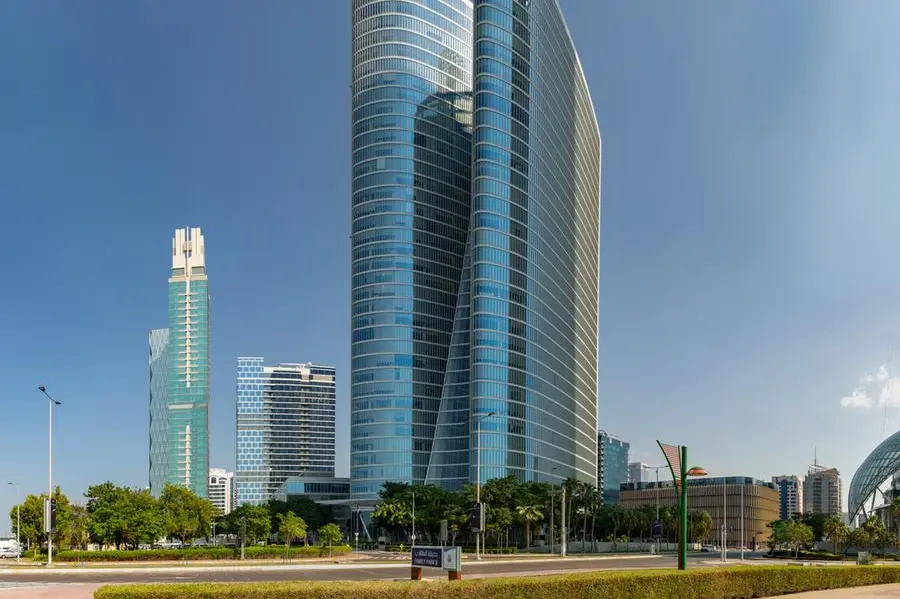
Organised in collaboration with the Arab Planning Institute (API) in Kuwait, the event will take place on 28-29 September 2026 at MBRSG’s headquarters in City Walk, Dubai, bringing together a select group of academics, experts, and policymakers from across the Arab region and beyond.
The conference aims to examine current shifts in global trade and financial systems amid the rise of new protectionist trends, addressing the implications of these developments for international trade, trade and investment finance, and global supply chains. Discussions will place particular emphasis on the impact of these changes on Arab economies, exploring the public policy responses required to effectively navigate them.
Several principal themes are on the agenda for the conference, including transformations in trade policies; the challenges associated with financing trade and investment; the impact of non-tariff barriers; the role of industrial and trade policies in advancing what is termed ‘smart protection’; and prospects for Arab economic integration amid rapid global shifts.
His Excellency Dr. Ali bin Sebaa Al Marri, MBRSG’s Executive President, affirmed that: “The scientific conference on ‘Finance and International Trade in the New Era of Protectionism’ forms part of our mission at the Mohammed Bin Rashid School of Government to support applied research in public policy. It offers a prominent knowledge platform for analysing global economic shifts and assessing their impact on Arab economies, with the aim of developing more balanced and resilient policies to address current challenges.”
“With its regional and international partnerships, MBRSG aims to serve as an intellectual platform that combines academic expertise with practical experience,” His Excellency added. “This, in turn, contributes to shaping forward-looking perspectives that support decision-makers in addressing complex economic challenges.”
Dr. Al Marri went on to note that cooperation with the Arab Planning Institute in Kuwait reflects how Arab research institutions play complementary roles in advancing development priorities and shaping the future.
Professor Adel Al-Wugayan, Director General of the Arab Planning Institute (API) in Kuwait, said: “The conference is a joint Arab scientific platform to deepen discussion of the structural transformations affecting the international finance and trade systems, particularly in light of rising protectionist tendencies and the structural challenges they pose to Arab economies. Its organisation reflects the shared commitment of the Institute and the School to supporting applied research that links academic analysis with policymaking and offers practical options to strengthen the resilience of Arab economies, diversify trade finance instruments, and enhance their capacity to adapt to an international environment characterised by heightened risk and uncertainty. We hope that the conference will generate actionable recommendations that support decision-makers across the region.”
For his part, Prof. Khalid Al Wazani, Professor of Economics and Public Policy at MBRSG, said: “The conference is a systematic research initiative designed to examine the intersection between economic sovereignty and free trade, against the backdrop of major transformations reshaping the rules of global competitiveness. The ‘new protectionism’ has extended beyond traditional customs restrictions to include technological and environmental standards, as well as digital instruments that influence the flow of trade.”
This academic initiative seeks to draw in forward-looking research projects that strengthen the resilience of Arab supply chains and advance trade finance processes, he added, noting that the event aims to chart a research roadmap that can support decision-makers in managing risk and securing sustainable growth in an increasingly uncertain international environment.
Organisers of the conference invited academics, researchers, policymakers, and other interested parties to submit original research papers in either Arabic or English, where all abstracts must be submitted no later than 15 March 2026. The results of the initial review will be announced on 1 May 2026.
Full papers are then due by 1 July 2026, and the outcomes of the final evaluation will be announced on 1 August 2026.
Research proposals must include the title of the study, a clear statement of the main research problem, the methodology to be employed, an outline of the proposed structure, and the expected findings, together with the researchers’ CVs.
Submissions should be sent to the Chair of the Scientific Committee at conference2026@api.org. The committee will notify applicants of the review results within one month of receiving entries.
If a proposal is accepted, researchers will be required to complete their papers in accordance with recognised academic standards and established scholarly referencing conventions. Acceptance of a proposal does not constitute final acceptance of the full paper, which remains subject to formal evaluation.
The process reflects the two organisers’ commitment to attracting rigorous, high-quality research papers that enrich scholarly debate and support decision-makers and economic policymakers in the Arab region, particularly in a highly uncertain international environment.