PHOTO
Ondo Governor, Lucky Aiyedatiwa on Monday, outlined a decisive shift in the State’s economic policy, emphasising a move from consumption-led governance to a private sector-driven industrial economy.
Speaking at the Ondo State Investment Summit 2026, Aiyedatiwa declared that Ondo State is open for business, innovation, and global partnerships, signaling a major shift toward a private sector-driven economic agenda.
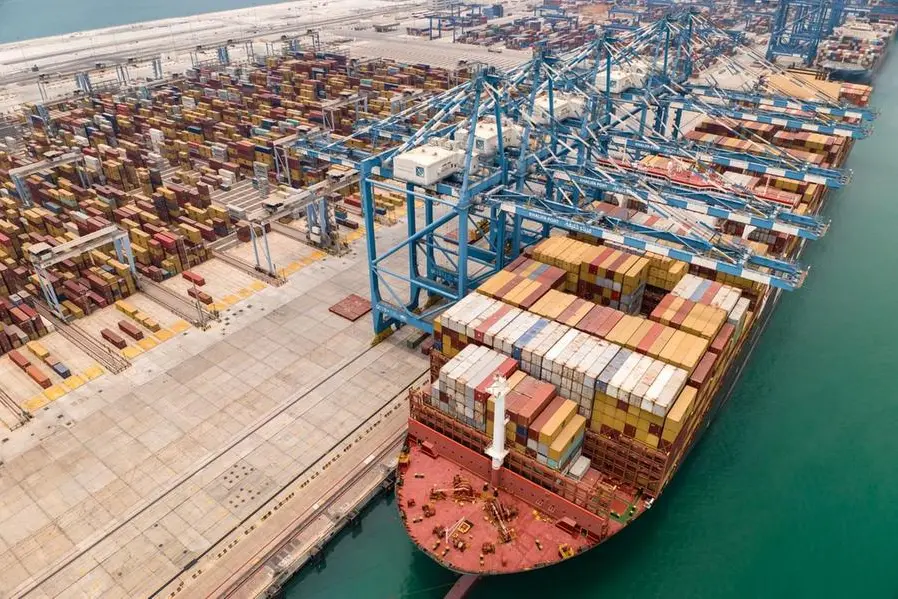
The Governor announced two major investment frameworks: a Deep Sea Port project, where the state holds a 12.5 per cent stake and private partners 87.5 per cent, and a $4 billion petrochemical fertilizer plant in the state’s southern senatorial district with Resident Fertilizer.
He said under his administration’s agenda, the state is prioritizing enabling policies for investment by simplifying processes, strengthening institutions, improving transparency, and accelerating approvals.
The governor disclosed that his administration is embarking on a decisive economic shift from consumption to production, saying the state will no longer rely predominantly on civil service structures and will reposition itself as a private sector-led industrial powerhouse driven by structured policy, regulatory clarity and political will.
“Investors do not go where there is potential alone. They go where there is structure, certainty, and political will and Ondo State offers all three,” he said.
He stated that the summit was not a ceremonial gathering but a commitment to measurable outcomes and assured participants that every engagement, investment discussion and decision reached at the forum would be tracked.
He added that by the 2027 edition, the state would present implemented projects and demonstrable economic impact arising from commitments made this year.
The governor said the government had prioritised creating an enabling environment where investment thrives by simplifying processes, strengthening institutions, improving transparency and accelerating approvals.
Aiyedatiwa highlighted Ondo State’s key advantages: 75 km of Atlantic coastline, vast bitumen and mineral deposits, fertile cocoa, oil palm, rubber, and timber lands, oil-producing communities, strong connectivity, and a vibrant diaspora.
Central to the state’s industrial plan are the Ondo Deep Sea Port, designed for large commercial vessels, and the adjoining Sunshine Industrial City, a 2,771-hectare Free Trade Zone forming an integrated port-linked industrial ecosystem for manufacturing, petrochemicals, agro-industry, and logistics with direct export access.
The Governor described the convergence of geography, policy support, tax incentives and institutional backing as a frontier opportunity grounded in strong fundamentals.
On energy and industrial development, Aiyedatiwa cited Ondo’s proximity to the Niger Delta energy belt as a compelling advantage for gas-based industries, embedded generation solutions and independent power projects tailored to industrial clusters.
As global production models evolve under the energy transition, he said the state is positioning itself as a reliable hub for distributed and transition-economy energy solutions.
The Governor also stated the importance of human capital, noting that the state’s youthful population running into millions is energetic, innovative, and increasingly skilled.
He said the government is intensifying entrepreneurship and innovation programmes while expanding support for small and medium enterprises and young entrepreneurs.
Reaffirming that sustainable development is private sector-driven and government-enabled, the Governor pledged that the government would provide infrastructure, regulatory clarity, security and policy stability, while investors bring innovation, capital and global competitiveness.
Institutionalising the Investment Summit as an annual platform, he said future editions would review tracked investments, executed projects and testimonials from investors who seized opportunities presented.
In his goodwill message, the Senate President, Senator Godswill Akpabio, congratulated the governor on the occasion of his first anniversary as elected governor of Ondo State.
Akpabio, who was represented by Senator Jimoh Ibrahim of Ondo South Senatorial District, called on the state government to adopt strategic thinking and position itself for success on the global stage.
He enjoined the governor to ignore criticism, noting that his achievements will speak for him. He also urged the governor to have a strategy that can serve as his legacy even after his tenure in office.
In his address, the Special Adviser to the Governor on Entrepreneurship and Innovation, Dr Summy Smart Francis, said the summit was aimed at repositioning the state for greater prosperity.
He called on all residents of the state in the diaspora to return home and invest in the state.
In his welcome address, Director-General of the Project Performance and Implementation Monitoring Unit (PPIMU), Engr Rasaq Obe, described the summit as a turning point, insisting on a shift from rhetoric to tangible assets that benefit the people.
He described the state as a destination at the local government level and the food basket of the South, ranking among the largest producers of cassava in West Africa, with cocoa regarded among the finest globally.
In his remarks, Chairman of the Coscharis Group, Cosmas Maduka, highlighted emerging opportunities, while examples from MTN Group’s expansion into Nigeria illustrated the enormous value of decisive action. He recounted how an initial $10 million commitment eventually yielded $1 billion within a year, stressing that domestic investment drives sustainable growth more effectively than government allocations.
At the panel session, speaking on federal reforms, the Special Adviser to the President on Economic Affairs, Tope Fasua, outlined measures taken by the administration, including reforms on the naira, fuel subsidy removal, and taxation, which he said were aimed at easing investment across states.
He described the state as strategic, with opportunities in agriculture, solid minerals, and the blue economy, noting its connection to the Lagos-Calabar Expressway corridor. He maintained that prosperity must be demonstrated through reinvestment within the state rather than exporting wealth elsewhere.
On her part, Chairman/Chief Executive Officer of the Nigerians in Diaspora Commission, Abike Dabiri-Erewa, called for optimism and focus, saying repositioning key sectors would require collective action from Nigerians at home and abroad.
She emphasised the critical role of the diaspora in driving investment and development within the state. She urged Nigerians abroad to see the state not merely as a point of origin but as a land of opportunity ripe for strategic engagement.
“Investing in your homeland is not just a patriotic act; it is an economic imperative,” Dabiri-Erewa said. She stressed that enabling legislation and government protocols are in place to support investors, both local and foreign, and encouraged stakeholders to take advantage of initiatives designed to reposition key sectors of the economy.
“We must work together to ensure that the resources and skills of Nigerians abroad are harnessed to create jobs, build industries, and strengthen our economy,” she said.
At the close of the summit, stakeholders agreed that Ondo’s path to prosperity lies not in revenue sharing but in mobilising capital, building industries, and creating jobs through deliberate and sustained investments.
Copyright © 2026 Nigerian Tribune Provided by SyndiGate Media Inc. (Syndigate.info).