PHOTO
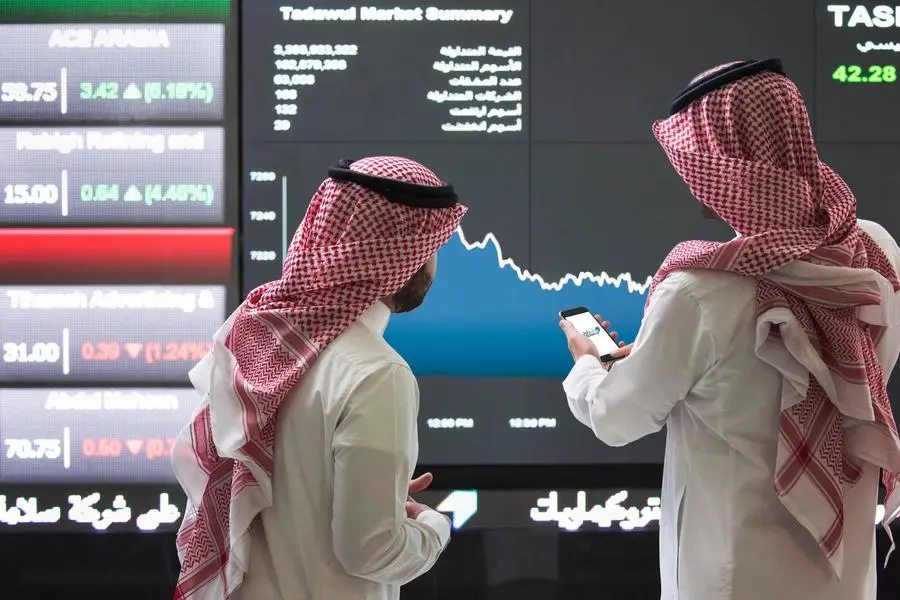
The ongoing Middle East crisis is driving a regional equity rotation, and this shift has already begun to favour Saudi Arabia, with the Tadawul All Share Index (TASI) rising 4.4% between March 1 and 11, an analyst said.
Saudi Arabia’s relative outperformance is partly due to the market having been oversold in 2025, when TASI fell around 13%, making it one of the GCC’s notable laggards, said Junaid Ansari, director of investment strategy at Kamco Invest.
“We expect these gains to continue as, when the war ends, the impact of recent reforms would support growth in TASI,” he added.
The Kingdom has also been less directly affected by the recent attacks compared to other Gulf markets, which saw sharper sell‑offs due to their proximity to the conflict, with Dubai’s DFM and Abu Dhabi’s ADX showing sharp declines. While the initial missile strike pushed TASI down nearly 5% intraday, the index closed 2.2% higher, and since March 4 it has delivered a 2.46% total return, one of the strongest in the region.
“The divergence in returns [among GCC markets] suggests that Saudi equities have held up comparatively well despite the broader risk-off sentiment,” said Vijay Valecha, CIO at Century Financial.
Much of TASI’s resilience stems from Saudi Aramco, whose weight in the index and strong correlation with oil prices help offset declines in other stocks. Companies such as SABIC and Ma’aden also benefited from improved sentiment as higher oil and commodity prices strengthened their outlook. Energy‑linked names like Rabigh Refining and Petrochemical Co., Bahri, and Saudi Arabia Refineries further supported the rally.
Elsewhere, the Ramadan effect, which typically boosts Consumer Staples, Food & Beverage, and Healthcare, was even more pronounced this year as investors gravitated toward defensive sectors amid heightened geopolitical risk.
“Overall, the recent moves in Saudi stocks reflect a mix of different factors. Consumer staples have been doing well as spending usually rises during Ramadan. At the same time, higher oil prices have supported energy and materials companies. With the current geopolitical tensions, many investors are also shifting toward more defensive sectors,” said Valecha.
In contrast, banking and financial stocks have lost ground since the war began despite a 16% rise in aggregate 2025 net profit.
According to Valecha, two pressures are weighing on the sector. First, the conflict has fuelled expectations of higher funding costs for GCC banks tapping international debt markets due to wider risk premiums. Second, stress in the US private‑credit sector has spilled over into global debt markets, amplifying pressure on Gulf lenders.
However, elevated oil prices, which boost government revenue and deposit inflows, provide a significant buffer.
“That’s key for Saudi lenders, given their high domestic and single‑sector concentration,” Valecha noted.
Seasonal factors around Eid often bring lighter trading or mild profit‑taking, but analysts say this year could be different.
“This time we believe it would be different and despite the Eid holiday, we believe investors would grab the opportunity if the situation improves,” Ansari said.
Valecha agreed, adding that “any selling pressure is likely to be limited, with investors continuing to treat short-term dips as buying opportunities.”
Valuations remain attractive
While some stocks are in oversold territory, Saudi valuations remain attractive for long‑term investors.
“The TASI P/E ratio has spiked after Aramco’s results earlier this week. But excluding Aramco, the exchange still trades below 20x earnings, which remains attractive given reforms-driven growth,” said Ansari.
Should the conflict extend beyond Eid, Saudi equities may face short‑term volatility, but Valecha expects the long‑term structural outlook to remain relatively resilient compared to other regional markets.
(Reporting by Brinda Darasha; editing by Seban Scaria)