PHOTO
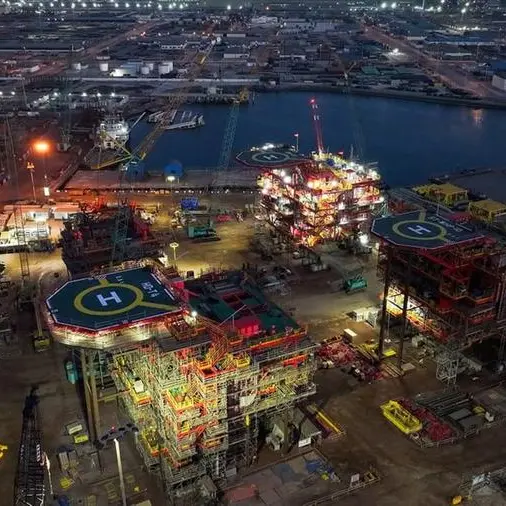
SYDNEY: Shares in Asia fell broadly on Thursday, as oil prices leapt 9% to above $100 a barrel on reports of more ships hit in Gulf waters and the closure of oil terminals - a jump that promises to fuel inflation and push borrowing costs higher worldwide.
Investors took little comfort from the International Energy Agency's plan to release 400 million barrels of oil from its reserves, the largest such move in its history. As part of that, the U.S. said it would release 172 million barrels of oil from next week.
Both oil benchmarks were up 9%, with Brent crude futures at $100.22 a barrel, extending a rise of more than 4% overnight. U.S. crude futures were at $95.41 a barrel.
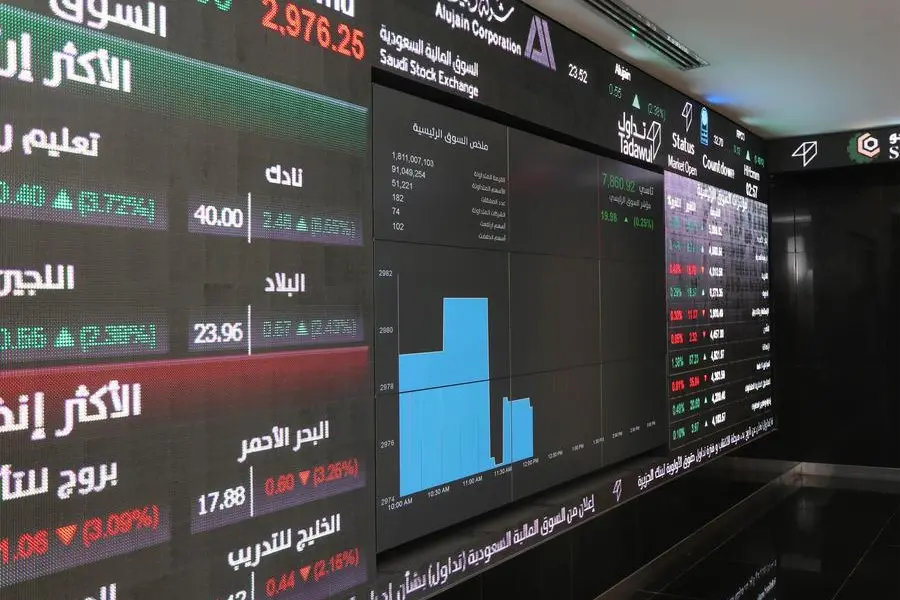
Shares slid, with MSCI's broadest index of Asia-Pacific shares outside Japan falling 1.6%, while the Nikkei dropped 1.5%.
Chinese blue-chips lost 0.6% and Hong Kong's Hang Seng index skidded 1.2%.
Both S&P 500 futures and Nasdaq futures fell 1%. EUROSTOXX 50 futures were down 1% and DAX futures lost 1.1%.
Two fuel tankers in Iraqi waters had been struck by explosive-laden Iranian boats, Iraqi security officials said early on Thursday, while an Iraqi official told state media that its oil ports "have completely stopped operations."
Bloomberg reported that Oman has evacuated all vessels from its key oil export terminal at Mina Al Fahal as a precautionary measure.
"Multiple tankers loaded with Iraqi crude are now reported burning in the Persian Gulf off the coast of Basra, engulfed in flames and leaking burning oil into the water," said Tony Sycamore, analyst at IG.
"This appears to mark a direct and forceful Iranian response to the IEA's overnight announcement of a massive strategic reserve release aimed at cooling runaway prices."
Iran had earlier stepped up attacks on merchant ships in the Strait of Hormuz, telling the world to get ready for oil at $200 a barrel. On Wednesday, three vessels were reported to have been hit in Gulf waters as Iran's Revolutionary Guards said their forces had fired on ships in the Gulf that had disobeyed their orders.
Throwing more uncertainty into the air, U.S. President Donald Trump on Wednesday declared the war on Iran has been won but he will stay in the fight to finish the job.
INFLATION RISKS
U.S. data showed the consumer price index rose 0.3% in February, in line with forecasts and above January's 0.2% increase. The report, however, was not regarded as particularly relevant given that the Iran war has started to fuel inflation.
In bond markets, the risk of rising inflation outweighed safe-haven considerations to shove yields higher globally. Yields on 10-year Treasury notes rose 4 basis points to 4.2472% on Thursday, having jumped 6 bps overnight.
Fed funds futures extended their slide as investors feared higher inflation would make it harder for the Federal Reserve to ease policy. Markets are just wagering one more rate cut from the Fed this year.
The danger of energy-driven inflation has led markets to wager the next move in rates from the European Central Bank could be up, possibly as early as June.
Nervous investors sought the liquidity of dollars while shunning currencies from countries that are net energy importers, including Japan and much of Europe.
The euro slipped 0.3% to $1.1536, after closing at the weakest level since November last year. The dollar inched up 0.1% to 159.12 yen, the strongest level since January when reported rate checks from the U.S. Fed spooked yen bears.
The risk-sensitive Australian dollar lost 0.3% to $0.7133, having hit a more than three-year high of $0.7188 on Wednesday as bets for an imminent rate hike from its central bank grew. (Reporting by Stella Qiu; Editing by Lincoln Feast and Edwina Gibbs)