PHOTO
- The UAE-India partnership creates a huge opportunity for investors and business community of both the countries as bilateral trade to double from US$100 billion to US$200 billion in just seven years, officials said at a Geo-Economic Summit organised by ICAI Dubai Chapter
- Indian economy is aspired to exceed US$30 trillion by 2047 – when India turns 100;
- Bilateral trade between India and the UAE to double the US$100 billion mark recorded in 2024-25 financial year to touch US$200 billion by 2032;
- India’s US$150 billion annual infrastructure gap provides a huge opportunity with 25 per cent annual return to investors;
- India’s US$150 billion infrastructure gap provides a huge opportunity annually.
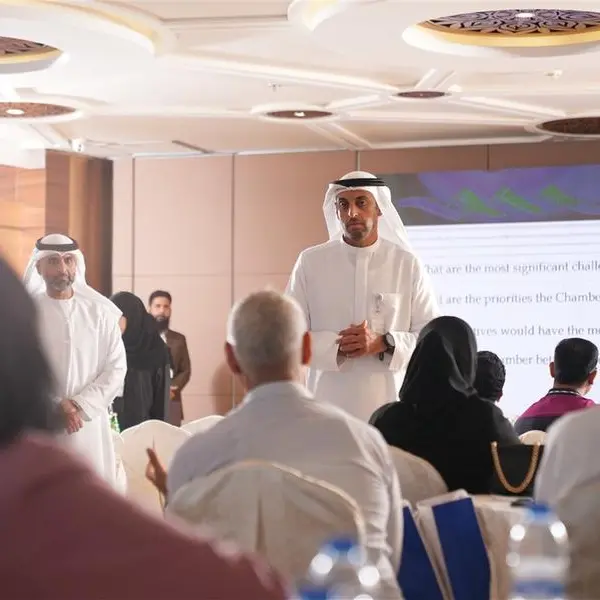
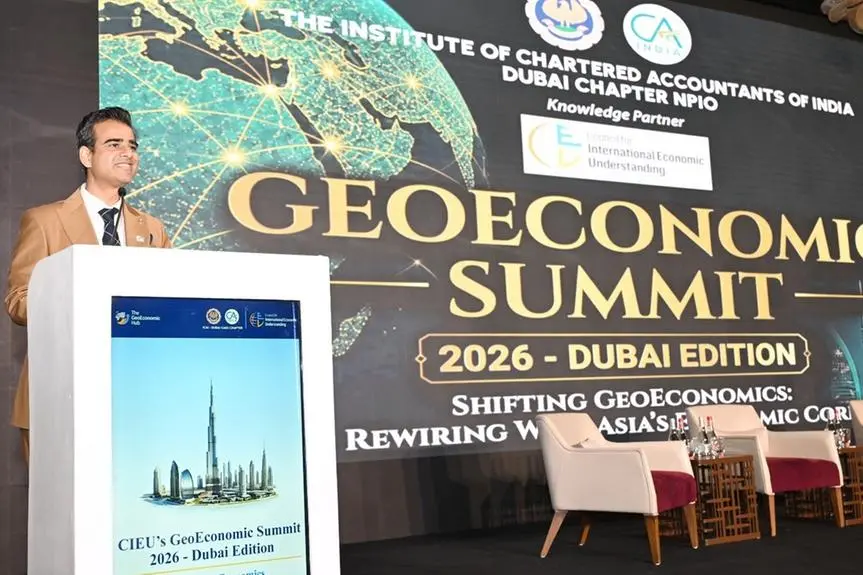
Dubai: Indian economy that is aspired to exceed US$30 trillion by the country’s independence centenary in 2047, provides a huge economic opportunity for investors worldwide, and with the growing strategic relationship, the UAE is well-positioned to benefit from it, experts said at a conference organised by the Dubai Chapter of the Institute of Chartered Accountants of India (ICAI), attended by more than 500 professionals.
“We are living at a time of extraordinary global transformation. The world economy is being reshaped by climate challenges, technological innovation, energy transition, digital finance, and changing trade corridors. In this rapidly evolving landscape, the role of West Asia has become increasingly significant,” Dr Mohammed Saeed Al Kindi, former UAE Minister for Environment and Water, told the delegates.
“The region is no longer viewed only as an energy hub, but as a major centre for global investment, trade connectivity, financial services, logistics, technology, and sustainable development.”
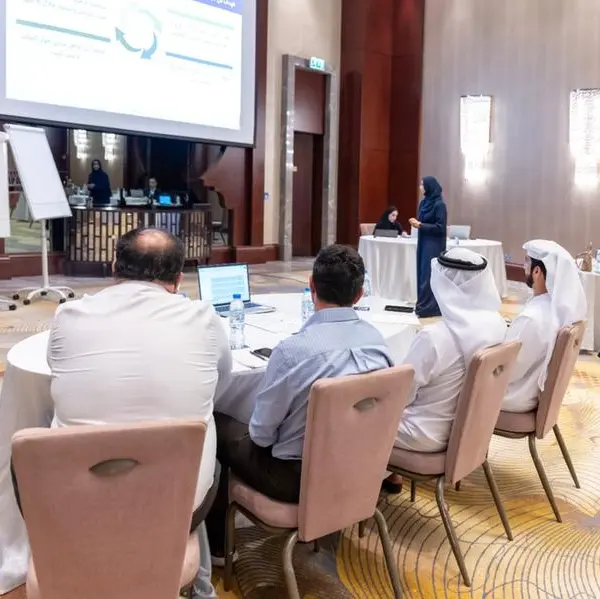
The conference, titled, Shifting Geo-Economics: Rewiring West Asian’s Economic Core, focused on the Gulf region’s changing geo-economic landscape, especially following the recent uncertainty. Council for International Economic Understanding (CIEU), a Knowledge Partner the ICAI, supported the event. However, the discussions dominated the UAE’s tolerance, resilience, the country’s leadership in reassuring the global community and investors, building trust by securing more investment, and its transformation towards growth.
CA Rishi Chawla, Chairman of the Dubai Chapter of the ICAI, said, “The UAE’s bold, dynamic, and visionary leadership continues to inspire immense confidence across the global business and investor community, positioning the nation as a symbol of stability, resilience, and forward-thinking growth. In today’s rapidly changing world, geo-economics and capital flows are no longer just economic concepts—they are powerful forces shaping the future of trade, finance, investment, and global influence.
“This is our fifth business conference in two months, and this reflects an environment that makes us feel safe at home and at work. Amid all these, investors are announcing record deals and investment. This is the UAE that we are all proud of.”
The world has shifted to a multi-polar global geo-economic environment, from a unipolar world since the break-up of the Soviet Union in 1991 – that has recreated the world order with regional alliances, according to Meenakshi Lekhi, former Indian Minister of State for External Affairs and Culture.
“From Non-Alignment, we also have moved to regional alignments as the global economic power centre is shifting towards the East and South. India with its ancient civilisation, culture and strong democratic credentials now represents the global South where regional alliances are gaining momentum,” Meenakshi Lekhi said.
“In the fragmented geo-economic environment, India has a lot to offer in terms of scientific, industrial and human capital. India believes in cooperative multi-polarity and this is where India is partnering with the UAE and GCC countries – home to a large Indian diaspora that are contributing to these economies.
“The UAE and India are two sisters who have navigated through multiple regional challenges. Both the countries are undergoing a tectonic shift in the global geo-economic environment where science, innovation, quantum computing, Artificial Intelligence, and technological disruption will determine who leads in this multi-polar world.”
The Comprehensive Economic Partnership Agreement (CEPA) signed between the UAE and India has created new opportunities for both the countries where two-way trade is set to double from US$100 billion in 2024-25 financial year to the US$200 billion mark by 2032.
India’s economic growth could create a US$45 trillion opportunity for the UAE and its investors, according to Siddarth Balachandran, President of the Indian Business and Professional Council (IBPC).
“India is on a snowball growth trajectory with its economy growing from US$4 trillion to an aspirational US$30 trillion by 2047 when the country celebrates its centenary of independence. This aspirational target is realistic and will create a US$45 trillion economic opportunity for all stakeholders. When India grows to that level, who will benefit? Obviously, the investors who are betting on its growth – such as the UAE and other countries,” Siddarth Balachandran who is also a seasoned investor and Executive Chairman and CEO of Buimerc Corporation, said.
“India’s US$150 billion annual infrastructure gap provides a huge opportunity with 25 per cent annual return in US dollar terms. The UAE is one of the leading investors in India’s National Infrastructure Investment Fund (NIIF). Uncertainty is a certain thing in the current global environment, and both the UAE and India have factored this in their growth vision.”
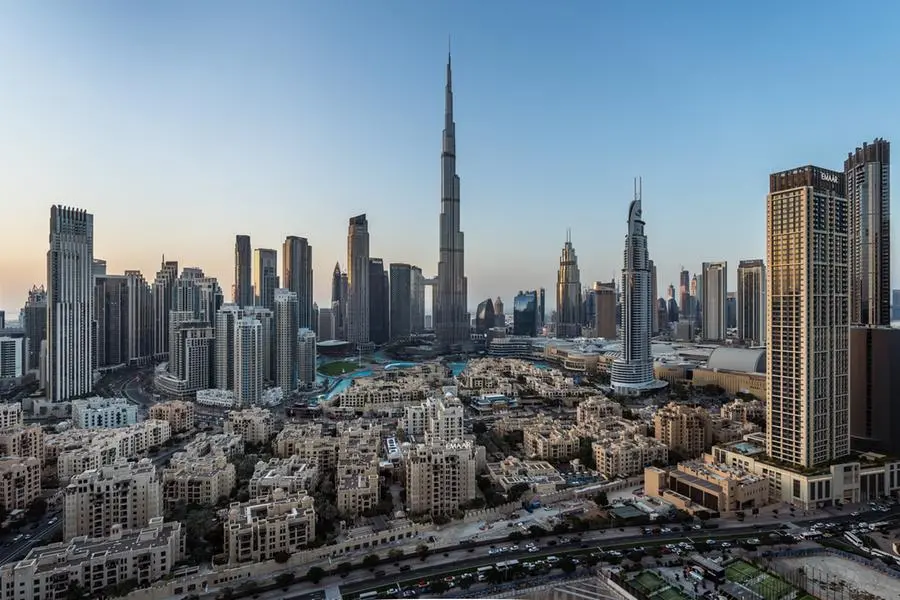
Despite the regional uncertainty, Dubai's real estate sector delivered a strong performance in the first quarter of 2026, with total transactions reaching Dh252 billion in the first quarter of 2026, marking a 31 per cent year-on-year increase in value and a 6 per cent rise in volume, reflecting sustained momentum and investor confidence.
CA Ankur Agarwal, Chairman and Co-Founder of BNW Developments, whose company is currently developing projects worth Dh32 billion in the UAE, said, “The UAE growth story is no longer single engine. Last year, the country’s total non-oil trade reached Dh3.8 trillion last year when 32.34 million people stayed in the hotels with hotel revenues reaching Dh49.21 billion. The UAE economy has been growing at more than 5.6 per cent – that can’t be affected with short-term problems.
“During the last two months, a number of property developers have launched new projects and investors are buying them. Our organisation is hiring salesmen – increasing from 350 to 1,000 by the end of this year – to manage growth. So, we have solid confidence in the UAE and these regional crises won’t deter investors who will continue to invest in the UAE.”
Amjad Taha, an Emirati expert in strategic affairs, said, “The UAE is a global leader in navigating through crises fast and transforming its economy from every challenges. What happened in recent weeks amid the crisis? Just last week, we witnessed 146,000 delegates attending an exhibition participated by 1,245 exhibitors in Abu Dhabi that saw 200 business deals signed including Dh180 billion cumulative off-take and Dh200 billion investment announced by Abu Dhabi National Oil Company (ADNOC).
“We used to only export oil in the past. Now we are exporting industrial products, technology, and trust. Our investment in futuristic technology will see the country become the global capital of Artificial Intelligence. These long-term strategic vision won’t be affected by geo-economic challenges as the country’s leadership will shield us with protection,” Amjad Taha said.
“With this kind of leadership, investors will continue to invest in the UAE – as they see certainty in an uncertain environment that strengthens their trust and confidence. That’s why you see so much of investment coming in while property developers are announcing new projects while missiles are hurled towards the UAE.”
ICAI is the largest professional body of Chartered Accountants across the world with over 1,000,000+ students and around 450,000+ members. ICAI has a wide network with five Regional Councils, 176 Branches, 54 Overseas Chapters, and 31 representative offices across the globe. And among 54 overseas chapters, ICAI Dubai Chapter is the largest and most vibrant chapter of ICAI. Of the 8,000 Indian Chartered Accountants active in the UAE‘s private sector, 1,400+ are currently leading businesses in senior positions.
About The Institute of Chartered Accountants of India (ICAI)
The Institute of Chartered Accountants of India (ICAI) is a statutory body established under the Chartered Accountants Act, 1949 (Act No. XXXVIII of 1949) for the regulation of the profession of Chartered Accountants in India. During its 77 years of existence, ICAI has achieved recognition as a premier accounting body not only in the country but also globally, for its contribution in the fields of education, professional development, maintenance of high accounting, auditing and ethical standards. ICAI now is the largest accounting body in the whole world.
ICAI Dubai Chapter
The Institute of Chartered Accountants of India (ICAI), Dubai Chapter, is the largest accounting professionals’ group comprising of some of the most powerful players in the UAE’s public and private sectors. Established in 1982, it is the largest, most active and award-winning chapter among the 54 overseas chapters of ICAI. It has registered a phenomenal growth in membership in recent years and currently has nearly 3,200 members. Members represent more than 1,550 multinationals and other companies.
Its vision is to contribute to the development of its members as global professionals through facilitating continuous learning and recognition in the wider community. Its mission is to develop professionals with world class competencies.
Web: https://icaidubai.org/
Press Contacts
Muhammad Yusuf
Pan Asian Media
Account Manager
P.O. Box 39865, Dubai, UAE
m.yusuf@panasian1.com