PHOTO
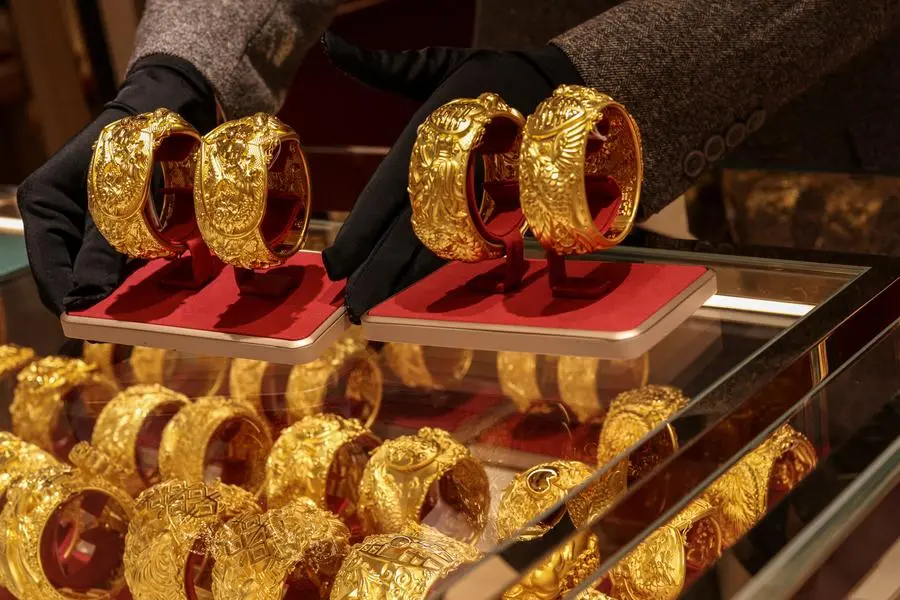
Gold fell from a three-week high hit earlier on Tuesday, as slim hopes of a U.S.-Iran peace deal drove the dollar and oil prices higher, clouding U.S. interest rate outlook ahead of key inflation data.
Spot gold fell 0.8% to $4,698.22 per ounce by 0913 GMT, after climbing to its highest since April 21 earlier. U.S. gold futures for June delivery lost 0.5% to $4,706.10.
U.S. President Donald Trump said a ceasefire with Iran was "on life support" as Tehran rejected a U.S. proposal to end the conflict and stuck to a list of demands the U.S. president described as "garbage".
"The overall driver (for gold's decline) is rising energy prices once again lifting U.S. bond yields ahead of today's CPI (consumer price index) print, as well as a stronger dollar," said Ole Hansen, head of commodity strategy at Saxo Bank. Oil climbed as the key Strait of Hormuz stayed largely closed.
The April inflation data, expected later in the day, could provide clues on the Federal Reserve's monetary policy direction.
Elevated crude oil prices can stoke inflation, increasing the likelihood of higher interest rates. While gold is seen as a hedge against inflation, high rates tend to weigh on the non-yielding asset.
Benchmark 10-year U.S. Treasury yields hit a one-week high, while the dollar gained 0.4%, making dollar-denominated commodities more expensive for holders of other currencies. Traders have largely priced out a Fed rate cut this year, with markets now seeing a 36% chance of a hike by March 2027, according to CME Group's FedWatch tool. Markets are also watching Trump's two-day visit to China on Wednesday, during which he is set to meet Chinese President Xi Jinping, with the Middle East expected to be a key part of the agenda.
"Overall, gold remains rangebound, with support established ahead of $4,500, while resistance is at the 50-day moving average, near $4,757," said Hansen.
Spot silver fell 2.4% at $84.05 per ounce, platinum slid 3.1% to $2,066.15, and palladium was down 1.6% at $1,484.23.