PHOTO
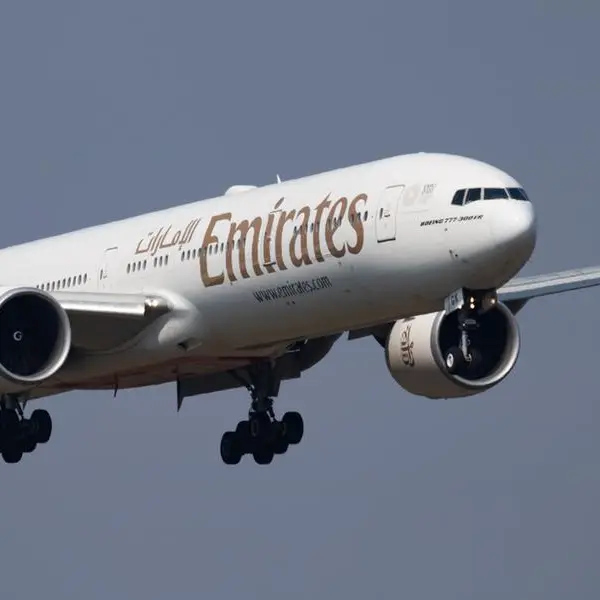
The ongoing conflict in the Middle East contributed to a 3.4% decline in global air passenger demand in April 2026.
The figure is contained in data released by the International Air Transport Association (IATA) on Thursday on global passenger demand for April 2026.
In its latest analysis of passenger air travel capacity and demand for April 2026 compared with the same month in 2025, IATA stated that African airlines recorded a 2.2% year-on-year increase in demand, while capacity expanded by 1.2% year-on-year.
According to IATA, Africa’s performance contrasted with the global trend, where airlines reported a 3.4% fall in demand year-on-year and a 2.9% decline in capacity, with average load factors falling to 83.1%.
The international organisation stated that total demand, measured in revenue passenger kilometres (RPK), was down 3.4% compared with April 2025.
Excluding the Middle East, IATA noted that demand increased by 1.2%, while total capacity, measured in available seat kilometres (ASK), decreased by 2.9% year-on-year.
“The load factor was 83.1% (-0.4 ppt compared to April 2025). International demand fell -5.3% compared to April 2025. Excluding Middle East, demand grew by 1.9%. Capacity was down -5.1% year-on-year, and the load factor was 83.9% (-0.2 ppt compared to April 2025). Domestic demand was flat compared to April 2025. Capacity increased 0.8% year-on-year. The load factor was 81.9% (-0.7 ppt compared to April 2025),” IATA stated in the report.
Commenting on the figures, IATA Director General, Willie Walsh, said the decline in demand among Middle Eastern carriers was largely due to the conflict in the region.
“The 46.6% fall in demand for carriers in the Middle East due to war in the region was so acute that it dragged overall demand down -3.4%. The situation for air transport remains highly volatile. The cost of jet fuel more than doubled in April, which is pushing airfares up. Forward schedule data is showing a reduced offering in the coming months, indicating that airlines are balancing high fuel costs and weaker demand,” Walsh said.
On cargo operations, IATA’s data for April 2026 showed that total demand, measured in cargo tonne-kilometres (CTK), increased by 4.0% compared with April 2025 levels.
Capacity, measured in available cargo tonne-kilometres (ACTK), decreased by 0.4% compared with April 2025.
“Air cargo demand grew 4% year-on-year in April, driven by strong Asia-linked trade flows. But this positive news masks a more complex operating environment. Severe disruption at major Gulf hubs due to the war in the Middle East continued to reshape trade routes and constrain capacity on key corridors. With dedicated freighters carrying much of the growth, air cargo is once again keeping supply chains moving amid trade disruptions. The coming months will test how well the sector can absorb continued geopolitical uncertainty and elevated operating costs,” Walsh added.
IATA also identified several factors that contributed to the latest developments. One of them was a contraction in global trade, which fell by 2.1% month-on-month in March after four consecutive months of growth, highlighting the vulnerability of trade momentum to geopolitical shocks.
Another factor was the sharp rise in jet fuel prices, which increased by 121.1% year-on-year in April, alongside a 77.7% rise in crude oil prices.
“Global manufacturing sentiment remained in growth territory in April, strengthening from March. The Purchasing Managers’ Index (PMI) rose 1.9 points to 53.4, while the PMI for new export orders reached 50.2. With both indicators above the 50-point expansion threshold, conditions remain supportive for air cargo demand,” IATA stated.
Meanwhile, aviation experts have observed that the Middle East conflict is having significant effects on global aviation, particularly for airlines operating between Europe, Asia and Africa.
The region remains one of the world’s busiest air corridors, meaning instability can quickly disrupt flight operations.
The conflict escalated significantly in 2026 when the United States and Israel launched major strikes on Iran following heightened tensions over Iran’s nuclear programme and regional influence. Iran subsequently responded with missile and drone attacks on Israel and U.S. positions in the region.
Copyright © 2026 Nigerian Tribune Provided by SyndiGate Media Inc. (Syndigate.info).