PHOTO
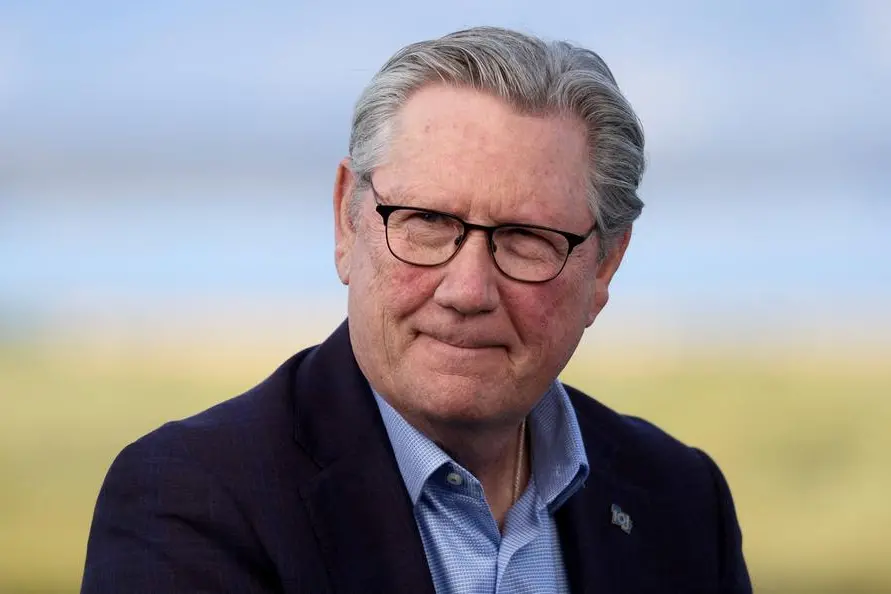
Federal Reserve Bank of Kansas City President Jeffrey Schmid said on Friday that already-hot levels of inflation make it harder to assume the current energy shock will have only a temporary impact on pricing and can be ignored by the central bank.
“My primary concern is inflation, which is too hot and has been above target for too long,” Schmid said in the text of a speech to be delivered before a conference in Iceland.
“I place little stock in assuming that the most recent runup in prices is transitory within an acceptable time horizon,” and “as such, my focus remains on inflation in setting the correct course for policy.” He added: "Now is not the time to let down our guard,” given how long inflation has been above the central bank’s 2% target.
Schmid did not say, however, how his inflation worries bear on what he expects for monetary policy.
FED RATE OUTLOOK SHIFTS
The Fed is widely expected to keep its interest rate target unchanged at between 3.5% and 3.75% at its next Federal Open Market Committee meeting next month, while market participants have shifted from expecting rate cuts later this year to expecting a possible rate increase.
Some Fed officials have said tighter monetary policy is on the table if inflation does not wane. Others have noted that the end of rate-cut expectations in markets, coupled with tighter financial conditions, provides enough restraint for now to allow officials to weigh the data before acting again. Many Fed officials expect inflation pressures to ease later this year, but that outlook is rooted in hopes of a swift resolution of the Iran war started by President Donald Trump.
U.S. ENERGY PRODUCERS CAUTIOUS
In his speech, Schmid noted the U.S. is less exposed to energy shocks relative to the past, but all the same, higher gasoline prices detract from consumers’ spending ability.
He also noted that U.S. energy firms are not moving to produce more oil despite higher prices.
“My discussions with firms in my region suggest a high degree of caution,” the official said, adding, “Over the past decade, my contacts have moved toward far greater capital discipline and are reluctant to increase production while prices remain so uncertain.”
The bank president also said in his remarks that “most economic indicators suggest continued steady growth,” and “I believe the labor market is in balance, notwithstanding the potential, though yet unrealized, disruptions of AI.”
(Reporting by Michael S. Derby in New York; Editing by Matthew Lewis)