PHOTO
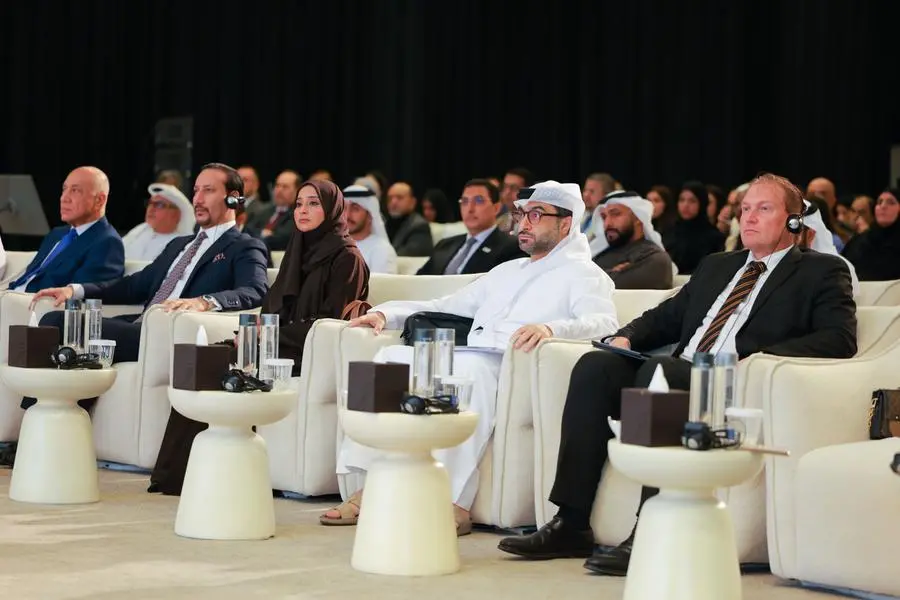
Sharjah, United Arab Emirates: The Ministry of Higher Education and Scientific Research (MoHESR) organised the second session of the ‘Future of Higher Education Dialogues’ series, held in Sharjah, to review the Federal Decree-Law on Higher Education and Scientific Research. The session was organised as part of the Ministry’s efforts to strengthen dialogue and engagement with higher education institutions (HEIs) and technical and vocational education and training (TVET) institutions on the practical application of the law and its implications for the national education system.
The session was attended by approximately 100 academic and administrative leaders representing HEIs and TVET institutions. Participants included Her Excellency Dr Aisha Mohammed Obeid Boukhater Al Shamsi, Secretary-General of the Sharjah Council for Higher Education and Scientific Research; His Excellency Ibrahim Fikri, Acting Assistant Under-Secretary for the Higher Education and Scientific Research Regulation and Governance Sector at the Ministry of Higher Education and Scientific Research; Professor Esameldin Agamy, Chancellor of University of Sharjah; Dr. Tod Laursen, Chancellor of American University of Sharjah (AUS), Dr Nadia Mahdi Al Hassni, Director of the Academy of Visual Arts at the University of the Art in Sharjah; Imran Khan, President of City University Ajman (CUA); and Dr Steve Riesz, Executive Director of the Ras Al Khaimah Department of Knowledge.
During the session, the key pillars of the Federal Decree-Law on Higher Education and Scientific Research were reviewed. The law establishes a flexible, enabling legislative framework that focuses on the quality of educational outcomes, strengthens alignment with labour market needs and unifies sectoral reference frameworks at the national level. It also reinforces the principle of partnership between the Ministry, HEIs, TVET institutions and local authorities regulating higher education across the UAE.
Participants were briefed on the main provisions of the law, including the unification of national frameworks for licensing, accreditation and quality assurance; the regulation of digital, online and blended education modalities; and the enhancement of data integration and exchange between educational institutions and the Ministry. These measures contribute to improving planning efficiency, streamlining procedures and supporting evidence-based decision-making based on accurate, reliable data.
The session featured open and interactive discussions, during which representatives of HEIs and TVET institutions were given the opportunity to ask questions regarding the new law and its implementation mechanisms. The discussions provided clarification on the law’s provisions and addressed various queries related to its application.
The session was organised under the Ministry’s Customer Councils initiative, reflecting its commitment to an institutional partnership approach and constructive dialogue with higher education institutions and stakeholders. This approach aims to develop a more efficient, flexible and competitive higher education system that contributes to preparing students for the future labour market and enhancing their readiness to support the UAE’s sustainable development journey.