PHOTO
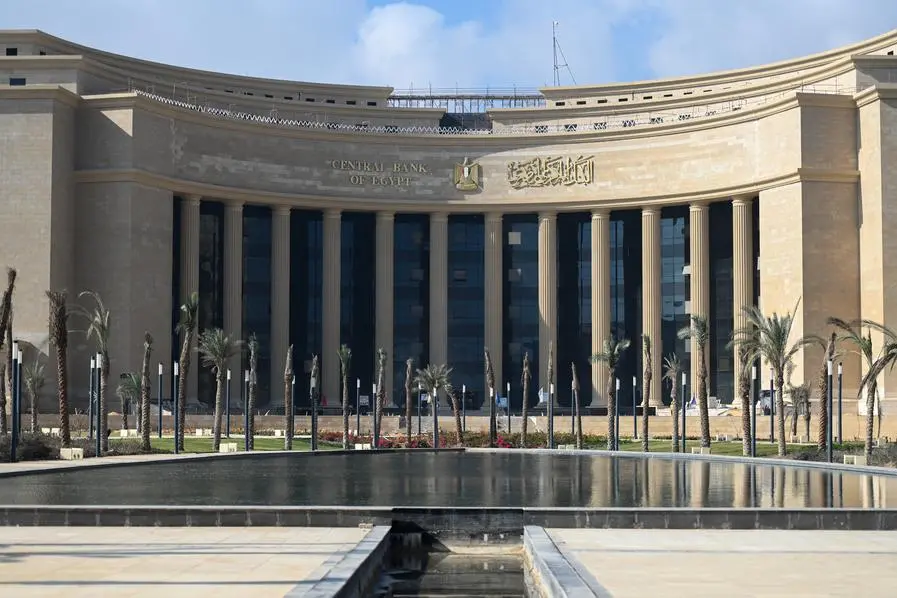
Arab Finance: Egypt’s annual headline inflation is projected to accelerate throughout the year before gradually moving downward by the second half of 2027, averaging 17% and 13% in 2026 and 2027, respectively, according to the latest Monetary Policy Report by the Central Bank of Egypt (CBE).
The US-Iran conflict has weighed on global economic expectations, increasing pressure on commodity and energy prices while adding uncertainty across emerging markets, including Egypt.
Hence, the CBE revised its baseline inflation forecast upward, despite highlighting the resilience of the Egyptian economy, backed by the flexible exchange rate that acts as a shock absorber and helps preserve external buffers.
Meanwhile, the CBE moderately lowered its real gross domestic product (GDP) growth forecasts to 4.9% for fiscal year (FY) 2025/2026 and 4.8% for FY 2026/2027, down from previous estimates of 5.1% and 5.5%.
The downward revision is mainly driven by lower expected contributions from the tourism sector and the Suez Canal. However, the CBE expects non-oil manufacturing and services to continue supporting economic growth over the forecast horizon.
This comes despite a recent moderation in inflationary pressures, with urban inflation easing slightly to 14.9% in April from 15.2% in March.
In its April meeting, the Monetary Policy Committee (MPC) decided to keep key policy rates unchanged, maintaining the overnight deposit rate at 19% and the overnight lending rate at 20%.
Minister of Planning and Economic Development Ahmed Rostom recently announced that Egypt’s GDP growth hit 5% in the third quarter (Q3) of FY2025/2026, versus 4.8% in Q3 FY2024/2025.
Rostom added that growth exceeded expectations, as it had been projected to slow to 4.6% amid ongoing geopolitical tensions in the Middle East and rising oil prices.