PHOTO
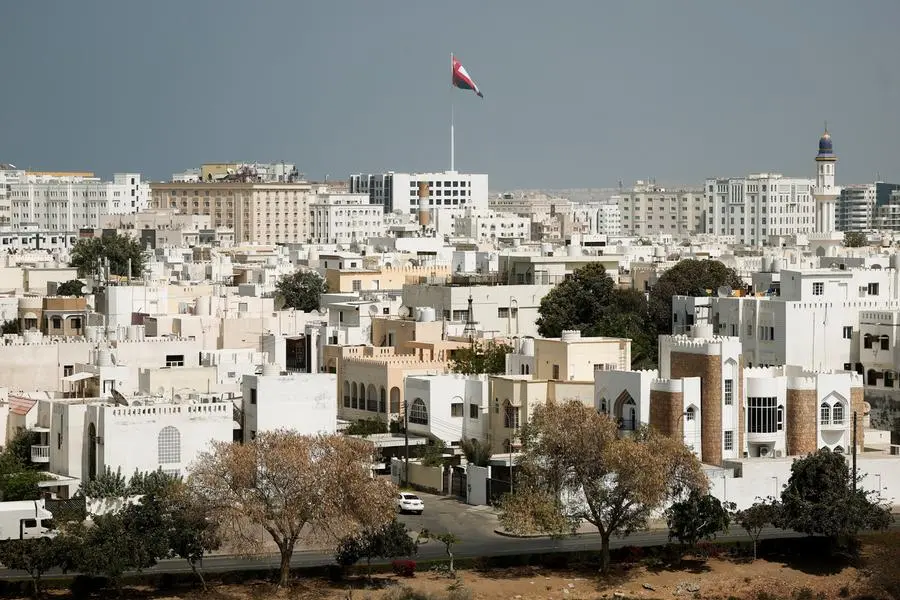
MUSCAT - As the Oman–India Comprehensive Economic Partnership Agreement (CEPA) enters its first week of implementation, an interesting trend is emerging across Indian policy and business circles. Increasingly, the discussion is no longer focused on tariffs, customs procedures or market access. Instead, it is centred on Oman itself.
For India, Oman appears to be evolving from a traditional Gulf trading partner into something more strategic: a stable economic platform linking the Gulf, Africa and the wider Indian Ocean region.
This shift in perception may prove more significant than the agreement itself.
Since CEPA entered into force on June 1, Indian media commentary, former diplomats and business analysts have increasingly highlighted Oman’s ports, political stability and geographic position. The message is consistent: in an era of geopolitical uncertainty and fragmented supply chains, Oman offers something increasingly valuable — reliability.
The timing is not accidental.
The global economy is undergoing a profound transformation. Supply chains are being redesigned, companies are diversifying production networks and countries are searching for trusted partners capable of ensuring uninterrupted trade flows. At the same time, India’s economic ambitions continue to expand far beyond South Asia.
As one of the world’s fastest-growing major economies, India is seeking stronger connections with markets in the Gulf, Africa and Europe. In that context, Oman’s location on the Arabian Sea, its modern ports and its reputation for political stability are attracting growing attention.
Yet the most important aspect of the discussion may be what it reveals about how India views Oman.
Historically, the relationship between the two countries was anchored by energy trade, commerce and centuries of maritime links. Today, Indian analysts increasingly describe Oman as a logistics hub, an investment destination and a strategic gateway to wider markets.
That distinction matters.
Countries do not invest heavily in logistics corridors, industrial partnerships and long-term trade agreements simply because they value a market. They do so because they see strategic value.
An economic analyst speaking to the Observer said the agreement should be viewed through a broader lens.
“The Oman–India CEPA should not be read as a normal trade agreement. It is a strategic test of Oman’s ability to convert geography, trust and diplomatic capital into economic value. India is looking at Oman as a gateway; Oman must now prove that it can turn that gateway into industry, exports and jobs.”
The analyst noted that the real success of CEPA will not be measured by tariff concessions alone, but by whether it attracts new investments, supports industrial development and expands Oman’s role within regional and global supply chains.
This is where the conversation becomes particularly relevant for Oman.
The Sultanate of Oman’s economic ambitions under Vision 2040 extend beyond trade. The objective is to develop a diversified economy supported by manufacturing, logistics, technology and foreign investment. CEPA offers an opportunity to accelerate that process, but only if the country is prepared to capitalise on it.
The question is no longer whether India sees opportunity in Oman.
The more important question is whether Oman is prepared to leverage the growing strategic interest it is attracting.
Can Al Duqm, Suhar and Salalah become centres for manufacturing and value-added activity rather than simply transit points? Can Omani businesses integrate into Indian supply chains? Can new partnerships generate jobs, technology transfer and export growth?
The answers will determine whether CEPA becomes a transformational economic platform or remains a conventional trade agreement.
What is increasingly clear, however, is that India’s interest in Oman extends far beyond commerce. As global trade routes evolve and economic influence shifts towards the Indian Ocean, Oman is being viewed not as a peripheral player but as an important part of the region’s future economic architecture.
India appears to have already made its strategic calculation. The next move belongs to Oman.
2026 © All right reserved for Oman Establishment for Press, Publication and Advertising (OEPPA) Provided by SyndiGate Media Inc. (Syndigate.info).