PHOTO
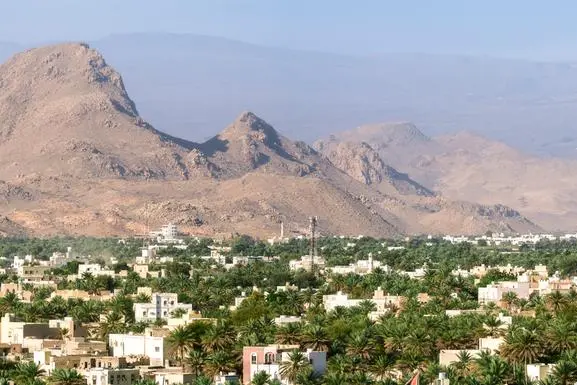
Al Duqm, located on the southeastern coast of Oman, is a deep-water port facing the Arabian Sea and the Indian Ocean rather than being inside the Strait of Hormuz or the Red Sea. Al Duqm is strategically located in the main east-west shipping lane between Asia and Europe. It is perfectly positioned to serve both the Eastern and Western corridors from a central position in the Indian Ocean. As it lies outside the Strait of Hormuz, yet close to the Gulf energy routes, it is valuable for energy supplies, general trade and naval access, making it attractive to partners such as India, the US, the UK and other countries.
One of the key pillars of the Oman Vision 2040 diversification strategy is the deliberate development of Al Duqm as a deep-water port and industrial hub outside the Strait of Hormuz.
Large, growing markets in Africa, India and the Gulf Cooperation Council are served by Al Duqm, a secure gateway connecting the continents of Asia, Africa and Europe. It is well-positioned to become a dependable alternative to hubs that rely on chokepoints. Al Duqm offers geostrategic depth and diversification at the system level, with access to the Indian Ocean through naval and logistic lines.
Al Duqm is not an alternative to the Strait of Hormuz for cargo starting or ending in the UAE, Qatar, Kuwait, etc, where ships inside the Gulf basin must still cross the Strait of Hormuz. The strategic value lies in providing firms and governments with the option to locate hubs, refineries, storage and transshipment facilities so that, in the future, they may move directly over blue-water routes rather than through the narrow Gulf Passage. It is an option for projects and shipping services to be based outside the Gulf.
On March 1-3, 2026, Al Duqm was under several drone attacks in the ongoing US-Israel and Iran war. During the drone attacks, some worker accommodations were struck, a nearby tanker off the coast of Oman was damaged and fuel storage tanks and bunkering facilities were also under threat.
Al Duqm and Salalah have temporarily suspended certain operations, but they can still help during a crisis, as the damage was limited. In this volatile region, where the Strait of Hormuz and parts of the Red Sea are highly risky, Al Duqm and Salalah provide shipping lines, naval forces and energy companies with support outside the Gulf bottleneck amidst geopolitical escalations, heightened security concerns and rising insurance costs.
The Omani authorities have reported that core operations have resumed since the drone attacks. Due to its political neutrality and rapid recovery, Al Duqm is an alternative hub likely to be both attacked and relied upon, as demonstrated by the recent increase in disruptions.
Given the recent drone attack on Al Duqm during the US-Iran war, it is evident that direct security risks can impair port performance and regional connectivity if risks are not effectively managed. Al Duqm's expansion plans, Oman's long-standing foreign policy and its diversification agenda are interrelated, emphasising neutrality, de-escalation and balanced relations with other countries.
A major source of competitive advantage for this port is this diplomatic approach, particularly in a region marked by sanctions, armed conflict and trade disruptions. In reality, neutrality should be seen less as a defence against geopolitical pressure and more as a governance strategy that requires constant modification and enforcement.
As the US-Israel and Iran war deepens, Al Duqm is uniquely positioned as a diplomatic and logistics safety net for a fragmenting region. Despite drone attacks, operations have resumed at Duqm and other Omani ports. It is plausible that Oman will continue to play a key role in any sustainable architecture for Gulf security and global supply-chain risk management, owing to its robust infrastructural resilience, political neutrality and Muscat's diplomatic position as a covert middleman between Washington and Tehran.
From a strategic perspective, Al Duqm is not merely a port in maritime trade; it demonstrates the Oman government's capabilities to leverage ports, diversification and diplomacy to keep crucial routes open amidst ongoing geopolitical upheaval.
2026 © All right reserved for Oman Establishment for Press, Publication and Advertising (OEPPA) Provided by SyndiGate Media Inc. (Syndigate.info).